As charter rates soar to $1M a day, crude oil trader pivots to buying ships
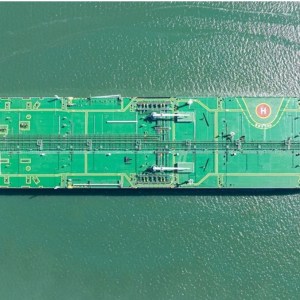
Trading house pivots, buys tankers amid soaring costs and tight capacity. The post As charter rates soar to $1M a day, crude oil trader pivots to buying ships appeared first on FreightWaves.
Source Lens
Industry Context
Useful background context, but lower-priority than direct platform, community, or operator intelligence.
Impact Level
medium
Use this briefing to decide whether your team needs an immediate workflow, policy, or reporting change.
Key Stat / Trigger
No single quantitative trigger surfaced in this report.
Focus on the operational implication, not just the headline.
Full Coverage
Trafigura is moving from chartering tanker capacity to owning it, launching Volare Shipping with six very large crude carriers and eight more on order in a $500 million capital-raising and planned listing on the Oslo exchange.
The move is a notable strategic shift for one of the world’s biggest commodity traders at a time when oil-tanker availability, freight costs and control of shipping capacity have become central to crude-trading economics.
Volare will operate a fleet of 14 very large crude carriers, marking a deeper move by the commodity trader into vessel ownership as disruptions from the Iran war push tanker charter rates to record levels of as much as $1 million a day. That is more than a month’s revenue for most charterers, said Francis Higgins, managing director of Ashford Advisory LLC.
Volare begins with six VLCCs in operation and eight newbuildings scheduled for delivery between 2026 and 2028. Reports said Singapore-based Trafigura plans to raise $500 million through a private placement, then list Volare on Euronext Growth Oslo on or around Oct. 5, subject to completion of the share sale and exchange approval under the ticker “VLCC.”
The transaction matters because it moves Trafigura toward direct control of increasingly scarce ships needed to move crude oil. Commodity traders have historically relied heavily on chartered tonnage rather than placing tanker assets directly on their balance sheets.
That approach preserves flexibility in ordinary markets, but exposes traders to severe cost inflation and vessel-access risk when the spot market tightens. “The aim is to maximize earnings of these vessels,” Trafigura head of shipping Andrea Olivi told Reuters, adding that the tankers could be used for either the group’s own cargoes or third-party business.
He said most of privately-held Trafigura’s VLCC activity historically has involved third-party cargoes. Trafigura had revenue of $141. 9 billion in the first half of 2026, up 19% from the previous-year period. The ownership strategy gives Trafigura two potential advantages.
First, it can secure capacity for its own crude-trading system rather than competing for ships in the charter market when rates surge. That can be especially valuable when geopolitical events disrupt normal trade flows, lengthen voyages or make particular loading regions more difficult to serve.
Second, vessel ownership lets the trading house capture tanker earnings when freight markets are strong. Instead of paying elevated freight costs entirely to independent shipowners, Trafigura can deploy owned tonnage internally, charter it to outside customers or choose the option producing the highest return.
That matters in the present market, as supply disruptions tied to the Iran war and the Ukraine conflict pushes tanker rates to record highs, prompting companies to seek more VLCC and Suezmax capacity. The Volare launch is also a signal that tanker capacity is becoming a strategic asset rather than merely a transport service purchased voyage by voyage.
Trafigura manages about 500 vessels across shipping segments, including roughly 250 oil tankers. For refiners, producers and trading firms, the ability to guarantee physical delivery can be as important as the outright price of crude.
A trading opportunity is of limited value if the buyer cannot secure a vessel at an economical rate, on the required laycan — the agreed arrival date range—or along a route acceptable to insurers, banks and other stakeholders. Volare’s planned public listing separates the capital-intensive tanker bet from Trafigura’s private trading operation.
It also offers investors direct exposure to tanker assets and VLCC earnings while Trafigura gains an external source of capital for fleet expansion. But cyclical tanker shipping means that the eight newbuild VLCCs due through 2028 will enter a market whose supply-demand balance could look materially different by the time they are delivered.
Why it matters: Trafigura’s new tanker unit gives the commodity trader direct access to scarce VLCC capacity and freight-market upside while reducing its exposure to volatile shipping costs. Read more articles by Stuart Chirls here.
Read more: Hapag-Lloyd revises Zim offer as Israeli approval concerns persist But no pandemic high: Asia-US container rate at $9,600 New data shows Suez route transits rose 27% in August Hurricane Polo disrupts Mexican Pacific ports with high winds, heavy rain New report: Just a third of container shipping on-time The post As charter rates soar to $1M a day, crude oil trader pivots to buying ships appeared first on FreightWaves.
Original Source
This briefing is based on reporting from Freightwaves. Use the original post for full primary-source context.
Style
Audience