

Predatory Towing is Turning Routine Truck Accidents into Six-Figure Financial Events
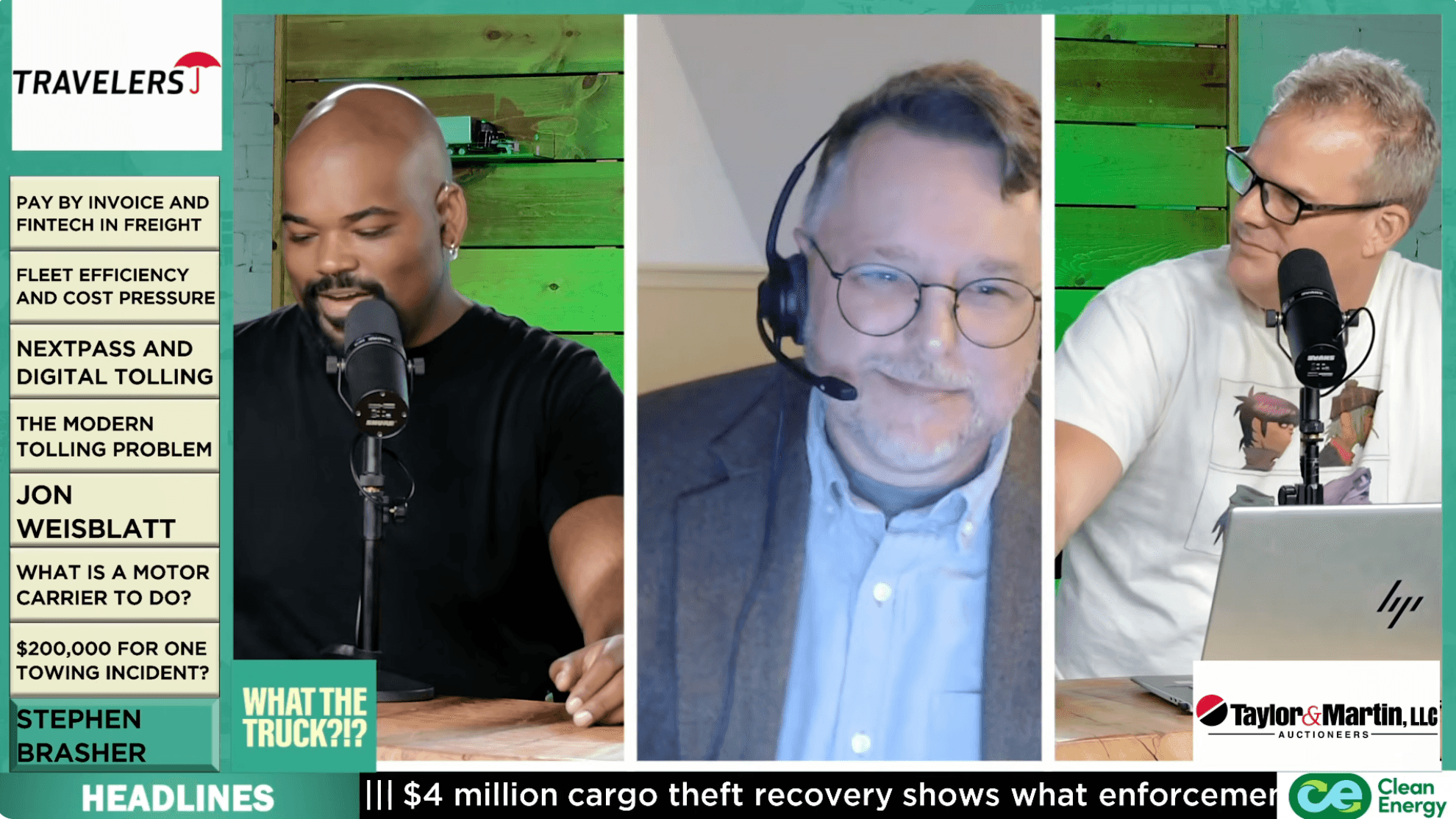
When a tow company takes possession of your truck, trailer, and cargo after a highway accident, storage fees start accruing immediately. Travelers' Stephen Brasher breaks down why predatory towing has become a six-figure financial risk for motor carriers and outlines five best practices to protect your fleet before the next accident happens. The post Predatory Towing is Turning Routine Truck Accidents into Six-Figure Financial Events appeared first on FreightWaves.
Source Lens
Industry Context
Useful background context, but lower-priority than direct platform, community, or operator intelligence.
Impact Level
medium
Use this briefing to decide whether your team needs an immediate workflow, policy, or reporting change.
Key Stat / Trigger
No single quantitative trigger surfaced in this report.
Focus on the operational implication, not just the headline.
Full Coverage
A rollover on the interstate at 3:00 a. m. is already a bad day. But for a growing number of motor carriers, even worse financial damage comes from the tow bill that follows. Stephen Brasher, Travelers Inland Marine Claim Unit Manager, joined FreightWaves’ What the Truck?!
with host Malcolm Harris to break down how predatory towing practices are draining carriers of tens (and sometimes hundreds) of thousands of dollars per incident.
Brasher says the tow operators hold nearly all the leverage, invoices are routinely inflated, and motor carriers who don’t respond immediately can watch storage fees consume whatever margin they had left. “Imagine it’s 3:00 a. m. and one of your drivers is involved in a rollover accident on the interstate,” Brasher said.
“The truck and trailer are blocking the roadway, the trailer is breached, and cargo is strewn across the highway. When the County Sheriff shows up, his priority is to get those travel lanes cleared as fast as possible, so he dispatches a tow company.”
The motor carrier has no say in which company responds, and the moment that tow operator hooks up, a billing clock starts running that can be extraordinarily difficult to stop. “Motor carriers need to understand, you do not get to choose that tow company,” Brasher said.
Once the tow company takes possession of the truck, trailer, and any salvageable cargo, those assets typically go to the operator’s storage facility. From that point forward, every day on the lot costs money, and the fees compound across multiple line items. “We’re talking an average of $120 per day for storage, per component.
$120 for the truck, $120 for the trailer, and $120 for the cargo, every single day,” Brasher explained. “They will not release any of it until their invoice is paid in full.” That structure gives tow companies an asymmetric advantage. The motor carrier needs its equipment back to generate revenue. The cargo may be time-sensitive or perishable.
With every day that passes, the bill grows, creating pressure to settle quickly and on the tow operator’s terms. “They are holding your property until the bill is paid,” Brasher said. “Towing operators know how desperate the situation is and use it to their advantage.
So we’ve all heard that possession is nine-tenths of the law; in this case, the tow company has all the leverage.” The scale of the problem is significant.
Brasher cited industry data showing the average tow-and-recovery invoice comes in at nearly $12,0001, a figure that can balloon dramatically depending on the complexity of the scene and the aggressiveness of the operator. “There’s a documented case in Virginia where a single truck crash recovery resulted in a $200,000 invoice2,” Brasher said.
Beyond the sticker shock of individual invoices, the financial exposure is magnified by the way insurance coverage is typically structured. A truck crash can involve multiple parties, such as the motor carrier, the shipper, and the broker, each with different policies and different carriers. The coverage triangle doesn’t always close cleanly.
“Generally speaking, an auto policy covers the truck and trailer, while cargo insurance covers the cargo,” Brasher said. “Let’s call this a triangle of coverage that gets very murky very fast.” The murkiness is especially dangerous when towing costs exceed what the policy was designed to handle.
Many commercial auto policies carry specific sub-limits for towing and recovery. Those caps may have been set before predatory billing pushed invoices into six-figure territory. “So if that tow recovery bill comes in at $60,000 or $100,000, and I can assure you it does, the motor carrier is responsible for the difference,” Brasher said.
“That leaves a $10,000 excess exposure over those sublimits for the cargo expenses, and the motor carrier is responsible for that excess. That can be a devastating financial hit for small fleets and owner-operators.” The math can be unforgiving. A carrier running a handful of trucks may not have the cash reserves to absorb a five- or six-figure surprise.
Because tow operators are likely to refuse to release equipment until the invoice is settled, the carrier is also losing revenue on a truck that’s sitting idle. The frequency of these situations is what makes the issue systemic rather than anecdotal.
Brasher noted that rollovers are a daily occurrence in the claims data he reviews, and that the vast majority of carriers have been on the wrong end of an inflated tow bill at some point. “I see at least one rollover a day; they are extremely common, especially in winter months when roads are icy,” Brasher said.
“Roughly 83% of motor carriers have experienced excessive towing rates3.” The problem goes beyond aggressive pricing. Brasher pointed to outright fraud as a recurring issue in the towing ecosystem, including cases where operators submit duplicate invoices to different insurance companies for the same recovery event. Regulation has been slow to catch up.
Original Source
This briefing is based on reporting from Freightwaves. Use the original post for full primary-source context.
Style
Audience