

Inside hotshot trucking’s ghost fleets
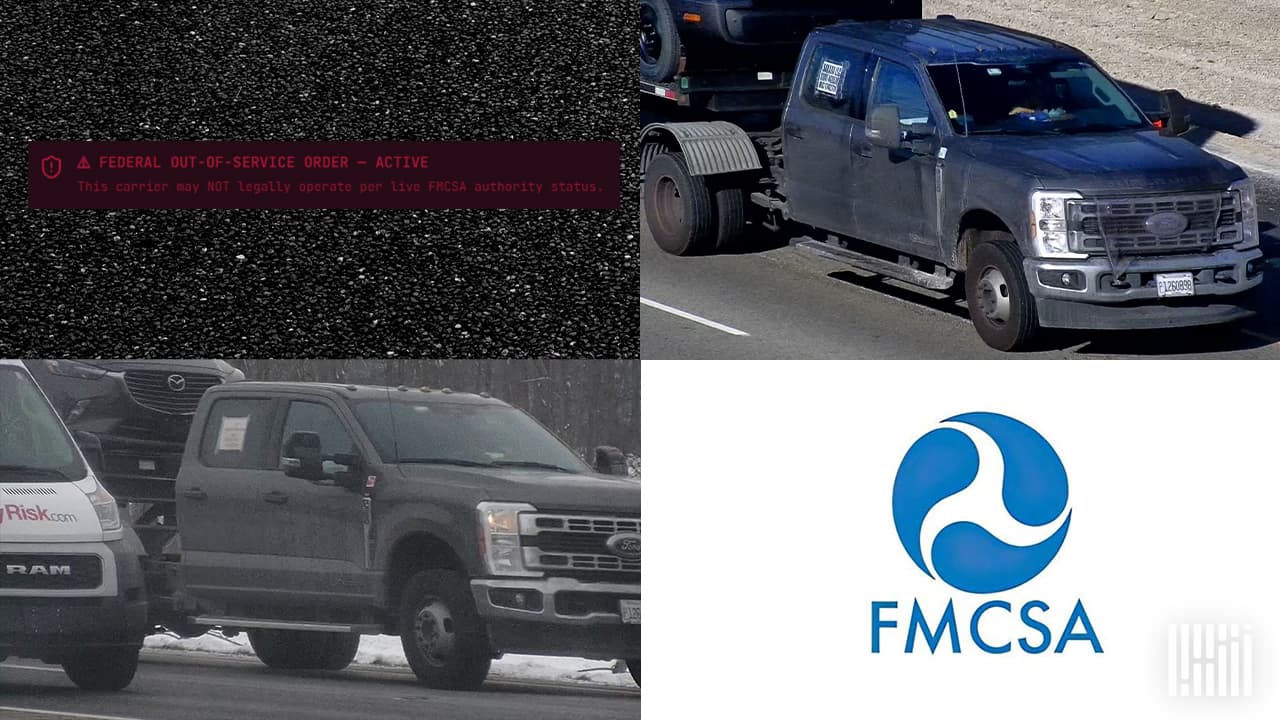
As enforcement tightened on long-haul trucking, marginal operators did not leave the business. They moved into hotshot and auto transport, where the rigs are smaller, the inspections fewer, and the insurance cheaper. The post Inside hotshot trucking’s ghost fleets appeared first on FreightWaves.
Source Lens
Industry Context
Useful background context, but lower-priority than direct platform, community, or operator intelligence.
Impact Level
medium
Use this briefing to decide whether your team needs an immediate workflow, policy, or reporting change.
Key Stat / Trigger
No single quantitative trigger surfaced in this report.
Focus on the operational implication, not just the headline.
Full Coverage
Suplicium Transport LLC told the federal government it runs one truck. Its registration with the Federal Motor Carrier Safety Administration lists a single power unit and a single driver, operating out of Springfield, Illinois.
In the same reporting period, roadside inspectors stopped Suplicium’s trucks 801 times in 46 states, on 675 different vehicle identification numbers. No single truck is inspected 801 times across 46 states in a year. The figure on the registration was never a count of equipment. It was the basis for an insurance premium.
Suplicium is one of 32 motor carriers that, taken together, report 38 power units to FMCSA. Inspection records tied to those 32 authorities account for 6,082 unique VINs across 7,505 inspections, with some carriers appearing in as many as 46 states.
That works out to roughly 160 vehicles on the road for every truck on the books, and the vehicles do not stay with one company. They circulate. A migration into the slow lane The pressure on long-haul Class 8 trucking has built steadily over the past year and a half. English-language proficiency is again an out-of-service violation.
The rules on non-domiciled commercial licenses are tightening. The electronic logging mandate closed the hours-of-service gaps that thin-margin carriers once relied on. For an operator built on cheap drivers, light paperwork and a minimum policy, long-haul stopped paying. Many of those operators moved into hotshot and auto transport.
A one-ton pickup pulling a car-hauler attracts fewer inspections than a tractor-trailer, and its insurance costs a fraction of a Class 8 fleet’s. The equipment is also easy to move. A pickup and a gooseneck trailer can be retitled, replated and run under a new limited liability company in a matter of days. The shift shows up in the equipment.
Of roughly 500 vehicles that appear under more than one carrier in this network, 46 percent are Ford and Ram pickups and another 14 percent are Kaufman-style car-hauler trailers. Almost none are heavy freight trucks. The timing tracks the broader auto-haul market.
When Jack Cooper, a 97-year-old unionized auto hauler, shut down in early 2025 after losing its Ford and General Motors contracts, the finished-vehicle freight it carried did not disappear. It dispersed down the chain into smaller carriers, and some of those carriers are in this group. The network is also recent.
Twenty-six of the 32 carriers hold DOT numbers issued recently enough to date their authority to 2023 or later, and 21 trace to 2024 and 2025. Their insurance filings follow the same line, with 26 of the most recent policies bound during 2025, most in the spring and summer.
This is a wave that formed over the past 18 months and had already generated thousands of inspections before the connections between the companies became visible. Tenure, or the lack thereof, is where the system is weakest.
A newly authorized carrier enters an 18-month new-entrant window during which FMCSA is supposed to run a safety audit before the authority becomes permanent. The problem is arithmetic. The agency processes well over 150,000 new carrier registrations a year and cannot audit a meaningful share of them inside that window.
A carrier that draws scrutiny, fails a new entrant review, or has its authority headed for revocation does not have to fight it. It can let that DOT number lapse and file for a fresh one, and the clock starts over with a clean record and another 18 months of runway. The vehicles, the drivers and the people behind them carry forward.
Only the identifier changes. A cluster of authorities that are almost all a year or two old is the signature of operators who treat the DOT number as disposable, and who reach for a new one the moment an old one becomes a liability. The same truck, different doors The clearest evidence is the shared VIN.
One Ford F-350, carrying Illinois plate DRL6327, was inspected 15 times under seven different carrier DOT numbers in 12 states. The most-inspected unit in the set, another Ford on plate P1295664, drew 17 stops across a dozen states. Across the network, single vehicles surface under three, four, five, and six separate authorities.
These aren’t driveaway towaway, these are real freight carriers. The plates swap too. A carrier running its own equipment shows roughly one tag per truck. These carriers show more plates than trucks. Sakara LLC, registered to two power units in Otis Orchards, Washington, accounts for 682 VINs wearing 695 plates. Suplicium shows 681 plates on 675 VINs.
Cobra Inc shows 303 plates on 288 VINs. At the level of an individual vehicle, the pattern is insane. One car-hauler turned up under four carriers wearing eight different plates across 14 inspections, most of them near-identical variations on a single Illinois number with a Maine tag mixed in. Others ran on plates reading APPLIED, TEMP, or NOTAG.
A trooper at the scale and a toll camera on the interstate both read the plate, not the VIN, so a shifting
Original Source
This briefing is based on reporting from Freightwaves. Use the original post for full primary-source context.
Style
Audience