

Government unveils toughest crackdown on late payments in over 25 years
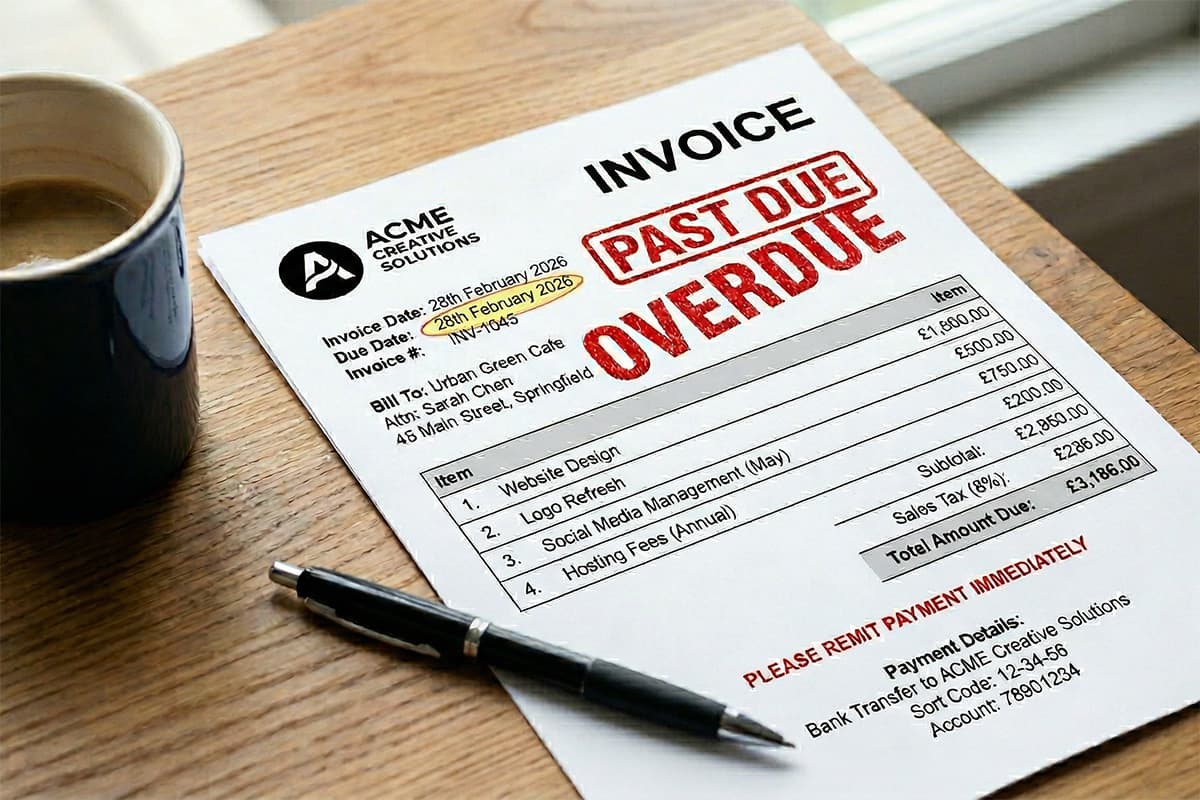
The UK government is enacting its largest late payment reforms in 25+ years, capping payment terms at 60 days for large firms paying smaller suppliers, mandating 8% above Bank of England base rate interest on late payments, and empowering the Small Business Commissioner to issue fines worth tens of millions against serial offenders. The legislation targets an £11B annual drag on the UK economy — with 38 businesses closing daily due to cash flow failure from unpaid invoices. UK-based marketplace sellers supplying large retail or wholesale buyers will face an immediate structural shift in receivables risk. This is not a consultation — it's enforcement-grade reform with board-level accountability requirements and mandatory publication in annual reports.
For UK-based brands selling through Amazon Vendor or wholesale channels into large UK retailers, this is a direct margin recovery event — not a cost.
If your wholesale contracts currently run Net 90 or Net 120 terms with large buyers, those are now legally non-compliant once enacted, and you can begin pricing statutory interest into overdue balances at 8%+ BoE base rate.
The non-obvious play: sellers who have historically accepted extended terms to win shelf space or Vendor agreements should immediately audit outstanding receivables and model what mandatory interest recapture means for their working capital position.
More critically, agencies managing brands in UK wholesale-to-retail pipelines should flag this as a lever to renegotiate payment terms NOW, before large buyers lock in compliant 60-day structures that still stretch cash cycles versus the 30-day best practice the FSB is pushing toward.
This reform is part of a broader 2025-2026 regulatory tightening across G7 markets targeting the structural power imbalance between large platform buyers and SME suppliers — the same dynamic driving EU payment directive updates and FTC scrutiny of Amazon Vendor terms in the US.
For marketplace operators, it signals that governments are increasingly willing to legislate cash flow protections that platforms and large buyers have historically controlled unilaterally.
Agencies and brands with UK wholesale exposure should treat this as a preview of coming regulatory frameworks in other markets — building receivables enforcement capability now creates competitive moat as rivals remain reactive.
Audit your UK wholesale and Vendor receivables ledger this week — pull every open invoice over 30 days and flag any buyer with a history of Net 60+ terms. Calculate the statutory interest owed under the 8% above BoE base rate formula for each overdue balance and send formal notice letters before the new Commissioner powers are operational, establishing your compliance posture and signaling enforcement intent to chronic late payers.
If you operate as a supplier to large UK retailers or distributors, update your commercial contract templates THIS WEEK to include statutory interest clauses at 8% above BoE base rate and the £100 compensation trigger — even before the law passes. Buyers who agree to new terms now are less likely to challenge them post-enactment, and you lock in receivables protections early.
In the next 30-90 days, expect large UK buyers to restructure procurement and AP workflows to hit the 60-day cap — which means some will front-load deductions, chargebacks, or quality disputes to delay the payment clock. Prep your ops team to document delivery confirmations, acceptance timestamps, and dispute resolution trails now so your payment trigger dates are airtight when enforcement begins.
Bottom Line
UK late payment reform caps buyer terms at 60 days with 8% interest penalties — your receivables ledger is now a compliance asset, not just an accounting line.
Source Lens
Industry Context
Useful background context, but lower-priority than direct platform, community, or operator intelligence.
Impact Level
medium
UK late payment reform caps buyer terms at 60 days with 8% interest penalties — your receivables ledger is now a compliance asset, not just an accounting line.
Key Stat / Trigger
£11B annual cost to UK economy from late payments with 38 businesses closing daily
Focus on the operational implication, not just the headline.
Full Coverage
Well I suppose it’s a start (again…). Perhaps the Small Business Commissioner should also focus on a couple of other traps inflicted on small businesses. We could start with large customers taking “early payment discounts” when paying late (or sometimes as a way to offset interest claimed in a Small Claims case).
Small businesses should be allowed to add a lump sum onto the claim; with the BoE base rate so low, interest is relatively derisory and worth the cost for a large company using smaller suppliers to prop up their cashflow. I notice that it’s all phrased as payments from large firms to smaller suppliers.
It would be nice if they would extend the remit to look at payments by councils, government bodies and (especially) HMRC. Oh, and if they are going to ban retentions for construction contracts, they really need to do the same for payment processors and Amazon. Reply
Original Source
This briefing is based on reporting from Tamebay. Use the original post for full primary-source context.
Style
Audience