

How Walmart uses AI to limit weather disruptions in its supply chain
The retailer uses technology to determine how to reroute or position inventory before severe weather events occur, an executive told Supply Chain Dive.
Source Lens
Industry Context
Useful background context, but lower-priority than direct platform, community, or operator intelligence.
Impact Level
medium
Use this briefing to decide whether your team needs an immediate workflow, policy, or reporting change.
Key Stat / Trigger
No single quantitative trigger surfaced in this report.
Focus on the operational implication, not just the headline.
Full Coverage
An article from How Walmart uses AI to limit weather disruptions in its supply chain The retailer uses technology to determine how to reroute or position inventory before severe weather events occur, an executive told Supply Chain Dive.
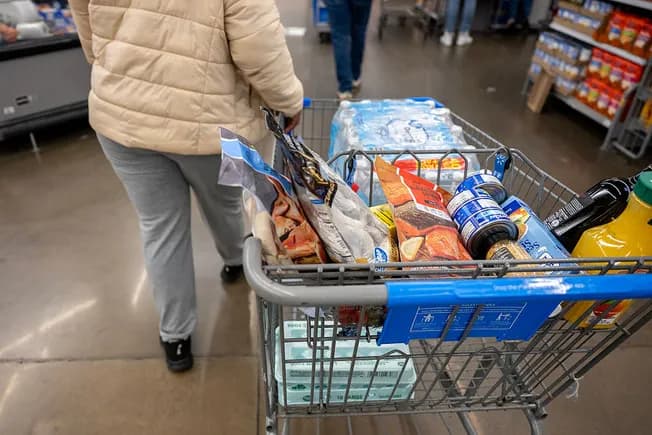
Published July 29, 2026 Max Garland Lead Reporter Share Copy link Email / Print License Add us on Google A customer stocks up at Walmart on Jan. 22, 2026, in Little Rock, Arkansas, before a winter storm. Weather events can influence customer behavior, something Walmart considers in its inventory positioning efforts.
Will Newton via Getty Images Listen to the article 4 min This audio is auto-generated. Please let us know if you have feedback. Walmart is taking a technology-driven approach to mitigate weather-related disruptions in its supply chain.
Severe weather can spur potential challenges such as spikes in demand for household essentials, or reduced fulfillment center capacity.
The retail giant works to position inventory in the best possible location to keep stores stocked and deliveries to customers on time despite the disruptions, Indira Uppuluri, SVP of supply chain technology, said in an interview with Supply Chain Dive.
To fulfill that mission, employees use predictive artificial intelligence and machine learning models that factor in historical weather patterns and real-time data to see how the company's network may respond to weather-related hurdles before they occur.
The insights from those tools help planners find opportunities to reposition inventory, tweak transit times or reroute shipments to unaffected locations before severe weather hits, per a June 24 company blog post last month.
"We bring a lot of signals together to simulate what it would mean for us and what the impact to our stores and customers is going to be," Uppuluri said, adding that transportation capacity and employee availability are other considerations the company weighs. Walmart factors in customer demand signals ahead of a weather event, as well.
For example, heavy rainstorms may drive heightened umbrella purchases, influencing where Walmart directs inventory to, Uppuluri said. Storms aren't the only severe weather Walmart has to consider throughout its transportation network.
Wildfires can be an obstacle for the company's supply chain in areas like California and Colorado, sparking disruptions such as highway closures. Walmart considers how to change its drivers' routes ahead of time, Uppuluri said.
If a fire emerges on short notice, the company's transportation center sends out alerts to affected drivers on what actions they need to take to ensure safety, she added. "There's one thing about getting all of these items and orders to our customers and to the stores," Uppuluri said. "There's also the other aspect of safety for us."
In response to severe weather, rerouting inventory to unaffected distribution centers is one common tactic Walmart uses to keep products flowing to stores. For online orders to consumers, the retailer's "intelligent fulfillment engine" helps determine the best approach.
Paths are recalculated via AI to maintain service levels during weather events, the blog post said. For shipments already in transit, the company uses smart tracking systems to identify potential delays and communicate to customers about delivery changes. The company's weather preparedness efforts extend beyond the U. S.
Jeff McIntosh, Walmart Canada's director of transportation, used AI-powered coding tools to roll out a storm rerouting agent, per a July 24 blog post from Walmart. The agent cross-references 10-day forecasts with real-time highway and ferry closures, carrier data and other signals, helping the company's supply chain team act earlier.
"That visibility is especially valuable in remote regions, where a ferry cancellation can disrupt one of the few available routes for getting products to stores and communities," the blog post said.
Technology is helping Walmart in areas beyond mitigating weather disruptions, with employees using AI-powered models and agents to understand how the company's resources are being used and potential optimization opportunities.
As a result, Walmart can learn how to improve its supply chain for the long haul, not just eliminate short-term hurdles, Uppuluri said. "As we run through these simulations, sometimes we realize maybe we can run our network slightly differently," Uppuluri said. "Maybe we can configure it differently."
Recommended Reading Walmart bets on AI and digital twins to shape its supply chain strategy Supply Chain Dive 4 ways Walmart is scaling AI to unify its supply chain By Kelly Stroh • Oct. 7, 2025 Add us on Google Share Copy link Email / Print License Filed Under: Risk and Resilience, Operations Management, Logistics, Retail
Original Source
This briefing is based on reporting from Supply Chain Dive. Use the original post for full primary-source context.
Style
Audience