

The Used Truck Market Just Got Flooded With Equipment You Need to Inspect Before You Touch
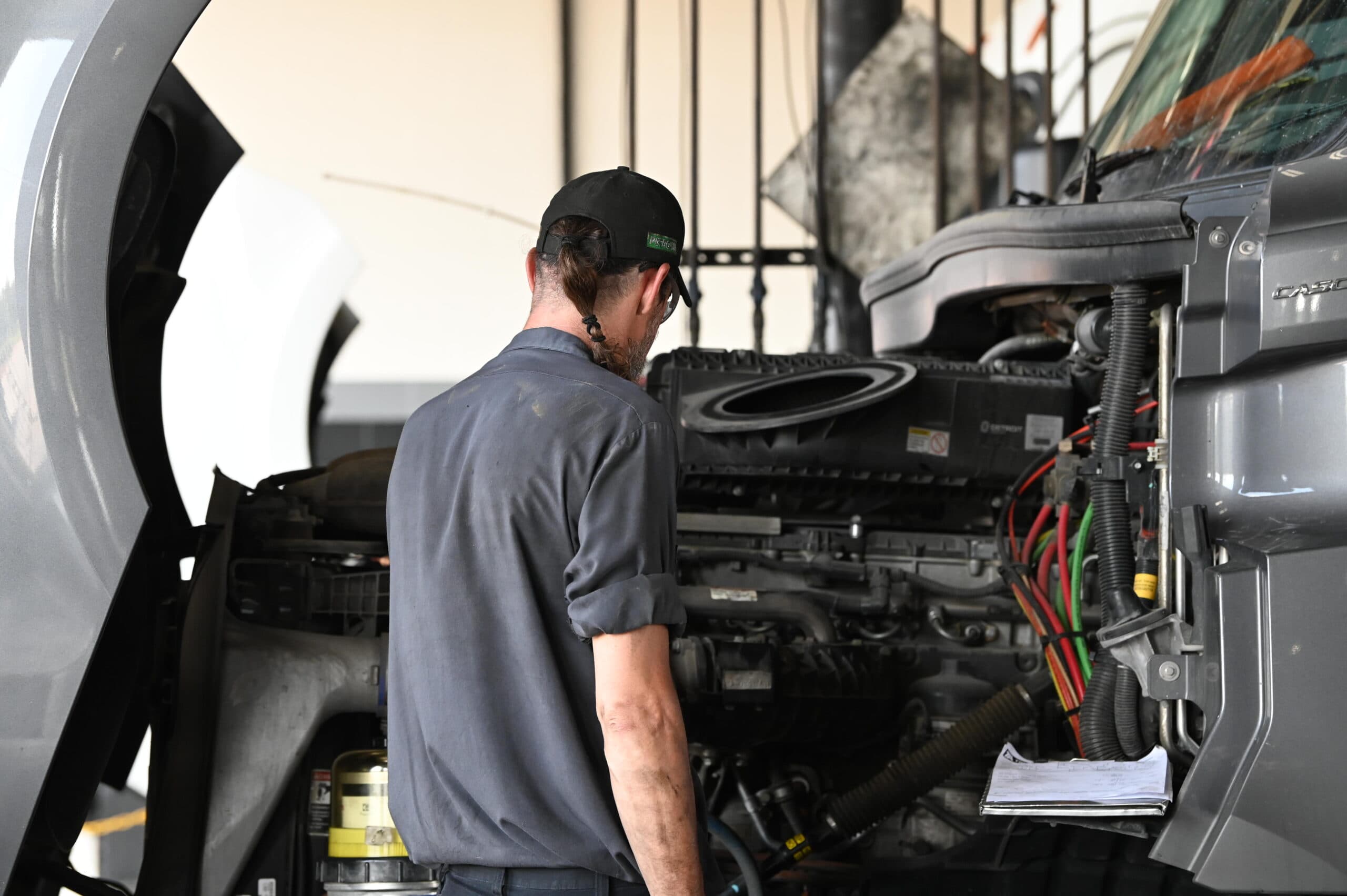
FMCSA's 2026 compliance crackdown flooded used truck markets with equipment from carriers who couldn't afford $1,000/month compliance costs. Thousands of trucks hit dealer lots as non-compliant operators exit, but buyers need ECM diagnostics to avoid purchasing damaged equipment.
E-commerce sellers using trucking for logistics should expect lower transportation costs as truck supply increases, but carriers may consolidate around compliant operators. This mirrors marketplace dynamics where compliance costs force out marginal players, potentially improving service quality from remaining providers.
Regulatory enforcement is consolidating transportation markets around compliant operators, similar to how marketplace policy changes eliminate non-compliant sellers and create opportunities for those who remain.
Review your 3PL and freight partners' FMCSA compliance ratings before Q3 2026 to avoid service disruptions from carrier exits.
Negotiate transportation contracts now while truck capacity is abundant and rates are compressed from the market flood.
Bottom Line
Trucking shakeout means cheaper freight for sellers.
Source Lens
Industry Context
Useful background context, but lower-priority than direct platform, community, or operator intelligence.
Impact Level
medium
Trucking shakeout means cheaper freight for sellers.
Key Stat / Trigger
$1,000 per month per truck compliance cost difference
Focus on the operational implication, not just the headline.
Full Coverage
Walk a truck dealer lot right now and you will see something you have not seen in years: inventory. Real inventory. Trucks lined up. Choices. And prices that look — compared to where used equipment was in 2022 and 2023 — like someone left the door open. That is not an accident.
That is the FMCSA compliance crackdown of 2026 showing up in the used equipment market, and if you do not understand what is driving it, you are going to buy someone else’s problem and wonder for the next 18 months why the truck is costing you more than it should.
Why the Lots Are Full Right Now The FMCSA has spent the first four months of 2026 executing what its own acting division administrator described as the largest regulatory enforcement action the agency has undertaken in years. Thousands of non-domiciled CDLs have been removed from the system.
Nearly 3,000 CDL training providers were pulled from the Training Provider Registry. More than 80 electronic logging devices have been revoked from the approved list.
And the agency has cracked down on chameleon carriers — operations that dissolved under one DOT number and reopened under another to escape their safety record — with new identity verification requirements that make that playbook far harder to run.
The cost difference between operating compliantly and operating non-compliantly has been estimated at $1,000 per month per truck on the low end. Carriers who were making that calculation in favor of cutting corners are now finding the margin has evaporated — and the enforcement environment has made the risk untenable. The result is predictable: exits.
Fast ones. Carriers surrendering authority, parking trucks, and pushing equipment back to dealers before the next inspection, the next audit, or the next renewal cycle forces the issue. Meanwhile, freight recession economics have been grinding on operations that were already thin.
The operators who could absorb three years of compressed margins while staying fully compliant are the ones still running. The ones who could not — or who were never fully compliant to begin with — are the ones whose trucks are on those dealer lots right now.
This is where it gets important for a carrier considering a used truck purchase: you do not know which category a given truck came from. And the truck will not tell you unless you ask it the right way. What the Odometer Does Not Know A truck with 345,000 miles on the odometer sounds like a truck with 345,000 miles of story.
But the odometer only counts distance. It does not count the hours the engine spent idling. It does not count how many times the driver overrode the idle shutdown system to keep the bunk air conditioner running through the night.
It does not count the cumulative hours the coolant level ran low, or how many minutes the oil pressure dropped below the threshold where the lubrication film starts to break down. It does not count how many times a water-in-fuel fault fired and nobody fixed it. The engine control module knows all of those things.
It has been recording them since the day the truck left the factory. Every fault code, every abuse event, every protection trigger, every driver behavior pattern — it is all sitting in the ECM, available to anyone who knows how to pull it, and invisible to anyone who does not.
What a real pre-purchase diagnostic pull from a platform like JPRO or Cummins INSITE produces is a different kind of odometer. One that measures not just distance but how that distance was accumulated, and at what cost to the engine systems that generate the truck’s remaining value. Take a 2022 International LT625 with a Cummins X15 and 345,000 miles.
On paper, it is early in its lifecycle — the X15 is built for well over a million miles under proper care, and a 2022 model at under 350,000 miles should have enormous useful life remaining. That assessment holds up on this particular truck: one inactive fault code, all warning lamps off, DPF soot low, coolant normal.
The diagnostic confirms what the odometer implied. The only flag is a 44. 6% idle rate — nearly half the engine’s runtime spent idling rather than moving — which is above the industry benchmark of 25 to 35% and tells you something about how this truck was operated.
Not a deal breaker on an engine this young and otherwise clean, but a legitimate negotiating lever and a flag to pull maintenance records and check oil change intervals. That is what a clean unit looks like in the data. Not every unit on those lots right now looks like that.
What a Problem Unit Looks Like Now consider a different Cummins X15, similar platform, similar mileage on paper — 324,000 miles, 18,000 engine hours. Before you even open the fault codes, one number stops the conversation: 365 hours of cumulative low coolant level. Not a single bad fill. Not an air-bleed event after a service.
Three hundred and sixty-five hours — more than two full work weeks of accumulated operating time — with the coolant level sensor reporting low. To understand
Original Source
This briefing is based on reporting from Freightwaves. Use the original post for full primary-source context.
Style
Audience