

The medical certification gap is putting CDLs at risk
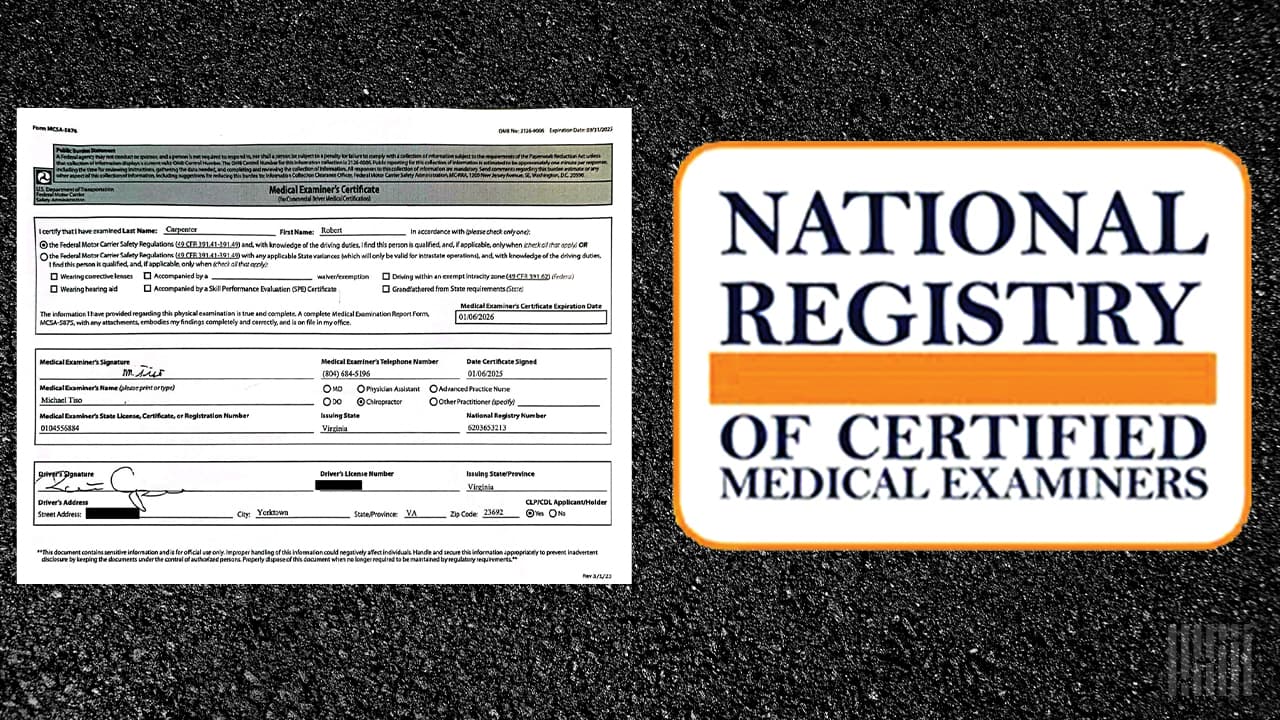
Under National Registry 2, the physician is now required to upload the results directly to the FMCSA, which then transmits the data to the state. The driver's career and the carrier's compliance both depend on a workflow that the physician may not understand exists. The post The medical certification gap is putting CDLs at risk appeared first on FreightWaves.
Source Lens
Industry Context
Useful background context, but lower-priority than direct platform, community, or operator intelligence.
Impact Level
medium
Use this briefing to decide whether your team needs an immediate workflow, policy, or reporting change.
Key Stat / Trigger
No single quantitative trigger surfaced in this report.
Focus on the operational implication, not just the headline.
Full Coverage
Two people I know personally reached out to me in the past week with the same problem. Gord Magill, a veteran of the trucking industry and a voice that most people in this space know, went for his DOT physical in New York and received his medical examiner’s certificate from the physician without issue.
Weeks later, he discovered that the physician had not uploaded the results to FMCSA’s National Registry system, which meant the state of New York had no record of a current medical certification on file. Mill owner and friend Sam Motley had the identical experience with a physician in Virginia. Two different states, two different doctors, the same failure.
I get dozens of these calls a week. In both cases, the driver did everything right. In both cases, the physician did not complete the process. In both cases, the driver was at risk of a CDL downgrade that would have pulled them off the road through no fault of their own.
These are symptoms of a systemic transition that FMCSA implemented and that the medical examiner community has not fully adopted, and most don’t know about. This same issue happened with Carriers and Clearinghouse. Half the carriers we deal with don’t realize Clearinghouse is a “thing and it’s existed for 6 years.
The change is significant, shifting a critical compliance burden from the driver to the physician in a way that many certified medical examiners do not yet fully understand. What changed Under the previous system, a commercial driver who completed a DOT physical received a Medical Examiner’s Certificate (and the long form) directly from the physician.
The driver was then responsible for providing that certificate to the state driver licensing agency to self-certify. The state would update the driver’s record to reflect the current medical certification, and the Motor Vehicle Record would show the driver as medically qualified.
The process depended on the driver taking the certificate to the state, and if the driver forgot or delayed, the state record would not reflect the current medical status. Carriers then had to verify the self-certification and medical certification status through an MVR pull. Under National Registry 2, that workflow changed.
The certified medical examiner is now required to electronically transmit the results of the DOT physical directly to FMCSA through the National Registry system. FMCSA then transmits the medical certification data to the appropriate state driver licensing agency. The state automatically updates the driver’s record based on data it receives from the FMCSA.
The driver no longer needs to hand-carry the certificate to the DMV. The physician uploads it, FMCSA routes it, and the state records it. The process is cleaner on paper and eliminates the compliance gap that existed when drivers failed to submit their own certificates. But it only works if the physician completes the upload.
Where the process is breaking The failure point is at the first step. Not all certified medical examiners, including physicians, chiropractors, nurse practitioners, physician assistants, and doctors of osteopathic medicine, are aware that the upload responsibility has shifted to them.
Many are still handing the driver the paper certificate and considering the encounter complete. The driver walks out with a valid medical certificate in hand, believes the process is complete, and has no reason to suspect that the electronic transmission to the FMCSA did not occur.
Weeks or months later, the state sends a notice that no current medical certification is on file, and the CDL will be downgraded if the issue is not resolved. The problem is compounded by the variety of medical professionals who perform DOT physicals.
A hospital-affiliated occupational health clinic with dedicated EHR integration may have built the FMCSA upload into its standard workflow. A solo-practice chiropractor performing DOT physicals on the side may not know the upload exists.
A nurse practitioner at a walk-in clinic may know the requirement but lack access to the National Registry portal, or may not have been trained to use it.
The certification to perform DOT physicals requires completing a training program and passing an examination, but training in the administrative upload process is not always part of that curriculum, and the administrative infrastructure varies widely across practice settings.
The resulting compliance gap is invisible to the driver and the carrier until the state sends the downgrade notice. The driver has the paper certificate. The carrier has a copy in the driver qualification file. The annual MVR pull, if the carrier runs one, may not reflect the problem until the state has already initiated the downgrade.
At that point, the carrier has a driver who is technically disqualified from operating a commercial motor vehicle, and every mile that driver drove between the failed upload and the downgrade notice is a mile the carrier’s insurance may not cover. What drivers need to do
Original Source
This briefing is based on reporting from Freightwaves. Use the original post for full primary-source context.
Style
Audience