

Trump hits Canadian imports with new 50% tariffs, escalating trade fight
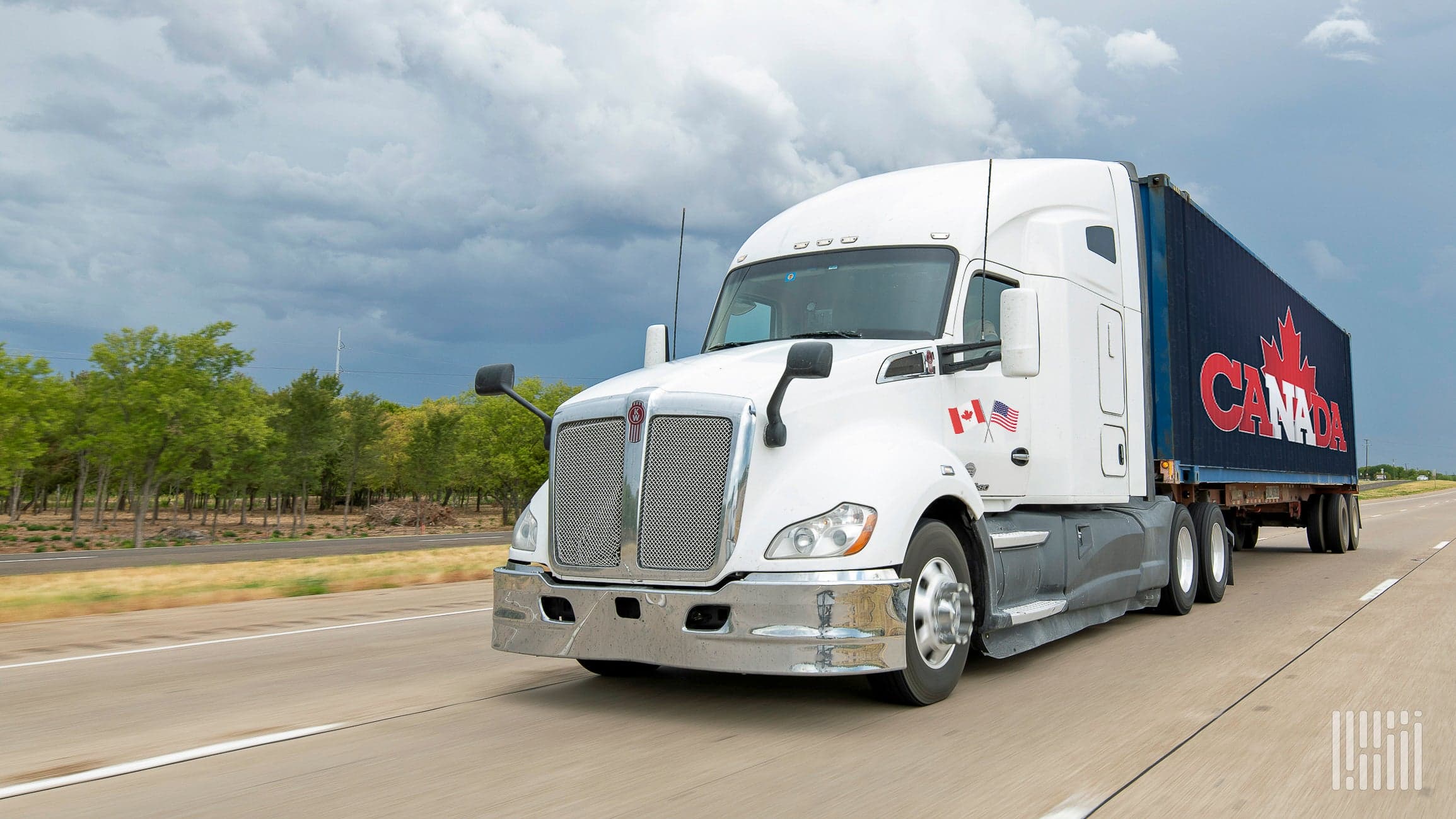
President Donald Trump on Monday announced sweeping new 50% tariffs on roughly $20 billion worth of Canadian imports. The post Trump hits Canadian imports with new 50% tariffs, escalating trade fight appeared first on FreightWaves.
Source Lens
Industry Context
Useful background context, but lower-priority than direct platform, community, or operator intelligence.
Impact Level
medium
Use this briefing to decide whether your team needs an immediate workflow, policy, or reporting change.
Key Stat / Trigger
No single quantitative trigger surfaced in this report.
Focus on the operational implication, not just the headline.
Full Coverage
President Donald Trump on Monday announced sweeping new 50% tariffs on roughly $20 billion worth of Canadian imports, reviving trade tensions with one of the largest U. S. trading partners and creating fresh uncertainty for cross-border supply chains.
The Trump administration used an obscure trade authority—Section 338 of the Tariff Act of 1930—to target a broad range of Canadian products after U. S. officials accused Canada of discriminating against U. S. exports of automobiles, dairy products and alcoholic beverages. The new duties are scheduled to take effect in 30 days.
Administration officials said the tariffs are intended to offset what they describe as Canada’s “unreasonable and discriminatory” treatment of U. S. commerce. “Canada, unlike other partners and allies, continues to retaliate against the U. S. for its efforts to rebalance trade and protect U. S. industry in national-security sensitive sectors,” U. S.
Trade Representative Jamieson Greer said in a news release. Unlike previous tariff actions, the new duties will apply even to goods that qualify for preferential treatment under the U. S. -Mexico-Canada Agreement (USMCA), according to the White House, signaling a significant escalation in trade policy between the neighboring countries.
The Trump administration exempted energy products, potash, critical minerals, fish and products already covered under Section 232 national security tariffs, including steel, aluminum and certain automotive products. According to the White House, Canadian imports of U. S. motor vehicles fell about 22%—or $5.
6 billion—from April 2025 through March 2026 compared with the previous year, while imports from other countries increased. The Trump administration also said Canadian imports of U. S. alcoholic beverages declined about 81%, or $582 million, after most Canadian provinces removed U. S. alcohol products from retail shelves.
Officials further criticized Canada’s dairy quota system, arguing it gives more favorable treatment to European suppliers than American exporters. Cross-border freight could face renewed uncertainty The latest tariffs inject new uncertainty into one of the world’s largest trading corridors.
Canada ranked as the United States’ second-largest trading partner behind Mexico in May with $66. 1 billion in two-way trade, with hundreds of billions of dollars in annual cross-border commerce moving by truck, rail and other modes. U. S. -Mexico commerce reached $87. 2 billion in May.
Manufacturers in the automotive, construction materials, food and beverage sectors rely heavily on integrated North American supply chains that frequently cross the border multiple times during production.
While many transportation sectors avoid the direct impact because energy products, critical minerals and certain automotive products are excluded, freight tied to affected consumer and industrial goods—including beverages, machinery, building materials and other manufactured products—could experience higher costs, sourcing changes or shifting trade flows if the tariffs remain in place.
The announcement also comes as Washington prepares to renegotiate the USMCA, adding another layer of uncertainty for shippers, carriers, manufacturers and customs brokers that depend on predictable North American trade rules. Canada signals potential retaliation The tariffs immediately drew calls for retaliation north of the border.
Ontario Premier Doug Ford said Canada should answer the new measures “tariff for tariff, dollar for dollar” if they take effect, raising the prospect of another round of reciprocal trade actions similar to those seen during earlier tariff disputes, according to The New York Times.
The White House said only China and Canada have chosen to retaliate against recent U. S. tariff actions rather than negotiate broader trade agreements with the administration. The administration also sought to distinguish Monday’s action from Trump’s recent comments suggesting tariffs could be tied to Canadian wildfire smoke.
Administration officials told reporters the new Section 338 tariffs are based solely on alleged trade discrimination involving motor vehicles, alcohol and dairy. Why it matters: The new tariffs represent one of the most aggressive U. S.
trade actions against Canada in decades, threatening to disrupt North American supply chains, raise costs for cross-border shippers and manufacturers, and complicate upcoming USMCA negotiations at a time when Mexico has become the United States’ largest trading partner.
The post Trump hits Canadian imports with new 50% tariffs, escalating trade fight appeared first on FreightWaves.
Original Source
This briefing is based on reporting from Freightwaves. Use the original post for full primary-source context.
Style
Audience