But no pandemic high: Asia-US container rate at $9,600
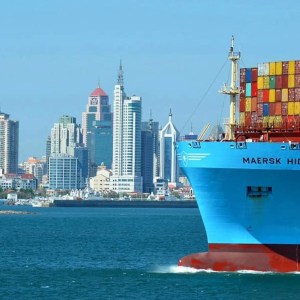
Trans-Pacific container rates remain near peak-season highs amid resilient U.S.-bound demand and congestion in Asia. The post But no pandemic high: Asia-US container rate at $9,600 appeared first on FreightWaves.
Source Lens
Industry Context
Useful background context, but lower-priority than direct platform, community, or operator intelligence.
Impact Level
medium
Use this briefing to decide whether your team needs an immediate workflow, policy, or reporting change.
Key Stat / Trigger
No single quantitative trigger surfaced in this report.
Focus on the operational implication, not just the headline.
Full Coverage
Resilient U. S. -bound demand, Far East port congestion and blanked sailings are keeping trans-Pacific spot rates near their early July highs, even as Asia-Europe pricing continues to slide from peak-season levels.
The divergence follows an unusually early east-west peak season that began in May and lifted container spot rates sharply through early July, according to analyst and SONAR data contributor Freightos (NASDAQ: CRGO).
On the trans-Pacific, shippers appear to be sustaining demand ahead of China’s Golden Week holiday, while the absence of a late-July tariff increase may have removed an incentive for an abrupt pullback in U. S. -bound imports.
Asia-West Coast spot rates increased 4% last week to more than $8,100 per forty foot equivalent unit (FEU), while East Coast prices were essentially unchanged at about $9,600 per FEU. The elevated levels reflect a combination of strong cargo demand, weather-related port congestion in the Far East and carrier capacity management through blanked sailings.
Some canceled sailings are likely the result of vessel delays and network disruptions caused by congestion, the analyst said. But carriers are also reducing capacity in anticipation of softer volumes during the Golden Week period and a broader easing in demand once the peak season ends later in October. window. googletag = window.
googletag || {cmd: []}; googletag. cmd. push(function() {var gptSlot = googletag. defineSlot('/21776187881/FW-Responsive-Main_Content-Slot1', [[300, 100], [320, 50], [728, 90], [468, 60]], 'div-gpt-ad-1709668545404-0'). defineSizeMapping(gptSizeMaps. banner1). addService(googletag. pubads()); googletag. pubads(). enableSingleRequest(); googletag. pubads().
collapseEmptyDivs(); googletag. enableServices(); setInterval(function() {if (! document. hidden) {googletag. pubads(). refresh([gptSlot]); } }, 30000); }); googletag. cmd. push(function() {googletag.
display('div-gpt-ad-1709668545404-0'); }); Cancellation data still points to relatively firm demand compared with prior years, suggesting carriers have less need to withdraw capacity than they typically would as the traditional peak-season window closes.
Pandemic comparison overstated Current trans-Pacific pricing has prompted comparisons with the pandemic-era market, but the latest levels remain well below the extremes reached during the Covid-19 import surge. Freightos Baltic Index data show that Asia-West Coast prices exceeded $20,000 per FEU in September 2021, when extraordinary U. S.
import demand collided with severe port congestion. During that period, carriers often did not move spot cargo booked at base rates unless shippers paid premium surcharges, pushing benchmark levels to historic highs.
Freightos said that the current market is more comparable to the 2024 peak season, when Red Sea diversions constrained effective vessel capacity. Today’s trans-Pacific rates are placing considerable pressure on shippers, but they are still far from the unprecedented levels of 2021.
Europe trades cool Asia-Europe spot prices continued to decline as peak-season volumes moderated. window. googletag = window. googletag || {cmd: []}; googletag. cmd. push(function() {var gptSlot = googletag. defineSlot('/21776187881/fw-responsive-main_content-slot3', [[728, 90], [468, 60], [320, 50], [300, 100]], 'div-gpt-ad-1665767553440-0').
defineSizeMapping(gptSizeMaps. banner1). addService(googletag. pubads()); googletag. pubads(). enableSingleRequest(); googletag. pubads(). collapseEmptyDivs(); googletag. enableServices(); setInterval(function() {if (! document. hidden) {googletag. pubads(). refresh([gptSlot]); } }, 30000); }); googletag. cmd. push(function() {googletag.
display('div-gpt-ad-1665767553440-0'); }); Rates from Asia to North Europe fell 15% last week to about $3,700 per FEU. That is down from a July high near $6,000 per FEU, though it remains roughly $1,000 per FEU above levels seen before peak season began in late May.
Asia-Mediterranean rates fell 7% to approximately $3,900 per FEU, after exceeding $7,000 per FEU in July. Unlike North Europe prices, Mediterranean rates have now fallen back to roughly their May level. Trade laneLatest rateWeekly changeRecent peak comparisonFar East–U. S. West CoastMore than $8,100/FEUUp 4%Near peak-season highsFar East–U. S.
East CoastAbout $9,600/FEURoughly flatNear peak-season highsAsia–North EuropeAbout $3,700/FEUDown 15%Down from nearly $6,000/FEU in JulyAsia–MediterraneanAbout $3,900/FEUDown 7%Down from more than $7,000/FEU in July Capacity and congestion split markets The sharper retreat in Mediterranean prices likely reflects a greater increase in effective capacity on that lane as more vessels resume Red Sea transits, Freightos said.
North Europe trades, by contrast, continue to face constraints from congestion at regional hubs and inland disruptions, including low water on the Rhine River. window. googletag = window. googletag || {cmd: []}; googletag. cmd. push(function() {var gptSlot = googletag. defineSlot('/21776187881/fw-responsive-main_cont
Original Source
This briefing is based on reporting from Freightwaves. Use the original post for full primary-source context.
Style
Audience