How to Evaluate Amazon DSP Campaign Performance Using Amazon Marketing Cloud
SellerApp's 2026 benchmark report (based on $3B+ in ad spend across 33,000+ brands) shows Amazon DSP native reporting fails to reveal cross-channel influence, audience overlap, or new-to-brand acquisition — Amazon Marketing Cloud (AMC) fills those gaps. Platform-wide CPM rose 47.46% YoY to $7.82 while CPA fell 5.65%, meaning efficiency gains are possible but require deeper attribution analysis.
As Amazon ad costs rise (CPM up 47% YoY), brands that rely on siloed campaign metrics will over-invest in DSP with no incremental return, accelerating margin compression for advertisers who don't adopt AMC-level measurement.
Brands optimizing DSP on native attributed ROAS alone are likely double-counting conversions already captured by Sponsored Ads, inflating DSP's apparent value. Pull AMC path-to-conversion and audience overlap queries to identify whether DSP is truly acquiring new customers or cannibalizing existing Sponsored Ads traffic.
Operational Impact
This story may require teams to revisit workflows, monitoring, or platform assumptions.
Bottom Line
DSP native reports lie — AMC shows who actually converted and why.
Source Lens
Industry Context
Useful background context, but lower-priority than direct platform, community, or operator intelligence.
Impact Level
medium
DSP native reports lie — AMC shows who actually converted and why.
Key Stat / Trigger
CPM increased 47.46% YoY to $7.82 across $3B+ in managed Amazon ad spend
Focus on the operational implication, not just the headline.
Full Coverage
Amazon DSP campaign performance is harder to evaluate than native reports make it seem. Campaign-level metrics can show spend, conversions, and attributed revenue, but they rarely reveal whether DSP is acquiring new customers, influencing Sponsored Ads conversions, or simply reaching the same shoppers repeatedly.
SellerApp’s 2026 Amazon Advertising Benchmark Report, based on $3B+ in managed ad spend across 33,000+ brands, shows why deeper analysis matters as DSP takes a larger role in Amazon advertising.
Amazon Marketing Cloud (AMC) helps connect the missing pieces, allowing advertisers to analyze customer journeys, cross-channel interactions, audience overlap, and new-to-brand acquisition instead of optimizing campaigns on attributed metrics alone.
In this guide, you’ll learn how Amazon Marketing Cloud helps evaluate Amazon DSP performance beyond standard attribution metrics, which AMC analyses matter most, and how SellerApp combines DSP reporting with AMC insights to turn complex campaign data into faster, more informed optimization decisions. Quick Guide: What Is Amazon Marketing Cloud?
(A Brief Overview)The Limitations of Native DSP ReportingUnderstand Whether Your Campaigns Are Expanding Reach or Repeating ItReconstruct the Customer Journey Instead of Measuring the Final ClickSeparate Customer Acquisition From Customer RetentionOptimize Frequency Before It Becomes WasteMeasure How DSP and Sponsored Ads Work TogetherApplying AMC Insights to Optimize DSP CampaignsCommon Pitfalls and Constraints to ConsiderFinal Takeaway: From Attributed Metrics to Proven ImpactFrequently Asked Questions What Is Amazon Marketing Cloud?
(A Brief Overview) Amazon Marketing Cloud (AMC) helps advertisers see how their Amazon Ads work together, connecting customer interactions across campaigns to reveal what drives conversions and growth. The difference is important because native DSP reporting measures campaign performance, while AMC explains customer behavior across campaigns.
Native Amazon DSP reporting focuses primarily on campaign-level performance, measuring metrics such as impressions, clicks, conversions, and attributed revenue.
While these metrics indicate how individual campaigns performed, they rarely explain how customers moved between advertising channels before converting or whether a campaign generated incremental business outcomes.
The Limitations of Native DSP Reporting Amazon DSP reporting provides valuable operational metrics, but campaign optimization becomes increasingly difficult as advertising strategies expand across multiple channels. What Native DSP Reports Show Native DSP reports provide campaign-level metrics such as impressions, clicks, spend, and attributed conversions.
For advertisers running multiple campaigns, these metrics make it possible to monitor individual campaign performance and manage day-to-day delivery. The problem is that each campaign is largely evaluated on its own.
Where Campaign-Level Reporting Falls Short Consider a brand running prospecting campaigns through Amazon DSP while simultaneously investing in Sponsored Products and Sponsored Brands. Native reports can show how each campaign performed independently, but they cannot explain how those campaigns influenced one another.
For example: Did a DSP campaign introduce customers who later converted through Sponsored Products? Are multiple campaigns competing for the same audience? Is increasing frequency improving conversions, or simply inflating media costs? These are customer-journey and cross-channel questions that campaign-level reporting alone cannot answer.
The Cost of Optimizing in Silos This limitation becomes more important as advertising costs rise. SellerApp’s benchmark report found that platform-wide CPM increased by 47. 46% year over year to $7. 82, while CPA declined by 5. 65%, conversion rates improved to 11. 02%, and ROAS increased to 3. 14x.
The data shows that higher media costs do not necessarily mean lower advertising efficiency. Instead, performance increasingly depends on how effectively advertisers allocate budgets, coordinate channels, and interpret customer behavior.
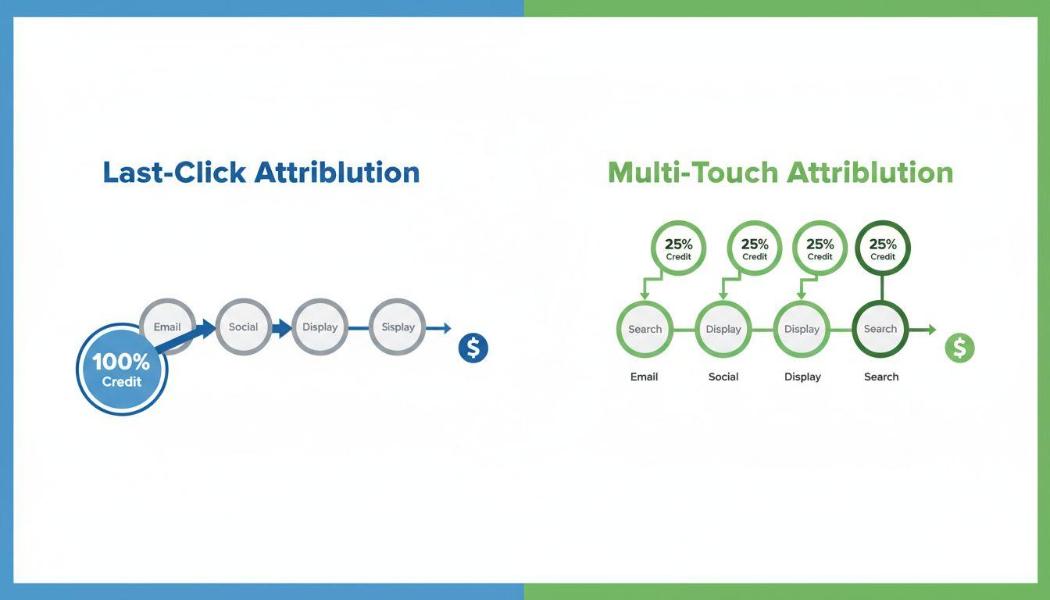
Why Customer-Journey Context Matters Optimizing individual campaigns without understanding their contribution to the broader customer journey can lead to misleading conclusions. A campaign that appears inefficient under last-touch attribution may, in reality, play a critical role in introducing new customers or influencing future conversions.
Without that context, advertisers risk cutting campaigns that contribute to growth simply because another channel received the final conversion credit.
Customer-Journey Context Matters Integrating DSP Data With Amazon Marketing Cloud AMC connects advertising exposure, engagement, and conversion data across Amazon Ads, allowing advertisers to evaluate how channels work together instead of independently.
Rather than asking which campaign generated the last click, advertisers can evaluate which combination of touchpoints
Run AMC's new-to-brand overlap query against your DSP prospecting campaigns — if NTB rate is below 40%, your DSP budget is retargeting existing customers, not expanding reach.
In the next 30 days, set up AMC frequency analysis reports to cap DSP impression frequency before it inflates CPM without incremental conversions.
Original Source
This briefing is based on reporting from SellerApp Blog. Use the original post for full primary-source context.
Style
Audience