

Why the freight industry needs Certified Fraud Compliance Officers
Banks learned years ago that fraud prevention requires more than instinct or technology alone. They built compliance roles, documented procedures, and repeatable verification processes designed to reduce risk and stand up in court. FreightWaves believes the transportation industry is now entering that same shift. The post Why the freight industry needs Certified Fraud Compliance Officers appeared first on FreightWaves.
Source Lens
Industry Context
Useful background context, but lower-priority than direct platform, community, or operator intelligence.
Impact Level
medium
Use this briefing to decide whether your team needs an immediate workflow, policy, or reporting change.
Key Stat / Trigger
No single quantitative trigger surfaced in this report.
Focus on the operational implication, not just the headline.
Full Coverage
The freight industry has spent years investing in technology to stop cargo theft and freight fraud. Companies now use onboarding platforms, monitoring systems, identity verification tools, fraud scoring, tracking software, and AI-driven analytics to help reduce risk. Yet despite all of these tools, freight fraud continues to grow.
That is because technology alone does not create consistency inside daily operations. A system can raise a warning, flag unusual activity, or verify a document, but someone inside the company still has to follow the process correctly and make the right decision before freight moves.
That is the reason the Certified Fraud Compliance Officer program was created through the FreightWaves Leadership Institute. The goal of CFCO is to help bring a compliance mindset into freight operations. For years, many companies in transportation have relied heavily on speed, instinct, and surface-level checks during carrier setup and load booking.
If something looked wrong, teams investigated further. If nothing stood out, the load usually moved forward. The problem is that modern freight fraud rarely looks suspicious at first glance. Most organized theft groups know exactly how to appear legitimate long enough to gain control of freight.
Modern cargo theft no longer starts with someone breaking into a trailer or cutting a lock at a warehouse. Many of today’s cases begin with fake identities, manipulated documents, spoofed email domains, compromised communication, or fraudulent carrier accounts.
Criminal groups study how brokers operate and understand where pressure exists inside the workflow. They know companies move quickly and employees handle large volumes of freight. They also understand that operations teams often depend on systems to raise alerts automatically.
Most of the time, the fraud works because everything appears normal on the surface until the shipment disappears. why compliance matters in freight The freight Industry needs more than technology. It needs structure around how decisions are made. Financial institutions learned this lesson years ago.
Banks do not rely on employees to simply notice fraud when something feels wrong. They build layered procedures, create standards, document workflows, and assign compliance officers to help make sure those processes are followed consistently. The purpose is not to assume every employee will make the perfect decision every time.
The purpose is to reduce operational exposure through consistency and accountability. Freight has not traditionally worked that way. In many transportation companies, carrier onboarding, dispatching, and shipment release decisions still depend heavily on individual judgment.
One employee may thoroughly verify every detail while another skips steps because of time pressure. One office may follow a strict process while another depends almost entirely on experience and instinct. Organized theft groups take advantage of those gaps. They do not need every employee to miss something.
They only need one inconsistent process to create an opening. The CFCO program was designed to help companies close that gap. The course is not built to turn freight professionals into investigators or law enforcement officers.
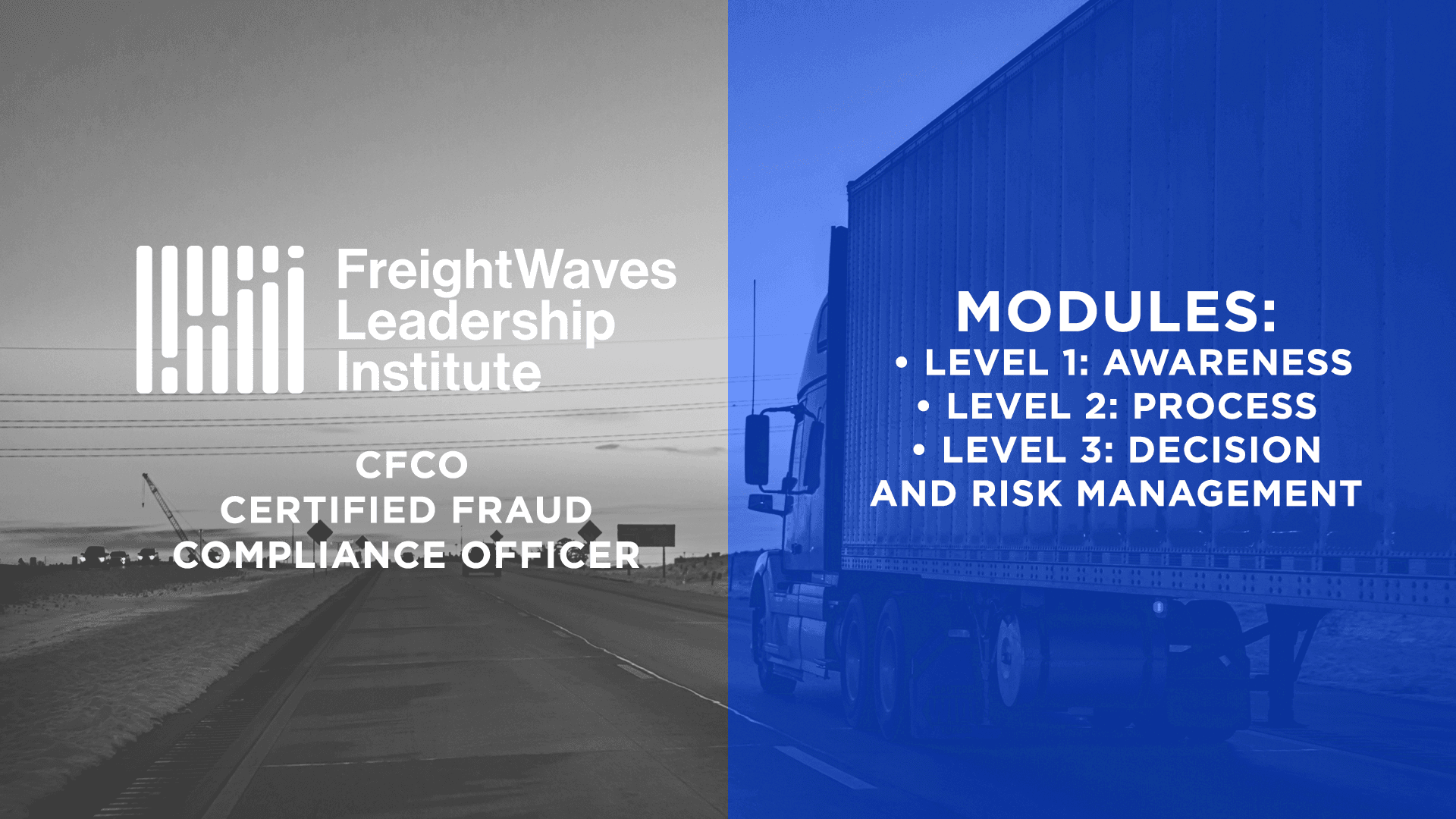
It is designed to help operations teams follow a repeatable verification process, understand how modern fraud works, recognize when information does not line up, and make better decisions before control of a shipment changes hands. building a certified fraud compliance officer The course is built around three areas: awareness, process, and risk management.
Level 1 focuses on awareness and helps explain how modern freight fraud actually happens. It covers identity manipulation, carrier fraud, communication compromise, shipment diversion, and the ways organized groups gain access to freight. Level 2 focuses on process and helps companies create repeatable workflows that reduce inconsistent reviews.
Level 3 focuses on risk management and decision-making. It teaches teams how to evaluate layered information, escalate concerns properly, and make stronger operational decisions when something does not fully line up. This conversation is becoming even more important as legal pressure on the industry continues to grow.
The recent Supreme Court decision tied to the Montgomery broker liability case raised serious questions across transportation about carrier selection, operational oversight, and broker responsibility. Whether companies agree with the ruling or not, the message to the industry is becoming clear.
Companies will increasingly need to show that they have structured processes, documented procedures, and trained personnel responsible for reducing operational risk before freight moves. That is where a Certified Fraud Compliance Officer can become critical inside an organization. A CFCO helps create accountability and consistency across teams.
Employees have someone they can go to with questions about verification, onboard
Original Source
This briefing is based on reporting from Freightwaves. Use the original post for full primary-source context.
Style
Audience