

NEW: Maersk shifts SoCal import containers to UP from BNSF
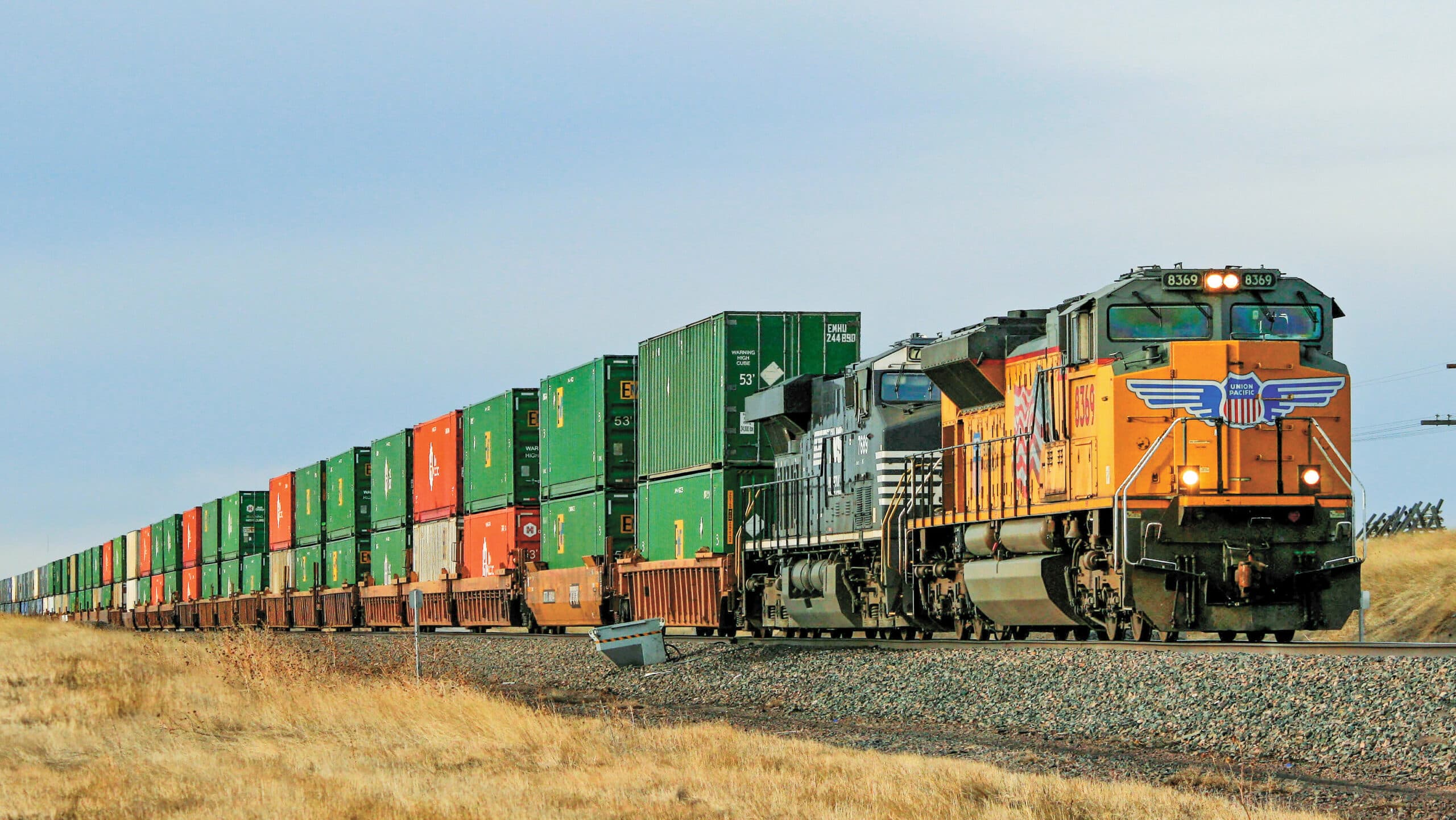
The world’s second-biggest ocean container line makes a major rail shift for containers moving inland out of Southern California. The post NEW: Maersk shifts SoCal import containers to UP from BNSF appeared first on FreightWaves.
Source Lens
Industry Context
Useful background context, but lower-priority than direct platform, community, or operator intelligence.
Impact Level
medium
Use this briefing to decide whether your team needs an immediate workflow, policy, or reporting change.
Key Stat / Trigger
No single quantitative trigger surfaced in this report.
Focus on the operational implication, not just the headline.
Full Coverage
In Southern California, Big Blue has moved to Big Yellow and away from Big Orange. Maersk, the world’s second-busiest container line, has switched most of its eastbound container traffic moving out of the Southern California port complex from BNSF Railway to Union Pacific Railroad.
Data specialist RailState said Maersk (OTC: AMKBY) has concentrated nearly all of its outbound intermodal volume from the Port of Los Angeles-Long Beach on UP’s Sunset Route and off of BNSF’s Southern Transcontinental route. Omaha-based UP (NYSE: UNP) has grown its share of Maersk volume there from single digits to about 59%, RailState said.
“Shifts like this are almost invisible from the outside,” according to a blog post by marketing chief Daniel Devoe of RailState, which extrapolates data from a sweeping network of cameras aimed at rail lines. “Railroads and shippers keep them private, and the volumes don’t surface in quarterly reports until months later, if ever.
By reading the ID on every container that passes a sensor, RailState tracked this shift as it happened.” RailState chart shows all of the new UP volume is moving over the Sunset Route in green, and that traffic on its parallel Los Angeles & Salt Lake route has stayed light throughout. Maersk currently has contracts with both UP and BNSF (NYSE: BRK-B).
The shift also comes as UP extended a $300 peak season surcharge on intermodal traffic moving out of Southern California. RailState in a recent report found that Union Pacific volume from Southern California to Chicago had been rising in recent weeks.
Approximately 1,000 TEUs of Maersk’s weekly Southern California outbound volume have shifted to Union Pacific, which now handles 77% of Maersk’s volume in that region.
These shipments are primarily routed via UP’s Long Beach-to-Chicago service, reaching the Global 4 terminal near Joliet, Illinois, and the Long Beach-to-Dallas corridor, industry observers say. “A change like this is hard to see from the outside.
The volumes may turn up later in a quarterly report, but that can take months, and many shifts are never announced at all,” said Devoe. Throughout the tracking period, Maersk transported 100,559 TEUs east along this corridor, with 90% previously handled by BNSF.
However, after UP maintained only a single-digit share through mid-May, the volume began to shift rapidly. By the week of June 1, UP’s share surpassed 50% for the first time, climbing to approximately 76% by the week of June 8. Since the transition started in late May, UP has accounted for roughly 59% of the total volume.
The shift comes just as the peak shipping season moves into high gear, and UP presses its case for a transcontinental merger with Norfolk Southern (NYSE: NSC). BNSF has been an outspoken critic of the merger.
As an integrated logistics provider, Maersk continuously balances inland capacity across our rail partners to ensure reliable service for customers, particularly heading into peak season,” Maersk said in an email to FreightWaves.
“We don’t discuss the commercial terms of our rail relationships, but our priority is delivering consistent transit and capacity for our BCO customers across all U. S. inland corridors. Where routing adjustments affect specific customers, we work directly with them to manage the operational details.”
FreightWaves has also reached out to UP and BNSF for comment. This article was updated June 29 to add a statement from Maersk. Subscribe to FreightWaves’ Rail e-newsletter and get the latest insights on rail freight right in your inbox. Read more articles by Stuart Chirls here.
Read more: California: First ILWU strike against sugar giant in decades Oregon port OKs federal rail grant agreement for multimodal project Norfolk Southern CEO says railroad must focus on today and tomorrow Rail, ocean access backs new Americold cold chain facility at eastern Canada port CSX officially opens $495 Baltimore intermodal rail tunnel project The post NEW: Maersk shifts SoCal import containers to UP from BNSF appeared first on FreightWaves.
Original Source
This briefing is based on reporting from Freightwaves. Use the original post for full primary-source context.
Style
Audience