

This U.S. state just banned public funding for port automation
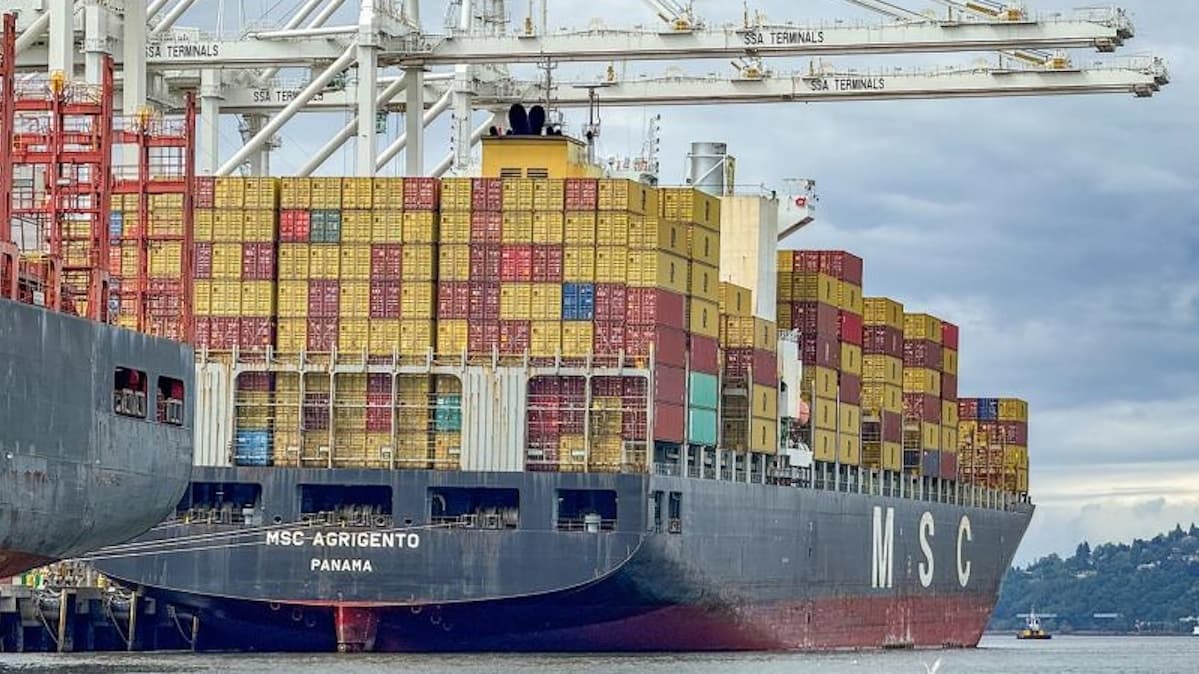
Washington state permanently banned public funding for automated container handling at Seattle and Tacoma ports, which handle 3.3 million TEUs annually. The law protects maritime jobs by preventing taxpayer-funded automation while still allowing zero-emission human-operated equipment.
Slower port automation at major West Coast gateways means continued efficiency gaps versus Asian ports, potentially keeping shipping costs higher and transit times longer. Sellers should diversify supplier geography and monitor port performance metrics to avoid supply chain bottlenecks.
This reflects broader tension between labor protection and supply chain efficiency, potentially accelerating the shift of import volumes to automated East Coast ports and affecting regional shipping costs.
Review supplier concentration in Seattle/Tacoma port regions -- if above 30% of inventory, diversify to East Coast or Southern California ports.
Monitor container dwell times at Seattle and Tacoma ports in your logistics dashboard to identify delays before they impact stock levels.
Bottom Line
Washington automation ban means slower West Coast ports for sellers.
Source Lens
Industry Context
Useful background context, but lower-priority than direct platform, community, or operator intelligence.
Impact Level
medium
Washington automation ban means slower West Coast ports for sellers.
Key Stat / Trigger
3.3 million TEUs handled annually by Seattle and Tacoma ports
Focus on the operational implication, not just the headline.
Full Coverage
A new state law means two major U. S. West Coast ports won’t be tapping public funds for automated container handling equipment. Washington Gov.
Bob Ferguson in March signed state Senate bill 5995 into law, which aims to protect maritime jobs by ensuring that public investments in port decarbonization do not lead to the replacement of human workers with robots.
The measure ensures a permanent ban on automation funding by repealing a “sunset clause” that would have allowed the prohibition to expire on Dec. 31, 2031. The law covers fully automated equipment if it is remotely operated or monitored, regardless of whether a human can intervene or control it.
A the same time, port districts are still explicitly authorized to use public funds for zero and near-zero emission equipment, provided it remains human-operated. The restriction applies to both individual port districts and port development authorities in Washington, including Seattle and Tacoma. The hubs rank ninth and tenth among U. S.
gateways, handling about 3. 3 million TEUs annually. The International Longshore and Warehouse Union has approximately 42,000 members at ports along the West Coast, including Washington.
Automation in 2024 became a flashpoint during longshore contract negotiations when a three-day strike by the International Longshoremen’s Association shut down container handling at dozens of East and Gulf Coast ports.
Port employers and dockworkers eventually agreed to a new six-year pact that provides for job protections but also permits the introduction of semi-automated cranes and other equipment. Studies have shown U. S.
ports, particularly those on the West Coast, rank poorly on efficiency because congestion, labor constraints, and landside bottlenecks slow vessel turnaround. A recent World Bank Container Port Performance Index showed Asian ports taking 13 of the top 20 places in 2023 and East Asia leading again in 2024.
This article was updated April 14 to correct that Gov. Bob Ferguson signed SB 5995 into law. Read more articles by Stuart Chirls here.
Original Source
This briefing is based on reporting from Freightwaves. Use the original post for full primary-source context.
Style
Audience