

£36bn abandoned at checkout as mystery shop exposes delivery failures
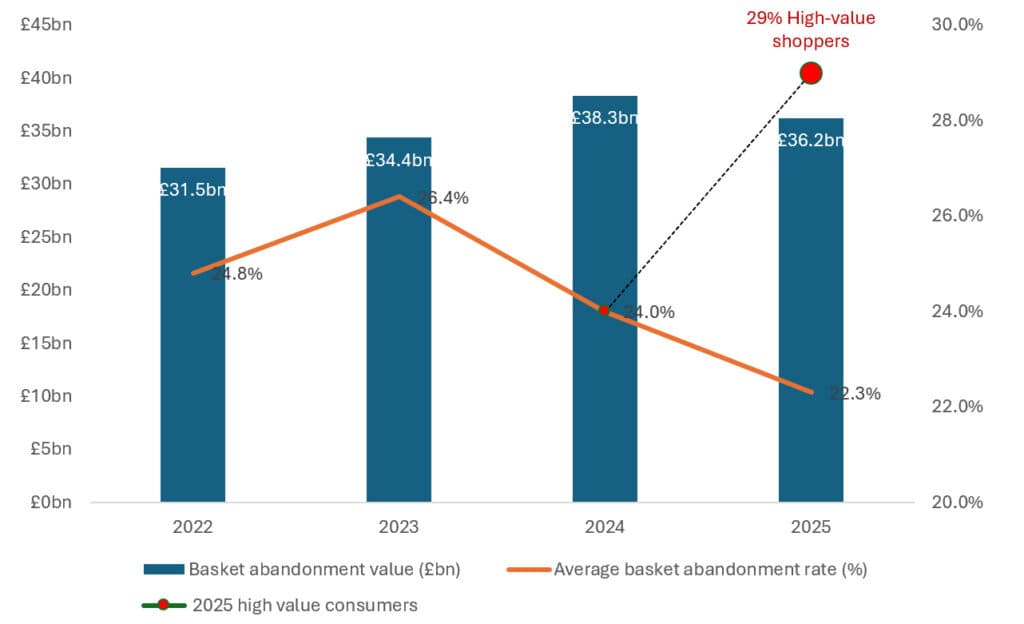
UK retailers lost £36bn in 2025 due to poor delivery options, with 29% of high-value shoppers abandoning carts over delivery issues. Mystery shop of 100 retailers found 77% charge above the £3.50 acceptable delivery fee limit.
US marketplace sellers face similar delivery expectation gaps - customers want 5+ delivery options but most offer under 3. Check your delivery speed promises during peak periods; 29% of retailers missed their stated delivery windows in this study.
Delivery expectations continue rising across all channels, making fulfillment speed and choice key competitive differentiators beyond just price and product quality.
Audit your checkout delivery options - if offering fewer than 4 choices, add same-day or pickup options to reduce abandonment among high-value customers.
Review delivery promise accuracy in Seller Central metrics - missed delivery windows drive 73% of customers to avoid repeat purchases.
Bottom Line
Poor delivery options cost retailers £36bn in abandoned carts.
Source Lens
Industry Context
Useful background context, but lower-priority than direct platform, community, or operator intelligence.
Impact Level
medium
Poor delivery options cost retailers £36bn in abandoned carts.
Key Stat / Trigger
£36bn lost to delivery-related cart abandonment in 2025
Focus on the operational implication, not just the headline.
Full Coverage
Research agency Retail Economics and delivery management firm GFS placed 100 orders with 100 UK retailers, revealing how poor delivery propositions are still costing retailers sales, trust and loyalty £36bn worth of non-food online baskets are still abandoned at checkout for delivery-related reasons.
Poor delivery options caused high-value shoppers to abandon more than one in four (29%) of their shopping carts in 2025, compared to 22% abandoned by all shopper types. 61% of shoppers value delivery choice over delivery cost. High-value shoppers expect to see 5 delivery options at checkout – the average offered by retailers is 2. 6.
73% of shoppers are less likely to buy again from a retailer that fails on the delivery promise – our mystery shop found that 29% of retailers either missed or nearly missed their delivery promise. 3 in 5 (59%) of all shopper types have abandoned a purchase and/or a retailer because the delivery experience did not meet their expectations.
76% of high-value shoppers are willing to pay extra for premium services – 15% of retailers offer neither next-day delivery or express. Shoppers say £3. 50 is the upper limit of acceptability when it comes to standard delivery fees; however, 77% of retailers charge more than this.
A new report from Retail Economics and GFS reveals that £36bn of non-food online sales were lost at checkout in 2025 as retailers continue to fall short of rising consumer expectations around delivery.
The high-value shoppers – those who buy online most frequently and spend the most – are particularly likely to abandon, showing how retailers are disappointing the shoppers who matter most.
£36bn still lost to basket abandonment in 2025 The report is centred on a mystery shop conducted during peak trading in December 2025, in which Retail Economics placed 100 online orders with 100 UK mid-market non-food retailers.
Each order was tracked end-to-end across five pillars: cost, speed, choice, reliability and communication, and sustainability, generating more than 3,000 data points and building a detailed benchmark of real-world delivery performance at the busiest point in the retail calendar.
The mystery shop reveals that many retailers are still struggling to deliver consistently when pressure is highest. Nearly a third of retailers either missed their stated delivery promise or only delivered on the final estimated day, underlining the extent to which delivery remains a weak point in the customer journey.
The findings suggest that delivery is no longer just a back-end operational issue, but a front-line driver of conversion, loyalty and margin. When delivery propositions are too expensive, too limited or too unreliable, shoppers are prepared to walk away – and increasingly unlikely to return.
The report combines the mystery shop with a nationally representative survey of 2,000 UK shoppers. Together, the two datasets show a widening gap between what shoppers now expect and what many retailers still provide.
Nearly six in ten shoppers (59%) say they have abandoned a purchase because the delivery options did not meet their needs, rising to 73% among high-value shoppers – those who are younger, more affluent and shop online more frequently.
In a highly competitive market, poor delivery is not just losing retailers a single sale, but putting long-term customer value at risk. Peak trading exposed where delivery still falls short The mystery shop shows that reliability is only part of the problem. Retailers offered just 2.
6 delivery options on average, well below the five options the most frequent online shoppers expect as standard. The audit also highlights a disconnect on price. Shoppers say £3. 50 is the upper acceptable limit for standard delivery, yet 77% of retailers charge more than this, with the average fee reaching £3. 95.
At the same time, 51% of shoppers say they have abandoned a purchase because delivery charges did not meet expectations. Taken together, the findings point to a delivery market that still too often forces shoppers into compromise – whether on cost, speed, choice or convenience.
Missed promises damage trust and future sales Reliability remains one of the clearest pressure points in the online customer journey. The mystery shop found that 29% of retailers either missed their stated delivery promise or only delivered on the final estimated day during peak. The consequences are significant.
Nearly three-quarters of shoppers (73%) say they are less likely to shop again with a retailer that misses its own delivery promise, rising to 79% among the most affluent shoppers. The report argues that many retailers still treat delivery as a cost centre, rather than a lever for growth.
With shoppers willing to pay more for urgent or higher-value purchases, and with free delivery now largely conditional on basket thresholds, delivery presents a clear opportunity to increase basket size, segment customers and protect margin – but only where the underlying service is reliab
Original Source
This briefing is based on reporting from Tamebay. Use the original post for full primary-source context.
Style
Audience