

Muted air cargo peak season activity signals weaker H2
Pricing is shifting in shippers' favor, with the global air cargo spot rate down 6% month over month, Xeneta reported.
Source Lens
Industry Context
Useful background context, but lower-priority than direct platform, community, or operator intelligence.
Impact Level
medium
Use this briefing to decide whether your team needs an immediate workflow, policy, or reporting change.
Key Stat / Trigger
No single quantitative trigger surfaced in this report.
Focus on the operational implication, not just the headline.
Full Coverage
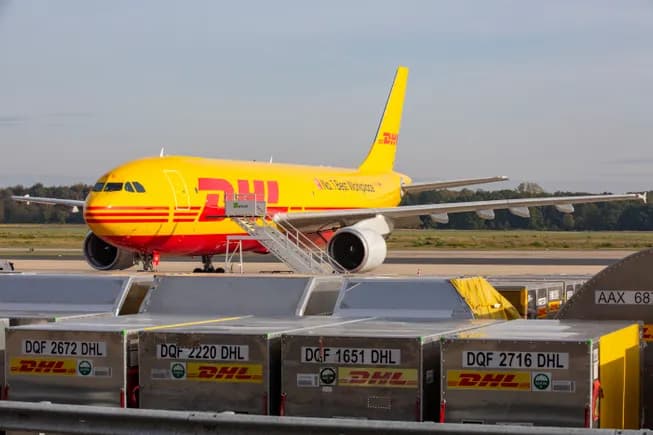
An article from Dive Brief Muted air cargo peak season activity signals weaker H2 Pricing is shifting in shippers’ favor, with the global air cargo spot rate down 6% month over month, Xeneta reported. Published Aug. 13, 2026 Kelly Stroh Senior Editor Share Copy link Email / Print License Add us on Google A DHL aircraft.
Air cargo spot rates from Northeast and Southeast Asia to North America are up 33% since late February, Xeneta reported. Courtesy of DHL Listen to the article 2 min This audio is auto-generated. Please let us know if you have feedback.
Dive Brief: Softening air cargo rates and little evidence of peak season activity points to a weaker market outlook in the second half of 2026, according to an Aug. 6 report from Xeneta. Spot rates valid for up to one month increased 28% year over year in July to $3. 12 per kilogram, per Xeneta. However, rates were down 6% month over month.
“In all the conversations we’ve had with our shipper community, in only one was there talk of peak seasons charters,” Chief Airfreight Officer Niall van de Wouw said. “This is another signal of the lower expectation for the coming months.”
Dive Insight: While spot rates are still significantly higher year over year — with prices up 41% in May and 38% in June — rates have started to swing backwards as expected, van de Wouw said. However, with the Iran war continuing to drive oil and fuel volatility, the decline will “be taken in small steps, not the big jumps shippers endured on the way up.”
“Airlines will be fighting tooth and nail to avoid reducing rates as quickly as they went up,” van de Wouw said. “It’s not in their interests to lower rates quickly, but there is some relief for shippers with the market on a downward trajectory year-on-year.” July By the numbers 4% YoY increase in global air cargo volumes $3.
12 Average spot rate per kilogram, up 28% YoY 33% Average spot rate increase from Northeast Asia to North America from the week starting Feb. 23 to the week starting July 27 33% Average spot rate increase from Southeast Asia to North America from the week starting Feb.
23 to the week starting July 27 27% Average spot rate decrease from Europe to North America from the week starting Feb.
23 to the week starting July 27 61% Global dynamic load factor, which measures volume and the weight of cargo flown, as well as available capacity, up two percentage points YoY Meanwhile, air cargo demand saw a 4% year-over-year increase in July, which is less than the 8% year-over-year increase posted in June.
Artificial intelligence-related goods continue to fuel demand on the Transpacific trade lane, Xeneta reported. Spot rates from Northeast and Southeast Asia to North America were both 33% higher than late February. While still elevated, the increase is still relatively lower than the levels recorded in June.
However, many market factors are still at play for the second half of the year. Last month, for instance, Xeneta noted that AI-related goods will continue to drive Transpacific demand, while the Iran war continues to impact ocean shipping capacity, boosting air cargo activity.
Further, elevated inventory due to shipper frontloading on the ocean side may dampen air cargo demand in the months ahead. “The air freight market twists and turns of 2026 may still bring more surprises,” van de Wouw said. Recommended Reading 3 factors that may shape the air cargo market in H2 By Kelly Stroh • Aug.
3, 2026 AI, semiconductors drive June air cargo demand By Kelly Stroh • July 8, 2026 Add us on Google Share Copy link Email / Print License Filed Under: Logistics, Freight, Air Cargo
Original Source
This briefing is based on reporting from Supply Chain Dive. Use the original post for full primary-source context.
Style
Audience