

Retailers — eager for cash — sell off rights to potential tariff refunds
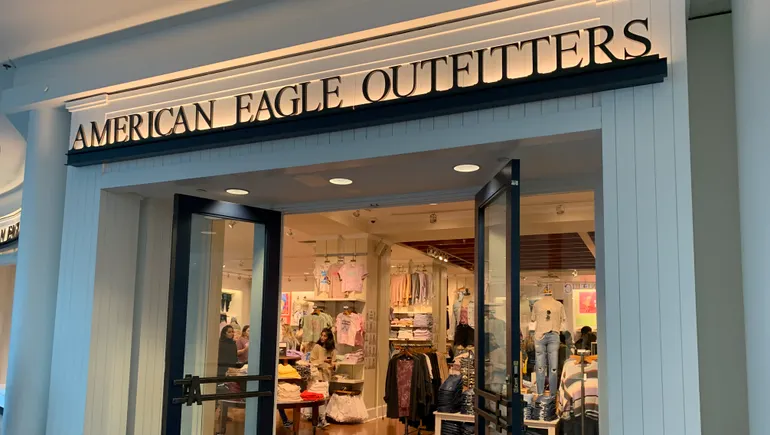
A secondary market has emerged for retailers, such as American Eagle Outfitters and The Children's Place, to get capital quicker by monetizing tariff refunds.
Source Lens
Industry Context
Useful background context, but lower-priority than direct platform, community, or operator intelligence.
Impact Level
medium
Use this briefing to decide whether your team needs an immediate workflow, policy, or reporting change.
Key Stat / Trigger
No single quantitative trigger surfaced in this report.
Focus on the operational implication, not just the headline.
Full Coverage
An article from Retailers — eager for cash — sell off rights to potential tariff refunds A secondary market has emerged for retailers, such as American Eagle Outfitters and The Children’s Place, to get capital quicker by monetizing tariff refunds. Published Aug.
6, 2026 Dani James Reporter Share Copy link Email / Print License Add us on Google An American Eagle Outfitters store in 2020. American Eagle Outfitters in its Q1 earnings release said it had applied for about $190 million in tariff refunds. Cara Salpini/Supply Chain Dive First published on Listen to the article 5 min This audio is auto-generated.
Please let us know if you have feedback. Looking for immediate cash, some retailers sold off the economic rights to their potential IEEPA tariff refunds over the past year.
A secondary market emerged looking to purchase future refund claims from businesses amid the legal debate over President Donald Trump’s levies imposed under the International Emergency Economic Powers Act, BDO Managing Principal David Wong told Retail Dive.
At a discount on the full value, buyers offered companies cash in exchange for the rights to those potential refunds that could come to fruition if the Supreme Court ruled against those levies. The approach is referred to as tariff refund monetization.
“For the seller, a lot of the risk is purely the economics of that transaction because of the uncertainty on exactly when an importer will receive their tariff refund,” Wong said. “That's been the biggest risk.
… Do I want to take a discount on the amount that could be refunded to me and get upfront cash today, and how does that compare with the full amount plus interest on if I got that amount at a later date?”
Prior to the Supreme Court’s February ruling against those IEEPA-backed tariffs, American Eagle Outfitters in fiscal year 2025 “sold a portion of its claims for refunds of previously paid tariffs imposed under the IEEPA” to a third-party buyer. The third party bought $68. 9 million of the retailer’s refund claims for $18.
6 million in cash, according to an American Eagle Outfitters quarterly report from June 3. Since the company began receiving refunds from the government on claims, $33. 1 million was paid to the buyer as of the filing date of the quarterly report.
American Eagle Outfitters in its Q1 earnings release said it had applied for about $190 million in tariff refunds, with a $140 million anticipated net cash benefit from it. The exact discount at which buyers will purchase the potential refund rights has fluctuated based on whether the deal was initiated before or after the Supreme Court’s ruling, Wong said.
Prior to the decision, refunds could be seen trading at 30 to 40 cents on the dollar, or at a 60% to 70% discount. After the decision was made and a refund process with the U. S. Customs and Border Protection was established, Wong said refunds were seen trading around 60 cents on the dollar.
The Children's Place on March 31 entered into a claim sale and purchase agreement with Alnus Investors to sell its “claims for refunds of tariffs originally invoked under IEEPA and were previously paid to the CBP,” per the company’s latest 10-K filing. Alnus purchased an aggregate amount of $38.
2 million of these refund claims at a total purchase price of about $25. 7 million. The retailer said it used the net proceeds to partially pay down its borrowings under its ABL Credit Facility.
Such moves may have offered quick capital, but the risk was in how steep the discount was, Lawrence Griff, head of retail and consumer brands at Grant Thornton, told Retail Dive. “I just think you could face a lot of criticism if you sell it at too big a discount, and then there's clarity in the marketplace,” Griff said.
“The CFO has to weigh immediate cash to what they could actually realize if they're a little more patient.” Investment firm Oaktree Capital Management sued big box retailer BJ’s for allegedly backing out of its deal to sell its refund claim.
The firm said in its New York Supreme Court lawsuit from April that it had an agreement to purchase a $29 million refund claim from BJ’s for about $20 million, or about 70 cents on the dollar. BJ’s allegedly backed out of the deal after CBP announced in April that it would launch a tariff refund portal, per the suit.
BJ’s did not respond to Retail Dive’s requests for comment. Because of the industry's tighter working capital and seasonal inventory requirements, many retailers seek out alternative financing options, Grant Thornton’s Griff said.
However, the need to sell off tariff refund rights at a discount instead of waiting for the refund depends on the retailer’s broader positioning. “I think, for certain retailers, there's always a need for liquidity and cash,” Griff said, as some companies are feeling the squeeze on discretionary spending more than others.
“There's certain very cash-rich retailers, big-box retailers that have easy access to debt market. So I think
Original Source
This briefing is based on reporting from Supply Chain Dive. Use the original post for full primary-source context.
Style
Audience