

McCormick gets $28M tariff refund as Iran war raises costs
The spice and ingredients maker plans to use the returned funds to help mitigate higher logistics and material costs tied to the conflict.
Source Lens
Industry Context
Useful background context, but lower-priority than direct platform, community, or operator intelligence.
Impact Level
medium
Use this briefing to decide whether your team needs an immediate workflow, policy, or reporting change.
Key Stat / Trigger
No single quantitative trigger surfaced in this report.
Focus on the operational implication, not just the headline.
Full Coverage
An article from Dive Brief McCormick gets $28M tariff refund as Iran war raises costs The spice and ingredients maker plans to use the returned funds to help mitigate higher logistics and material costs tied to the conflict. Published July 2, 2026 Antone Gonsalves Reporter Share Copy link Email / Print License Add us on Google McCormick & Co.
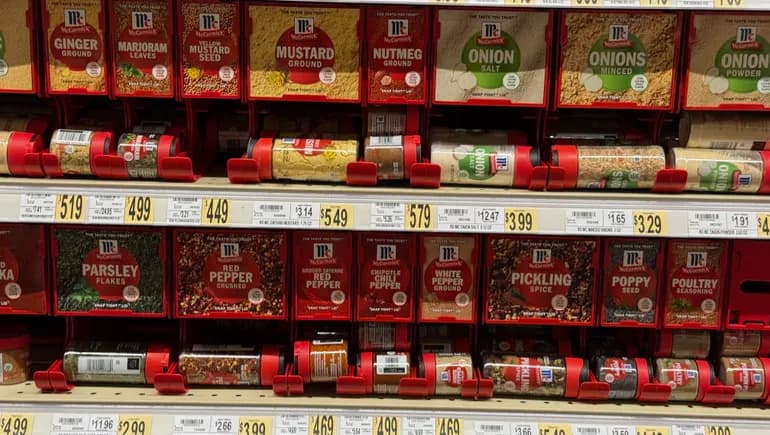
spices at a Washington, D. C. , area grocery store. McCormick expects the Iran war to contribute significantly to cost inflation, tracking at about 6% for the fiscal year, EVP and CFO Marcos Gabriel said. Christopher Doering/Supply Chain Dive Listen to the article 2 min This audio is auto-generated. Please let us know if you have feedback.
Dive Brief: McCormick & Co. received $28 million in tariff refunds in the second quarter ended May 31, with another $3 million expected in the second half of the fiscal year, EVP and CFO Marcos Gabriel said on a June 25 earnings call.
The spice and ingredients maker plans to use the tariff windfall to help offset inflationary pressures, including higher costs tied to the Iran war, Gabriel said. "I think it's important to note that the Middle East conflict is really driving more inflation that we had not contemplated before," Gabriel said.
Dive Insight: The Iran war has lifted inflation by driving up energy prices amid severe disruptions to oil shipments through the Strait of Hormuz. McCormick expects the war to contribute significantly to cost inflation, which is tracking at about 6% for the fiscal year, Gabriel said.
The higher costs the company has already faced include increased logistics spending tied to the conflict and tighter freight capacity, Gabriel said. McCormick expects the ripple effects of the Iran war to affect the company for the rest of the year.
The tariff refunds the company plans to use to offset those expenses are for country-specific duties nullified this year by the Supreme Court. McCormick had worked to reduce the levies’ impact because it sources thousands of ingredients from 80 countries, and some raw materials are not commercially available in the U. S. , executives have previously said.
Other companies have also started to get tariff refunds. BJ’s Wholesale Club has used the reimbursements to help reduce overall retail prices by about half a percentage point. Deere & Co. recovered $272 million but still forecasts about $900 million in net tariff costs due to other duties imposed by the Trump administration.
Despite the refunds, McCormick is still expecting additional tariff costs this year, primarily from a 10% global tariff, according to Gabriel. President Donald Trump imposed the tariffs under Section 122 of the Trade Act of 1974 after the Supreme Court decision. The U. S.
Court of International Trade later ruled the Section 122 duties illegal, a decision the Trump administration is appealing. Editor’s note: This story was first published in our Procurement Weekly newsletter. Sign up here. Recommended Reading McCormick ups tariff impact to $70M before mitigation efforts By Antone Gonsalves • Updated Oct.
31, 2025 Add us on Google Share Copy link Email / Print License Filed Under: Risk and Resilience, Procurement, Logistics, Manufacturing
Original Source
This briefing is based on reporting from Supply Chain Dive. Use the original post for full primary-source context.
Style
Audience