

Traffickers with 20 illegals cloned a truck. The real carrier had no idea.
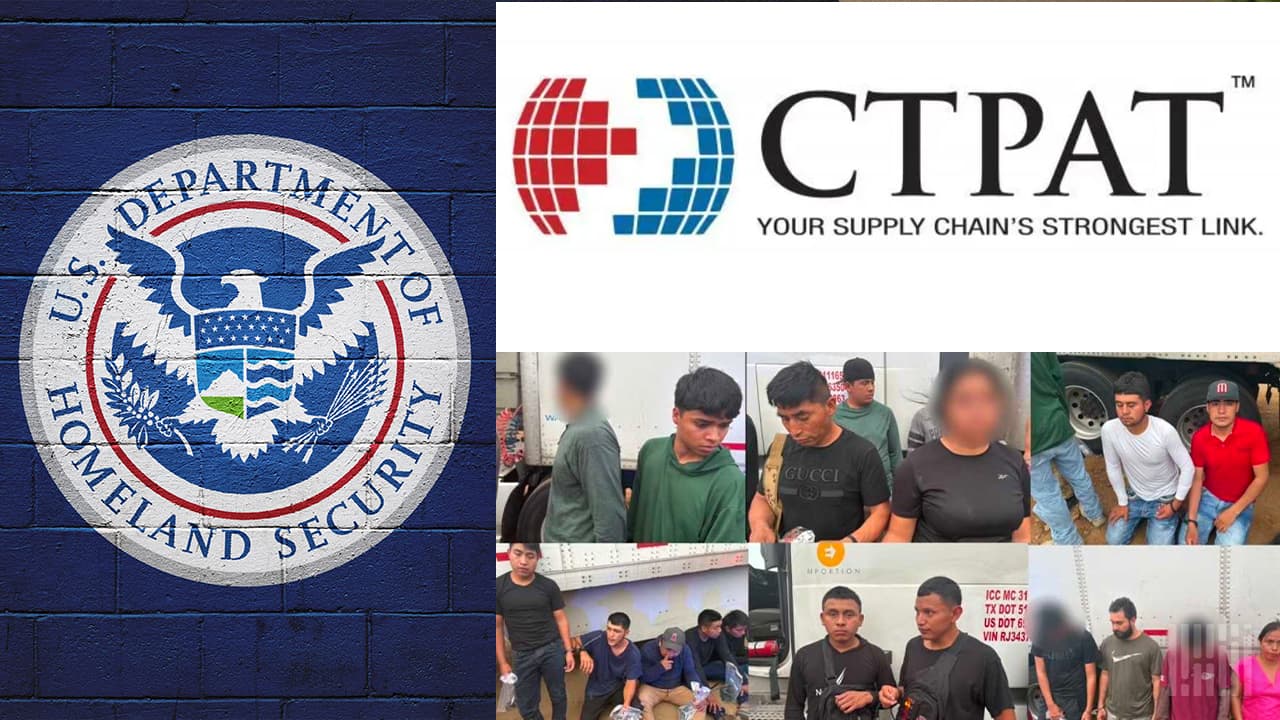
Every screening tool in the industry gave this carrier a passing grade. A 250-truck Laredo carrier with a Satisfactory rating, C-TPAT certification, and a former TXTA Chairman at the helm just got stopped in Webb County, with 20 people hidden in the sleeper berth. The carrier hauls for Tesla and CH Robinson. How good is good enough when screening a carrier? The post Traffickers with 20 illegals cloned a truck. The real carrier had no idea. appeared first on FreightWaves.
Source Lens
Industry Context
Useful background context, but lower-priority than direct platform, community, or operator intelligence.
Impact Level
medium
Use this briefing to decide whether your team needs an immediate workflow, policy, or reporting change.
Key Stat / Trigger
No single quantitative trigger surfaced in this report.
Focus on the operational implication, not just the headline.
Full Coverage
On May 22, 2026, Texas DPS troopers stopped a Volvo truck in Webb County. The driver tried to run. When troopers searched the sleeper berth, they found 20 people hidden inside, including four children. If you have seen the movie Den of Thieves, you have seen this play before. An armored truck rolls up to the Federal Reserve.
It has the right wrap, the right logos, the right uniforms, the right badges, the right paperwork. The crew walks in, loads up $100 million in cash, and walks right out. Nobody stops them because the truck looks right; it’s supposed to be there. That is what happened on I-35 in Webb County, Texas, on May 22, 2026.
Except this wasn’t a movie, and they weren’t stealing cash. They were moving people. Texas DPS troopers stopped a Volvo truck that day. The driver tried to run. When troopers searched the sleeper berth, they found 20 people hidden inside, including four children.
The truck had the door markings of Super Transport International LTD, DOT 692863, a 250-truck, 220-driver cross-border carrier out of Laredo. CTPAT certified. Satisfactory safety rating. The only problem was that it wasn’t their truck.
When we published this story yesterday, we identified Super Transport International as the carrier based on what was visible: the door markings, the DOT number, the unit number, and the logo. Everything on the outside of that truck said STI. Our FMCSA data confirmed that a unit 578 existed in their fleet.
We noted in the original article that this could be a case of carrier identity theft, as we have dealt with dozens of similar cases over the past ten years. It turned out that is exactly what it was. CBP and federal law enforcement were already on this.
After the truck was stopped and the markings were run, investigators contacted Super Transport International directly. They found that this Volvo was not in the STI fleet. The real unit 578 is a Kenworth. The cloned unit 578 was a Volvo. While the markings were identical, the trucks were clearly two different makes.
One of the things that made us suspicious enough to mention this was that we could see in Genlogs that these trucks were different makes. Same unit. That tells you one of two things happened here: it’s the best clone we’ve ever seen, or one of these trucks was removed from service, and its markings were transferred to a new truck.
With no response for comment from the business, all we had was what everyone else had. This was not a magnet slapped on a door. This was not dirty tape with handwritten DOT numbers. This was a full clone.
The logo, the unit number, the font, the colors, the writing style, all of it was manufactured, printed, and professionally applied to a relatively new Volvo truck to be identical to the trucks STI operates. Whoever did this spent money. They put thought into it. They specifically chose to clone a CTPAT certified carrier.
CTPAT stands for Customs-Trade Partnership Against Terrorism. It is a voluntary CBP program in which carriers agree to implement enhanced supply chain security protocols. In exchange, CTPAT certified carriers receive expedited processing at the border. FAST lane access. Fewer stops. Fewer searches. Faster throughput.
Laredo’s World Trade Bridge processes over a million commercial truck crossings annually. A CTPAT truck moves through that crossing with minimal scrutiny. The people who cloned this truck understood that. They did not clone some random one-truck carrier out of a residential driveway in Laredo.
They cloned a 250-truck fleet with a 29-year operating history, a Satisfactory safety rating, and a CTPAT certification that reduces the frequency of border searches on their trucks. The clone was designed to inherit the trust that STI had spent decades building.
CBP’s published CTPAT Highway Carrier Security Criteria require carriers to maintain conveyance tracking and monitoring, access controls that prevent unauthorized entry to trucks, the positive identification of all persons, and a seven-point conveyance integrity inspection before each crossing.
STI has a dedicated Safety and Risk Management team, including a former CTPAT and Security Supervisor, to implement those protocols. None of that mattered because the truck that got stopped was not in their system. It was not tracked by their telematics. It was not dispatched by their operations. It was a ghost running under their name.
I first brought carrier identity theft to the FBI three years ago. We had so many clients at TruckSafe Consulting who were discovering that people were creating fake lease agreements, claiming they were leased onto a motor carrier, putting a magnet or taped on marking on the side of the truck, and running loads under someone else’s authority.
One of our clients found out only because a vigilant scale officer called them after questioning the quality of the logo on a lease agreement that was also fake. The officer took pictures of the driver’s license, the license plate, and the truck. At that tim
Original Source
This briefing is based on reporting from Freightwaves. Use the original post for full primary-source context.
Style
Audience