

Amazon DSP Private Marketplace: What 2026 Benchmarks Reveal About Premium Inventory
The Amazon DSP Private Marketplace is the part of the platform built for advertisers who care about where their ads run, not only how many people see them. Open a typical Amazon DSP account, and most of your spend flows straight into the open exchange, where advertisers compete for the same pool of available impressions.… The post Amazon DSP Private Marketplace: What 2026 Benchmarks Reveal About Premium Inventory appeared first on SellerApp Blog. Related posts: Best Stock Inventory Management &
Source Lens
Industry Context
Useful background context, but lower-priority than direct platform, community, or operator intelligence.
Impact Level
medium
Use this briefing to decide whether your team needs an immediate workflow, policy, or reporting change.
Key Stat / Trigger
No single quantitative trigger surfaced in this report.
Focus on the operational implication, not just the headline.
Full Coverage
The Amazon DSP Private Marketplace is the part of the platform built for advertisers who care about where their ads run, not only how many people see them. Open a typical Amazon DSP account, and most of your spend flows straight into the open exchange, where advertisers compete for the same pool of available impressions.
But as Amazon advertising gets more expensive, buying more impressions is no longer enough. SellerApp’s State of Amazon Advertising 2026 found that platform CPMs rose 47% in 2025 to $7. 82, making the quality of every impression increasingly important.
This guide breaks down what a private marketplace is inside Amazon’s demand-side platform, how premium inventory changes campaign outcomes, and when Amazon DSP private deals are worth a higher CPM. Quick Gudie: What Is an Amazon DSP Private Marketplace (PMP)?
Open Exchange vs Private Marketplace vs Programmatic Guaranteed Why Premium Inventory Performs Better Than Standard Inventory When Should You Use Amazon DSP Private Marketplace Deals?
How Amazon DSP Private Marketplace Deals Actually Work Understanding Amazon DSP PMP Pricing How to Measure Amazon DSP Private Marketplace Performance Common Amazon DSP PMP Mistakes That Waste Budget How SellerApp Helps Brands Maximize Amazon DSP Private Marketplace Performance Final Takeaway: Choosing the Right Inventory Strategy for Long-Term Growth FAQ What Is an Amazon DSP Private Marketplace (PMP)?
An Amazon DSP Private Marketplace is an invite-only buying environment where selected advertisers get access to curated, high-quality publisher inventory through pre-negotiated deals, rather than competing for whatever impressions are available in the open auction.
In practice, that could mean a beauty brand securing premium video inventory around high-engagement entertainment content, a consumer electronics brand getting priority access to Connected TV placements during a product launch, or a seasonal advertiser locking in premium publisher inventory before competition spikes around Prime Day.
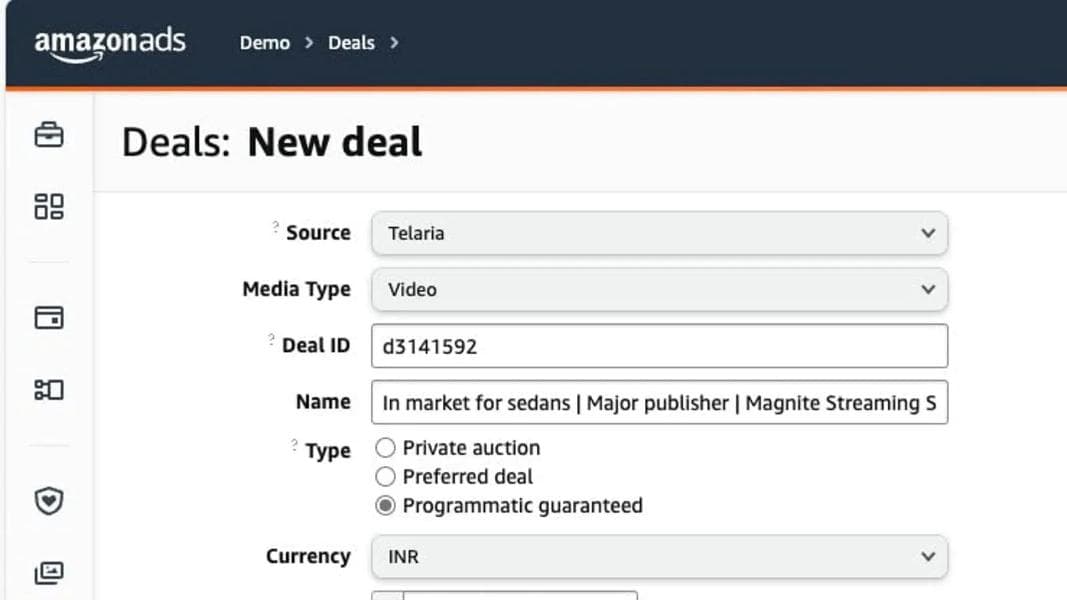
Access is controlled by a Deal ID, a unique code that ties your Amazon DSP account to a specific inventory package and its agreed terms. Depending on the deal, those terms could include a fixed CPM, a minimum auction price, priority access to impressions, or guaranteed delivery volume. The benefit is not simply access to more inventory.
It is greater control over where your ads appear, who sees them, and how reliably they are delivered.
A premium placement may cost more per thousand impressions, but the higher CPM can pay off when more of those impressions are actually viewable, completed, served in brand-safe environments, and exposed to audiences that are more likely to become new customers. That is why ROI should not be judged on CPM alone.
For example, SellerApp’s 2026 benchmarks show that 36. 5% of DSP-attributed purchases come from new-to-brand customers. For an advertiser using premium inventory for prospecting or awareness, the return may show up through stronger new-customer acquisition and incremental sales, not just immediate clicks.
In plain language, the open exchange is a public marketplace where anyone can bid. A PMP is closer to getting priority access to a curated set of placements. You may pay more to enter, but you gain more control over the quality and context of the impressions you are buying.
Amazon DSP PMP and Amazon DSP private deals are used interchangeably, which is fine day-to-day. Under the hood, the Amazon DSP Private Marketplace covers a set of Amazon DSP deal types that behave differently on price, guarantees, and competition, from Amazon DSP preferred deals to Amazon DSP programmatic guaranteed agreements.
Open Exchange vs Private Marketplace vs Programmatic Guaranteed Amazon DSP does not use a single method to buy ad inventory. Advertisers can access inventory through three main buying paths: the open exchange, private marketplace deals, and programmatic guaranteed agreements.
Each offers a different balance of scale, inventory quality, pricing control, and delivery certainty. Before choosing how to buy, it helps to see how those three paths compare. The open exchange prioritizes scale and flexibility.
The Amazon DSP Private Marketplace gives advertisers access to curated inventory through negotiated deals, while programmatic guaranteed is built for campaigns that need a fixed volume of impressions delivered at agreed terms.
FeatureOpen ExchangePrivate Marketplace (PMP)Programmatic GuaranteedAccessOpen to all biddersInvite-only via Deal IDOne-to-one publisher agreementInventory qualityMixed, variableCurated, premiumCurated, premiumPricingAuction-driven, lowest costFloor price or fixed CPMFixed, negotiated CPMDeliveryNo guaranteeNo volume guaranteeGuaranteed impressionsCompetitionHighLimited, vetted buyersNoneBest forBroad reach, testing, efficiencyQuality, brand safety, controlTentpole moments, certaintyTransparencyLowHighHigh The takeaway is not that one method wins every time.
Original Source
This briefing is based on reporting from SellerApp Blog. Use the original post for full primary-source context.
Style
Audience