Black Friday 2026 will test whether UK retailers can still grow profitably in Europe
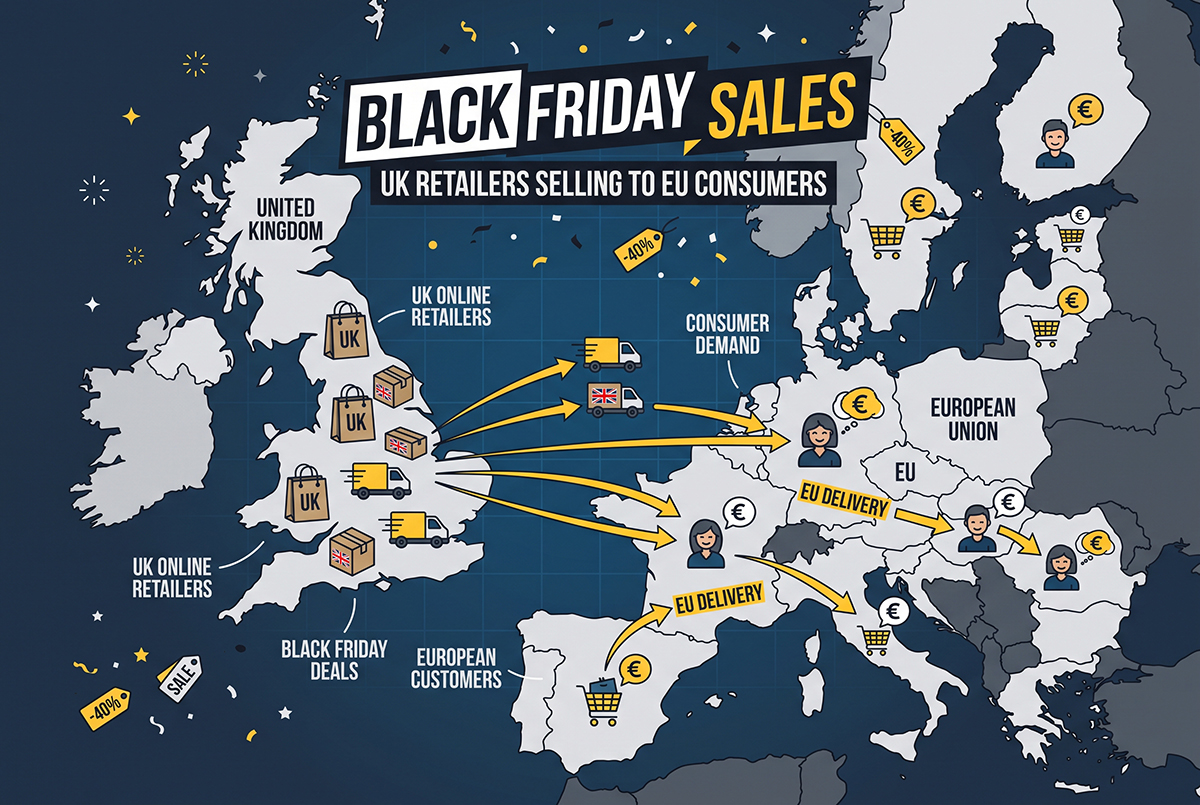
This year’s Black Friday will be the first peak trading season under the EU’s new customs rules for low-value ecommerce imports. For UK retailers selling into Europe, the challenge is no longer simply generating more orders. The real question, according to Paweł Zakielarz, CEO of Shopreturns, is what happens to margin when higher customs costs, […]
Source Lens
Industry Context
Useful background context, but lower-priority than direct platform, community, or operator intelligence.
Impact Level
medium
Use this briefing to decide whether your team needs an immediate workflow, policy, or reporting change.
Key Stat / Trigger
No single quantitative trigger surfaced in this report.
Focus on the operational implication, not just the headline.
Full Coverage
This year’s Black Friday will be the first peak trading season under the EU’s new customs rules for low-value ecommerce imports. For UK retailers selling into Europe, the challenge is no longer simply generating more orders.
The real question, according to Paweł Zakielarz, CEO of Shopreturns, is what happens to margin when higher customs costs, more complex peak-season baskets and the January returns wave are added to the equation. With Q4 planning already under way, retailers still have time to model that exposure before volumes rise.
Black Friday falls on the 27th of November this year, but the decisions that will determine its profitability are being made now. Retailers are planning promotional ranges, discounts, inventory and logistics for the most important trading period of the year. This peak will be different.
Every parcel entering the EU from outside the bloc is now subject to a €3 charge per tariff line under the new low-value import regime. It is not simply €3 per parcel. Goods sharing the same tariff classification, description and country of origin can sit on one declaration line and carry one €3 charge, regardless of the number of units.
Different categories can create separate lines. From the 1st of November, Product Identifiers are also due to become mandatory on distance-sales customs declarations, including a standardised identifier such as an EAN where one exists, a non-standardised identifier where it does not, and a merchant identifier.
For UK retailers, Black Friday will therefore be the first major stress test of the new system at peak volumes. More orders do not automatically mean more profit The €3 charge looks relatively small in isolation. The problem is what happens when it meets peak-season shopping behaviour.
Black Friday and Christmas baskets tend to contain more products and more categories. A customer who buys one item in a quieter month may buy several during peak, particularly when shopping for gifts. That matters because the number of tariff lines can increase with basket complexity. At an average of 1. 6 tariff lines per order, the duty is €4. 80. At 2.
8 lines, it rises to €8. 40. The cost per order is therefore increasing at exactly the point when retailers are processing their highest volumes. Retailers should not look at the €3 charge in isolation. What matters is the economics of the entire order. How many tariff lines are in the basket? What happens to that basket after the Black Friday discount?
What does it cost to deliver it into Europe, and what happens financially if the customer sends it back? Those are the numbers that determine whether cross-border growth is actually profitable.
– Paweł Zakielarz, CEO of Shopreturns For Zakielarz, this is the distinction retailers need to make before peak: sales growth and profitable growth are not the same thing. Black Friday discounts can change the customs calculation Promotional pricing creates another variable.
A basket that sits above €150 at full price can fall below that threshold after a significant Black Friday discount, changing the customs treatment that applies to the order. For qualifying UK-origin goods under the UK-EU Trade and Cooperation Agreement, a basket above €150 can in some circumstances be subject to 0% duty under normal tariff rules.
Discounting that same basket below €150 can move it into the €3-per-line regime. That means a promotion designed to increase conversion can also change the cost of serving the order. Retailers should therefore model planned discounts against the €150 threshold before campaigns go live.
They should also check that shipping is not being incorrectly included in the intrinsic value calculation, as this can push an order across the threshold. Peak planning is usually dominated by demand: how much will we sell, which products will convert and how aggressive should the discount be? This year there needs to be another layer to that calculation.
Retailers should model what happens to margin after the promotion changes the value and composition of the basket. A discount can change more than the selling price.
– Paweł Zakielarz, CEO of Shopreturns Gift bundles deserve particular attention Gift sets are an obvious Black Friday and Christmas product, but under the new regime they can also create one of the clearest examples of how basket structure affects cost. A four-component set can potentially create four tariff lines and €12 in duty.
Genuine retail sets can sometimes be classified under a single heading, but that needs to be established correctly rather than assumed. The question should be resolved with a customs specialist before promotional ranges are locked. The same principle applies more broadly to the Black Friday catalogue.
Retailers do not necessarily need to review every product they sell before peak. They do need to know that the HS codes and Product Identifiers attached to their promotional range are correct. From 1 November, Product Identifiers are due to become mandator
Original Source
This briefing is based on reporting from Tamebay. Use the original post for full primary-source context.
Style
Audience