

The Decision Layer: What AI in Product Discovery Means for Marketplace Sellers
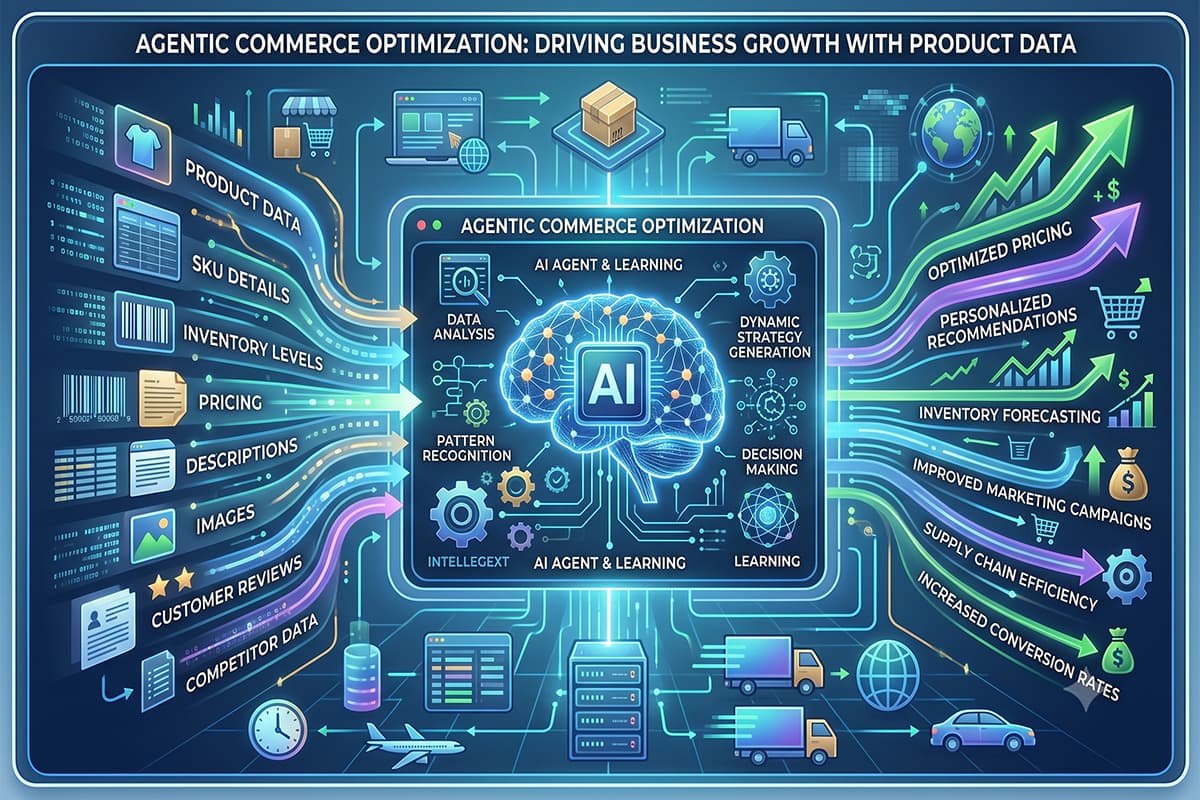
Recent moves from Amazon and Google point the same way: product data is increasingly read by a machine before a shopper ever sees a listing. Amber Bartholomeusz from ReFiBuy discusses Agentic Commerce Optimisation and the process of preparing product catalogues to be interpreted, included, and recommended by AI shopping agents. Something structural is changing in […]
Source Lens
Industry Context
Useful background context, but lower-priority than direct platform, community, or operator intelligence.
Impact Level
medium
Use this briefing to decide whether your team needs an immediate workflow, policy, or reporting change.
Key Stat / Trigger
No single quantitative trigger surfaced in this report.
Focus on the operational implication, not just the headline.
Full Coverage
Recent moves from Amazon and Google point the same way: product data is increasingly read by a machine before a shopper ever sees a listing. Amber Bartholomeusz from ReFiBuy discusses Agentic Commerce Optimisation and the process of preparing product catalogues to be interpreted, included, and recommended by AI shopping agents.
Something structural is changing in how products get discovered, and it is easy to miss inside the noise of any single shopping event. Increasingly, an AI agent sits between the shopper and the listing. It reads product data, offer data, and whatever it can infer about the shopper, then curates, explains, and narrows the field before a person sees a result.
Call it a decision layer. For brands and retailers who sell through marketplaces and other channels they do not own, it is the shift worth understanding right now, and it is bigger than any one retailer’s calendar. Two recent moments make it concrete.
Amazon put an agent in the middle of the deal At a recent Prime Day event, Amazon moved its own assistant, now unified as Alexa for Shopping, into the center of deal discovery: surfacing deals, explaining products, tracking prices, and in some cases completing the purchase. Most of the coverage fixated on sales totals.
The more durable observation is where the assistant sat in the journey. It was not a feature bolted onto the edge of the experience. It was part of how shoppers found and evaluated what to buy. It is worth being precise about what this does and does not tell us.
Traffic that reached retailers through AI assistants converted better than traffic from other channels, according to Adobe, and a year earlier that same AI traffic converted worse than average. That is a real signal about how quickly these tools are maturing.
It is also true that AI still drives a small share of total traffic, that shoppers were cautious and deal-sensitive, and that analysts disagreed on how strong the event really was. The point is not that AI won anything. The point is that AI moved to the middle of discovery, and shoppers went along with it.
Google is building the same layer, in the open Google’s announcements at its recent I/O conference show the same move taking shape, this time in the open. Universal Cart assembles products across merchants and weighs offers to help shoppers choose. Conversational Attributes ask merchants for richer, product-level context.
New merchant reporting measures how products appear inside answer engines. Where Amazon is building a closed assistant and keeping rival agents out of its store, Google is building an open, cross-surface layer that other platforms can plug into. Two strategies, one direction.
Whether the agent is walled inside a single retailer or spread across an open standard, the pattern is the same: product, offer, and shopper-context data are assembled and judged by a machine before a human is involved. The first reader of your listing is now a machine Step back from the branding and the event calendars and the shift is clear.
Discovery is becoming machine-mediated. The first reader of your product information is increasingly an AI agent, not a person. That agent decides whether your product is understood, whether it is eligible to be included in a set, and whether it is recommended, based on the data it can actually parse.
When that data is thin, inconsistent, or unreadable, the product is not ranked lower. It is left out of the consideration set before the shopper has a say. That failure mode has a name: silent exclusion. Adobe’s own analysis noted that up to 46% of some retailers’ site content is not readable by machines, which limits their visibility across these surfaces.
That is not a ranking problem. It is an eligibility problem, and it happens quietly. For sellers, this reframes an old discipline. For twenty years the job was making products findable in search and legible to humans skimming a page. The emerging job is making products interpretable by machines that research, find, and buy on a shopper’s behalf.
It is the same catalog, read by a very different reader. What the market needs to understand None of this rewards panic, and it does not reward chasing the next platform announcement. It rewards a few honest questions about your own data. Can an agent interpret your listings, or do they lean on context a human infers but a machine cannot?
Are your products represented consistently across every surface where they appear, or does the story change channel to channel? Is anything quietly missing, obvious enough that a person would fill the gap but an agent cannot?
This work has a name: Agentic Commerce Optimisation (ACO), the operating discipline for preparing product catalogs for AI-powered shopping. The discipline matters more than the acronym: treating product data as infrastructure rather than marketing exhaust.
The retailers and brands who do well in this next phase will not be the ones who reacted fastest to a single Prime Day or a
Original Source
This briefing is based on reporting from Tamebay. Use the original post for full primary-source context.
Style
Audience