

YMX Logistics Reduced a Grocery Distributor’s Yard Fleet by 36% With Its Autonomous Yard Operating System
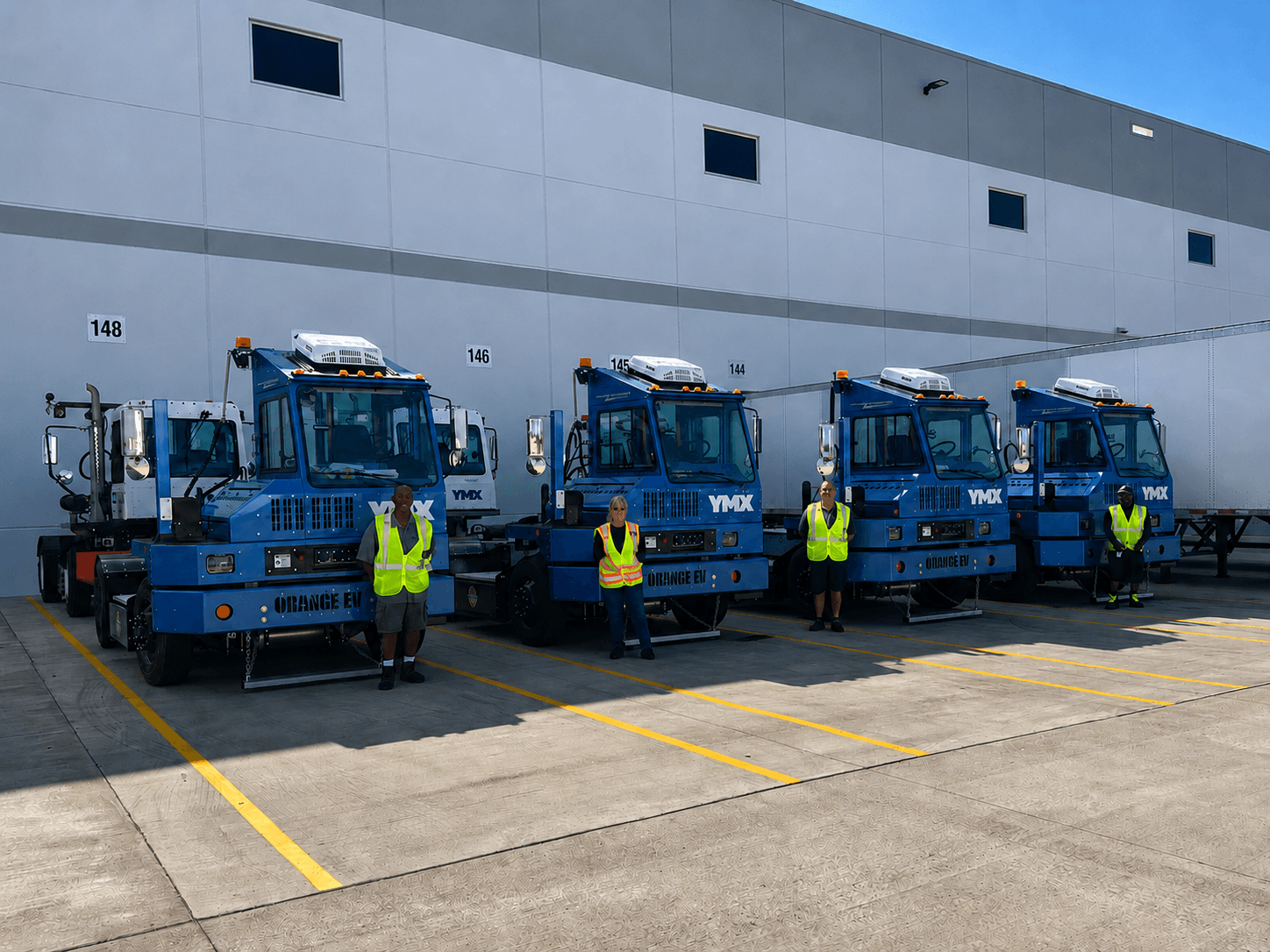
YMX Logistics was named one of the honorees in the Operational AI Integration category for the AI Excellence in Supply Chain Awards. The post YMX Logistics Reduced a Grocery Distributor’s Yard Fleet by 36% With Its Autonomous Yard Operating System appeared first on FreightWaves.
Source Lens
Industry Context
Useful background context, but lower-priority than direct platform, community, or operator intelligence.
Impact Level
medium
Use this briefing to decide whether your team needs an immediate workflow, policy, or reporting change.
Key Stat / Trigger
No single quantitative trigger surfaced in this report.
Focus on the operational implication, not just the headline.
Full Coverage
When FreightWaves launched the AI Excellence in Supply Chain Awards, the goal was to cut through the noise of an industry where “AI” has become a marketing buzzword slapped on every press release, and instead spotlight the companies that are leveraging AI in truly revolutionary ways.
The awards recognize real deployments and measurable outcomes as opposed to flashy pitches. Entries are judged on the strength of the AI application itself, how deeply it’s integrated into existing workflows, and the tangible results it produces.
This year, YMX Logistics was named one of the honorees in the Operational AI Integration category for logistics companies. The honor goes to YMX’s Autonomous Yard Operating System (YOS), which applies AI to a part of the supply chain that has historically gotten the least attention and the least investment: the yard.
The yard is where transportation and warehousing physically hand off to each other. Trailers, drivers, gates, docks, labor, safety, inventory, and sustainability initiatives all converge in the same few acres of asphalt. It’s also, according to YMX, one of the most under-optimized parts of the entire supply chain.
“Autonomous” in YMX’s naming doesn’t mean replacing yard workers or deploying autonomous trucks at scale. It means using AI to sense yard conditions, forecast labor demand, recommend decisions, automate data capture, and orchestrate workflows. All of these elements help turn the yard into a continuously improving execution layer.
YMX CEO Matt Yearling has described the shift in simpler terms. For decades, yard operations at even the largest shippers ran on “two channels on a radio and pen and paper,” with little to no visibility into how a yard was actually sized, laid out, or performing relative to what it could be.
YMX’s system is built to replace that with an operating model that measures itself and improves over time.
Simulation, Computer Vision, and a Digital Twin of the Yard The core of YMX’s approach is what the company calls a Digital Operational Twin, using yard data, service needs, and site-level constraints as inputs, then running that information through simulation and optimization models before recommending equipment, staffing, or process changes.
Rather than deploying technology first and hoping it fits, YMX models the yard, tests alternatives digitally, and validates a plan before anything changes on the ground.
Key components include AI-powered yard modeling, decision support layered on top of a yard management system, machine-learning-based labor and throughput forecasting, automated gate transactions, and spotter-based computer vision that reads trailer numbers and monitors trailer condition in real time.
An AI-driven safety intelligence layer runs alongside all of it. Unlike traditional yard management tools that mainly provide visibility, this system is built to improve execution across fleet sizing, labor planning, gate throughput, inventory accuracy, safety, EV charging, and cost.
Yearling has framed the broader arc of the industry as unfolding in stages: operational standardization, technology enablement, an electrification strategy, and finally autonomous operations, with digital intelligence and physical execution converging at the end of that journey.
Many shippers are still stuck piloting three, four, or five look-alike technology point solutions without ever fixing the operating model underneath them. Skipping the standardization step is why so many yard technology pilots stall out.
A 36% Fleet Reduction, and a Nine-Site Rollout in Six Months The clearest proof point of YMX’s solution comes from a top-five U. S. grocery distribution network. Before YMX, the site ran with minimal technology and no real forecasting layer.
After YMX deployed its operating model, technology, and optimization approach, the customer cut its yard truck fleet from 22 units down to 14 (a roughly 36% reduction) while improving throughput, safety, and control at the same time. The model that produced that result then expanded from a single site to nine sites within six months.
YMX tracks a wide set of operational, financial, safety, sustainability, and scalability metrics across its customer base: dwell time, yard driver productivity, congestion, truck wait time, empty moves, dock utilization, safety incidents, gate throughput, cost per move, asset utilization, and network consistency.
Across its book of business, YMX cites target and observed improvement ranges of 15-30% lower dwell time, 10-25% higher driver productivity, 20-40% less congestion and wait time, 15-25% fewer empty moves, 10-20% better dock utilization, and 15-30% fewer safety incidents.
The Yard Is the Missing Piece Enterprise shippers have already spent heavily on TMS, WMS, visibility platforms, and analytics, yet delays, congestion, detention, labor inefficiency, safety exposure, and rising costs keep showing up anyway. The yard sitting between those systems has remained disconnected. When the ya
Original Source
This briefing is based on reporting from Freightwaves. Use the original post for full primary-source context.
Style
Audience