

How Target plans to own the baby category as it rolls out new in-store displays
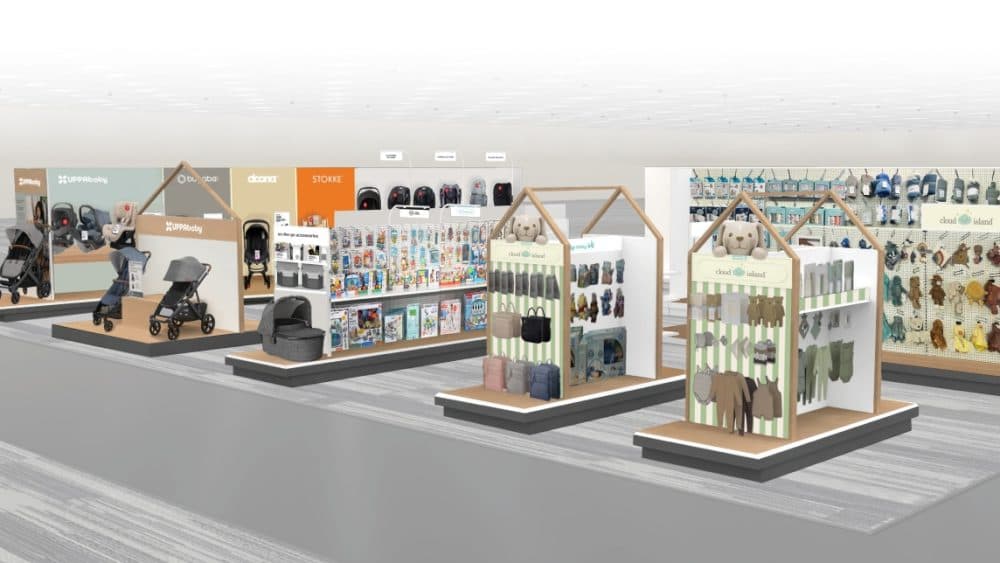
Target is rolling out Baby Boutiques in 200 stores with 2,000+ new baby items, premium brand partnerships, and free 30-minute consultations. The retailer removed crib displays to focus on faster-moving products like strollers and higher-margin premium gear.
Target's baby category expansion signals intensified competition for family-focused brands across all marketplaces. Sellers should audit their baby/family product positioning and pricing against Target's new premium assortment to avoid being undercut on features or value proposition.
This reflects the broader trend of physical retailers using experiential services and premium curation to compete against online marketplaces. Expect similar category-focused initiatives from other big-box retailers targeting high-lifetime-value customer segments.
Check your baby/family category performance in Seller Central Brand Analytics -- if declining share, audit against Target's new premium brands like Uppababy and Stokke.
Review your product consultation or customer education strategy to compete with Target's free Baby Concierge service offering.
Bottom Line
Target's baby category push means tougher competition for family brands.
Source Lens
Industry Context
Useful background context, but lower-priority than direct platform, community, or operator intelligence.
Impact Level
medium
Target's baby category push means tougher competition for family brands.
Key Stat / Trigger
200 Baby Boutiques across 37 states with 2,000+ new items
Focus on the operational implication, not just the headline.
Full Coverage
Store of the Future // April 21, 2026 How Target plans to own the baby category as it rolls out new in-store displays By Melissa Daniels Target’s latest baby aisle reset forgoes floor space for one of the most critical first-time-parent purchases: the crib.
While that might sound counterintuitive, Amanda Nusz, Target’s svp of merchandising, essentials and beauty, said the company’s sales data showed parents were far more likely to research and buy cribs online than at the store.
Removing crib displays meant the company could dedicate that floor space to faster-moving items and larger displays, and add more strollers at ground level that customers were more eager to see in person.
“We moved these lower-turning, lower-purchased categories and put in categories that were faster-turning, faster in innovation, and really emotional across apparel, toys and other aspects,” Nusz said in an exclusive interview with Modern Retail. In late March, Target rolled out “Baby Boutiques” in 200 stores across 37 states.
These sections boast more interactive displays, like strollers that can be picked up and rolled across different terrain. Those stores will also have a larger assortment of higher-priced gear like car seats from premium brands like Uppababy, Bugaboo, Stokke and Doona.
Customers will also have the option to schedule a 30-minute free in-person product consultation with a Baby Concierge from Tot Squad, a family services marketplace that has already worked with Target through its registry business.
Across its whole fleet, Target is adding more than 2,000 items, including from buzzy companies like carrier brand Wildbird and personal care brand Tubby Todd, plus an expansion of goods from baby and toddler product brand Lalo. The focus is on well-designed products, plus a variety of price points and better-for-you ingredients.
The updates coincide with Target’s turnaround plan under new CEO Michael Fiddelke, which includes a bid to reclaim its merchandising authority. The company is also putting a bigger focus on “busy families,” and ensuring they can find what they need whenever they need it. But baby is specifically a category that’s ripe for share capture, as the U. S.
lacks a dedicated baby-and-child retailer. Cara Sylvester, Target’s evp and chief merchandising officer, said during the latest earnings call that the company would make deliberate investments in elevating the baby shopping experience.
“This is a category that’s gone untouched for years, and there is so much potential in front of us,” Sylvester said, according to a transcript. Nusz told Modern Retail that Target designed the section with an eye toward shoppers at a life stage when they naturally change their buying habits.
The strategy centers on offering a more elevated experience to draw in shoppers for a big moment — like picking out their first stroller — and keep them coming back for everyday essentials.
“Having a baby is one of the few life stages where people rethink everything, including where they shop, because they are looking to simplify and kind of make their life easier,” Nusz said.
“And so we know that that moment is really important, not just because of the diapers and the gear and the food, but because of everything they need for a growing family.” Building up a premium, trending assortment In expanding the assortment, Nusz said the team conducted additional discovery work to determine which up-and-coming brands were most in demand.
That included “great style and design” across price points, more clean and better-for-you ingredients, and more premium-priced baby gear. New parents today are doing more research than ever on products, Nusz said, and the bigger assortment is meant to help increase customer loyalty and keep up with trends.
“I think you are seeing a faster evolution from even DTC to retail than there ever has been. In this category, you have to move fast because the guest keeps changing, and they’re always right.” Target specifically increased its focus on health and wellness, she said. “We made a major investment in what we call wellness and health,” she said.
“We’ve always been a leader in terms of curating items that really are thought through in terms of sustainability, organic, natural ingredients, but we leaned into that now in a bigger, bolder way.”
David Johnson, founder and CEO of dye-free medicine company Genexa, said the company is now selling a bigger assortment of its products right in the baby aisle versus the pharmacy section in the front of the store. It also launched an exclusive-to-Target “Baby’s First Sick Day” bundle that includes multiple fever and cough-support products in a zipper bag.
“Genexa is growing significantly within total pediatric, but really,
Original Source
This briefing is based on reporting from Modern Retail. Use the original post for full primary-source context.
Style
Audience