

Osprey brand owner says high supply chain costs are outpacing IEEPA tariff refunds
Helen of Troy CFO Brian Grass said there has not been a reliable pattern to the reimbursements, making it difficult to plan investments and offset supply disruptions.
Source Lens
Industry Context
Useful background context, but lower-priority than direct platform, community, or operator intelligence.
Impact Level
medium
Use this briefing to decide whether your team needs an immediate workflow, policy, or reporting change.
Key Stat / Trigger
No single quantitative trigger surfaced in this report.
Focus on the operational implication, not just the headline.
Full Coverage
An article from Dive Brief Osprey brand owner says high supply chain costs are outpacing IEEPA tariff refunds Helen of Troy CFO Brian Grass said there has not been a reliable pattern to the reimbursements, making it difficult to plan investments and offset supply disruptions.
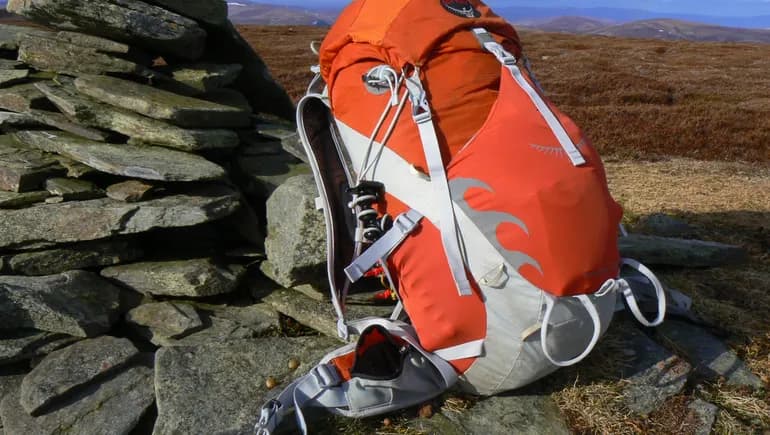
Published July 15, 2026 Phil Neuffer Lead Editor Share Copy link Email / Print License Add us on Google An Osprey backpack. Parent company Helen of Troy said it has received approval for $9. 2 billion in refunds for International Economic Emergency Act tariffs, with another $71 billion still in limbo.
" Osprey Talon 33 " by Nick Bramhall is licensed under CC BY-SA 2. 0 Listen to the article 3 min This audio is auto-generated. Please let us know if you have feedback.
Dive Brief: Helen of Troy has begun collecting refunds for tariffs invalidated by the Supreme Court earlier this year, but unclear payment cadence and higher commodity costs are complicating the benefits to its bottom line, executives said during a Q1 2027 earnings call this month.
The parent of brands such as Hydro Flask, Osprey and Drybar expects refunds totaling $9. 2 million for entries covered by the first phase of Customs and Border Protection’s efforts to return funds paid for levies enacted under the International Emergency Economic Powers Act. Thus far, the company has secured $1. 8 million of those reimbursements.
However, increased spending to avoid supply disruption, higher commodity prices, unfavorable currency fluctuations and spiking freight costs are offsetting the initial benefits from the refunds, according to CFO Brian Grass.
Dive Insight: Refunds for President Donald Trump’s IEEPA tariffs have been flowing ever since CBP launched its dedicated portal, known as Consolidated Administration and Processing of Entries, or CAPE. Companies including Nike, McCormick & Co. , Ford Motor Co. and BJ’s Wholesale Club have publicly reported their returns.
However, the payment of refunds has not been immediate for every entry, particularly as CBP continues to develop new capabilities to handle returning the $166 billion importers paid in IEEPA tariffs before the Supreme Court struck them down.
The agency launched phase two of the refund rollout at the end of last month, covering shipments awaiting reconciliation of their final duty calculations. Phase three, which would cover finally liquidated entries, could go live by the end of this month, pending an appeal by the Department of Justice.
Helen of Troy said $71 million of the IEEPA tariffs it paid were not covered during phase one of CAPE and that it is preparing to submit for additional entries now that phase two is available. During the quarter, the company endured a 110 basis-point decrease in gross profit margin, due in part to the unfavorable impact of tariffs.
The company plans to invest much of the reimbursements back into its business, including by increasing capital expenditures on product development and commercial initiatives, according to Grass.
Helen of Troy also expects to use tariff refunds to mitigate inflationary pressure on its supply chain, mirroring similar headwinds faced by manufacturers in other industries, such as Ford and McCormick. Grass said the strain began building before the Iran war, but geopolitical and supply chain disruptions have exacerbated the impact.
Thus far, cost inflation has outstripped the benefit of tariff refunds the company has secured, but the dynamic would flip if Helen of Troy receives its full reimbursement. Planning investments and projecting potential economic benefits is difficult given the unclear timing of tariff refund payments, according to Grass.
“There is a general rule that within 90 days, you should get claims approved,” Grass said. “It doesn't totally follow; there doesn't appear to us that there's a pattern that we can reliably depend on.” Recommended Reading E. l. f expects $58.
5M in tariff refunds to fuel price cuts By Antone Gonsalves • May 28, 2026 Hydro Flask, Osprey owner doubles down on Southeast Asia sourcing By Kelly Stroh • Aug. 12, 2025 Add us on Google Share Copy link Email / Print License Filed Under: Risk and Resilience, Operations Management, Procurement, Manufacturing
Original Source
This briefing is based on reporting from Supply Chain Dive. Use the original post for full primary-source context.
Style
Audience