

UPS shift away from Amazon shows bigger payoff
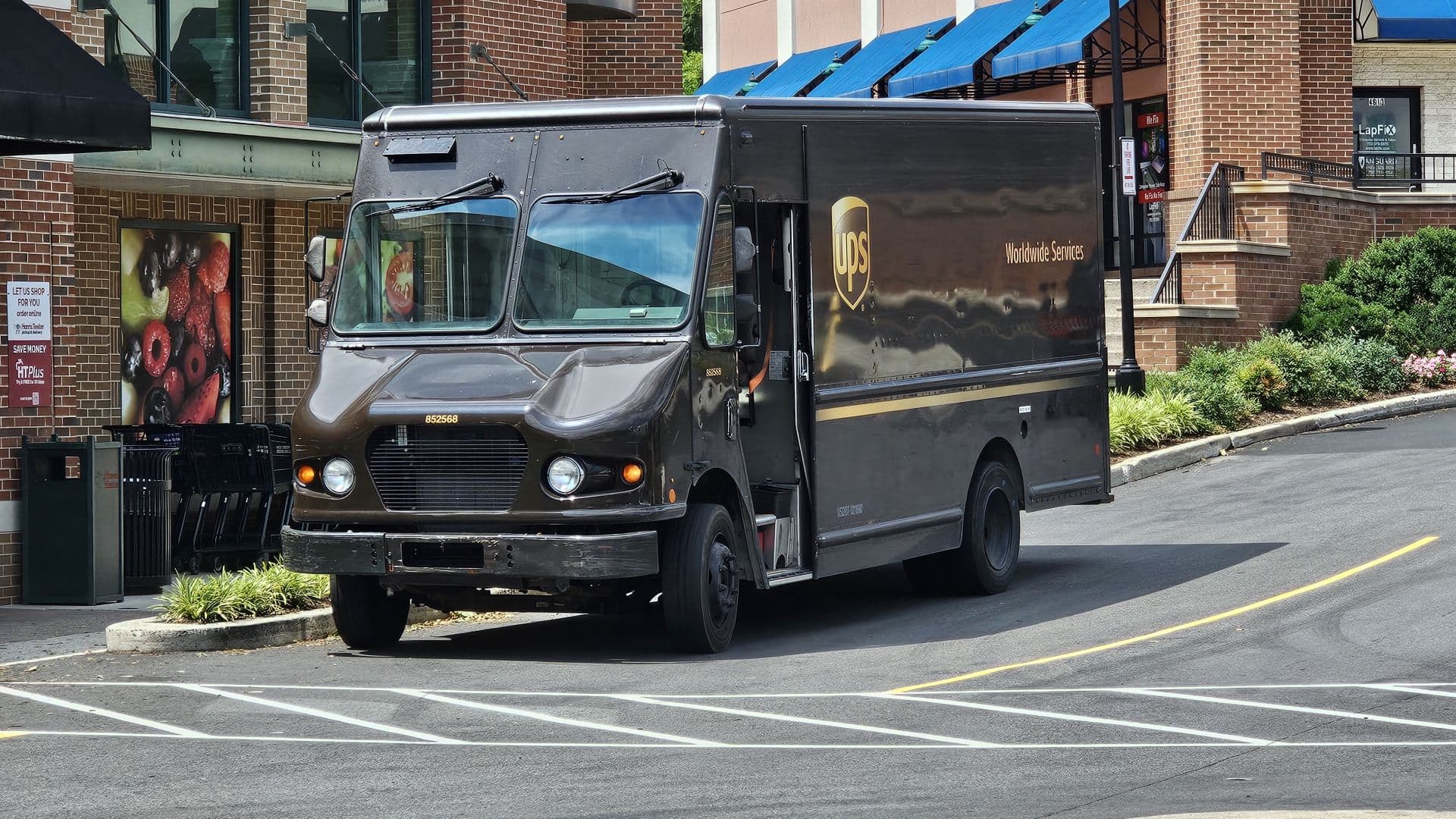
UPS said earnings improved in the second quarter as it fully ended handling low-margin Amazon shipments and continued streamlining its domestic network as it concentrates on high-quality revenue. The post UPS shift away from Amazon shows bigger payoff appeared first on FreightWaves.
Source Lens
Industry Context
Useful background context, but lower-priority than direct platform, community, or operator intelligence.
Impact Level
medium
Use this briefing to decide whether your team needs an immediate workflow, policy, or reporting change.
Key Stat / Trigger
No single quantitative trigger surfaced in this report.
Focus on the operational implication, not just the headline.
Full Coverage
United Parcel Service parcel volumes fell during the second quarter as it completed the phase out of low-margin Amazon business, but revenue per piece and profits increased behind a focus on premium shipments, efficiency gains, and strong pricing amid ongoing economic volatility. The integrated parcel and logistics giant on Tuesday reported revenues of $22.
8 billion, up 7. 6% year over year, with adjusted operating profit increasing 12% to $2. 1 billion, or $1. 76 per share, delivering a modest beat of analyst expectations. Management raised full-year guidance a notch, with revenue expected at $91. 2 billion and adjusted operating profit up 0. 5% to $8. 6 billion.
UPS (NYSE: UPS) has worked with Amazon over 18 months to eliminate unprofitable shipments from its network, which accounted for half the volume tendered by the retail marketplace — its largest customer. In total, UPS eliminated 2 million pieces per day of Amazon volume and $4. 5 billion in related expenses.
The drawdown, along with slower overall parcel demand, led UPS to initiate a network reconfiguration based on closing 150 parcel sort facilities, eliminating 30,000 positions and 50 million labor hours, and adding technology to improve the throughput of existing distribution stations.
The company closed 45 buildings in the first half of 2025, with several additional closures planned in the second half, CFO Brian Dykes said on a conference call with analysts. By the end of June, 68. 5% of U. S. volume flowed through an automated facility compared to 64% the year prior.
The cost per piece in an automated handling facility is about 28% lower than a conventional facility with mechanical systems, which spreads out unit costs and drives operating leverage. “That gives us confidence in the productivity that we should continue to deliver going forward,” he said.
Management previously identified a total of 51 facility closures this year. Amazon is still responsible for about 9% of UPS revenue, down a point from last year from 13% during the Covid e-commerce boom. The goal now is to optimize the remaining Amazon volume across the various air and ground modes. “This reconfiguration was never the destination.
It was the foundation. We now have a leaner, more automated, more agile network that will deliver operating leverage as volume grows. And importantly, incremental volume today carries materially better economics than before because of the structural changes we’ve made,” CEO Carol Tomé emphasized. Packages move through a UPS parcel sorting system.
(Photo: UPS) UPS Supply Chain Solutions posted a 7. 8% increase in revenue to $2. 86 billion, highlighting the company’s continued activity in contract logistics as rival FedEx prepares to sell its supply chain unit to Ceva Logistics.
Results were weighed down by an $891 million charge for employee separation costs associated with a voluntary program that encouraged 7,500 drivers to leave the company as part of the company’s network streamlining effort. About 80% of participating drivers departed the company in the second quarter.
Stronger pricing came from a combination of higher base rates and broad application of fees and surcharges. The TD/Cowen Freight Index quantified how fuel surcharges, higher billed weight per parcel and other fees increased prices for ground and expedited shippers at FedEx and UPS during the quarter.
UPS officials maintained that higher fuel costs negated most of the revenue increase from fuel surcharges, with international margins more impacted by fuel because there is more air volume flying longer distances, making it a larger portion of the cost base. Domestic package revenue increased 6%, driven by a 9.
3% increase in revenue per piece, while volume declined 3. 3%. When adjusting for the exit from Amazon and other low-yield delivery accounts, average daily volume actually grew in the second quarter. International package revenue increased 12. 5% with a 19% increase in revenue per piece as volume fell 5. 8%. But international operating profit slipped 7.
2% to $623 million because of higher fuel costs and extra expenses associated with having to adjust the air network to avoid the Middle East conflict zone, including contracting with third-party cargo airlines with existing permissions to fly to new destinations in the region.
The decline in international volume was led by domestic declines in Europe, with cross-border volumes decreasing 4. 2% year over year. On a positive note, volumes grew on the China-U. S. trade lane as the effects from last year’s U. S. cancellation of duty-free access for de minimis e-commerce shipments reset the market, CFO Brian Dykes said.
Earlier this month, UPS opened a new operations center in Kaohsiung to support growing customer demand for premium international logistics services in southern Taiwan. The new facility doubles the size and package processing capacity of UPS’s operations, providing customers in Gangshan Industrial Park, Gangshan Beizhou Industrial Park, Na
Original Source
This briefing is based on reporting from Freightwaves. Use the original post for full primary-source context.
Style
Audience