

Why Logistics Tech Is Failing the AI Test
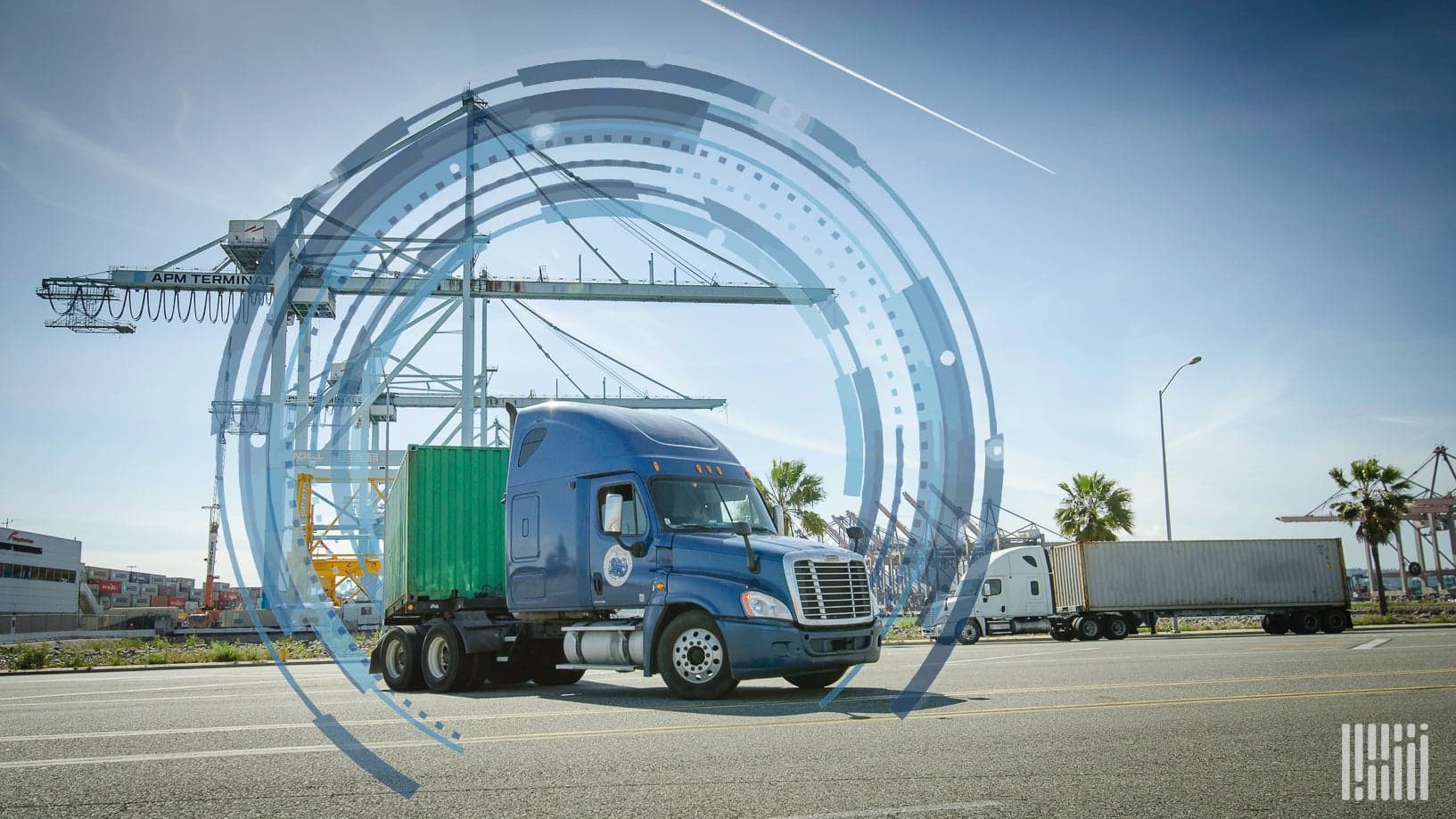
Gnosis Freight CRO Michael Rentz breaks down what operational-grade data infrastructure actually requires, and what shippers should be asking every technology vendor before they buy. The post Why Logistics Tech Is Failing the AI Test appeared first on FreightWaves.
Source Lens
Industry Context
Useful background context, but lower-priority than direct platform, community, or operator intelligence.
Impact Level
medium
Use this briefing to decide whether your team needs an immediate workflow, policy, or reporting change.
Key Stat / Trigger
No single quantitative trigger surfaced in this report.
Focus on the operational implication, not just the headline.
Full Coverage
The freight technology industry has a problem that has become more apparent as more organizations implement artificial intelligence. AI has become the dominant selling point across virtually every logistics software category, from transportation management to container visibility to customs compliance.
Carriers, forwarders, and shippers are being pitched AI-powered dashboards, AI-driven ETAs, and AI-enabled workflow automation at a pace that has outrun the industry’s ability to evaluate what any of it actually means in practice.
Michael Rentz, Chief Revenue Officer of Gnosis Freight, has a clear diagnosis for why so many of those implementations disappoint. “AI does not create accuracy, it amplifies whatever you feed it,” Rentz said. “If the underlying container data is incomplete, delayed, or conflicting, the AI does not just fail quietly.
It confidently makes the wrong call, automates the wrong action, and scales the mistake across your entire operation.” Austin McCombs founded Gnosis Freight in 2017 with a focus on building powerful container tracking software.
Over time, the company arrived at a more foundational realization that has grown more consequential as AI has entered the logistics mainstream. “We didn’t fully recognize the scale of this challenge until the platform itself demanded it,” Rentz said. “We started out focused on building great software.
What we learned is that the data infrastructure surrounding the container lifecycle has to be solved first. Without that foundation, no downstream outcome, whether it’s operational efficiency, automation, or AI execution, can be fully realized.”
Gnosis Freight’s platform, built around its proprietary container tracking engine, was designed to establish a single, validated, real-time record of every container milestone from booking through empty return. According to Rentz that foundation is less a competitive differentiator than a prerequisite most of the industry has yet to build.
“Most companies are skipping the foundation and going straight to the model,” he said, “and that’s why so many AI pilots in supply chain look great in a demo and fall apart in production.” The Data Readiness Gap The gap between AI promise and AI reality in freight operations is, at its core, a data problem, according to Rentz.
The industry is only beginning to address it. “True data readiness is rare,” Rentz said. “What we see most often is organizations that have data, but it’s fragmented across carrier portals, spreadsheets, freight forwarder emails, and legacy TMS systems with no common structure or timestamp logic.”
Data readiness, as Rentz defines it, means a single, validated, real-time record of every container milestone that every team and every system works from simultaneously. By that standard, most shippers are still early in what he describes as a data sovereignty journey.
“A lot of shippers are just stitching together three sources and hoping they agree,” Rentz said. “The ones who’ve done the work to get there are the ones seeing real ROI from automation.” When the underlying data isn’t ready, the consequences rarely show up as a dramatic system failure. More often, the team slowly loses trust in the imperfect technology.
“It looks like a demurrage bill nobody saw coming,” Rentz said. “It looks like an ETA prediction that was off by four days and nobody caught it because the system said everything was fine. It looks like an automated workflow that triggered the wrong drayage pickup because a terminal update never made it into the system cleanly.”
“The failure mode isn’t dramatic,” he continued. “It’s death by a thousand small errors that erode trust in the technology until the team stops using it and goes back to manual. That’s the graveyard most AI logistics pilots end up in, and bad data is almost always the cause.”
What Operational-Grade Data Actually Requires Gnosis Freight’s answer to the data problem is the container tracking engine at the core of the platform. Rather than routing data through third-party aggregators, Gnosis establishes direct, first-party relationships with ocean carriers, ports, terminals, Class I railroads, AIS satellite feeds, and U. S. Customs.
That first-party access, Rentz said, is foundational to what separates Gnosis’s approach from much of the rest of the market. “Unlike a lot of providers that lean on third-party aggregators, we go directly to the source,” he said.
“That relationship-first approach gives you a stronger data infrastructure, but it also opens the door to workflows the industry hasn’t been able to build before.” He points to Gnosis’s partnership with PayCargo to build the Container Payment Portal as an example of what becomes possible when ecosystem partnerships go deep enough.
But sourcing the data directly is only part of the equation. Raw data, however well-sourced, isn’t the same thing as operational-grade infrastructure. “Raw ingestion is only half of it,” Rentz said. “The validation layer is where the real wo
Original Source
This briefing is based on reporting from Freightwaves. Use the original post for full primary-source context.
Style
Audience