

Amazon delivery provider convicted in $9.4M fraud scheme
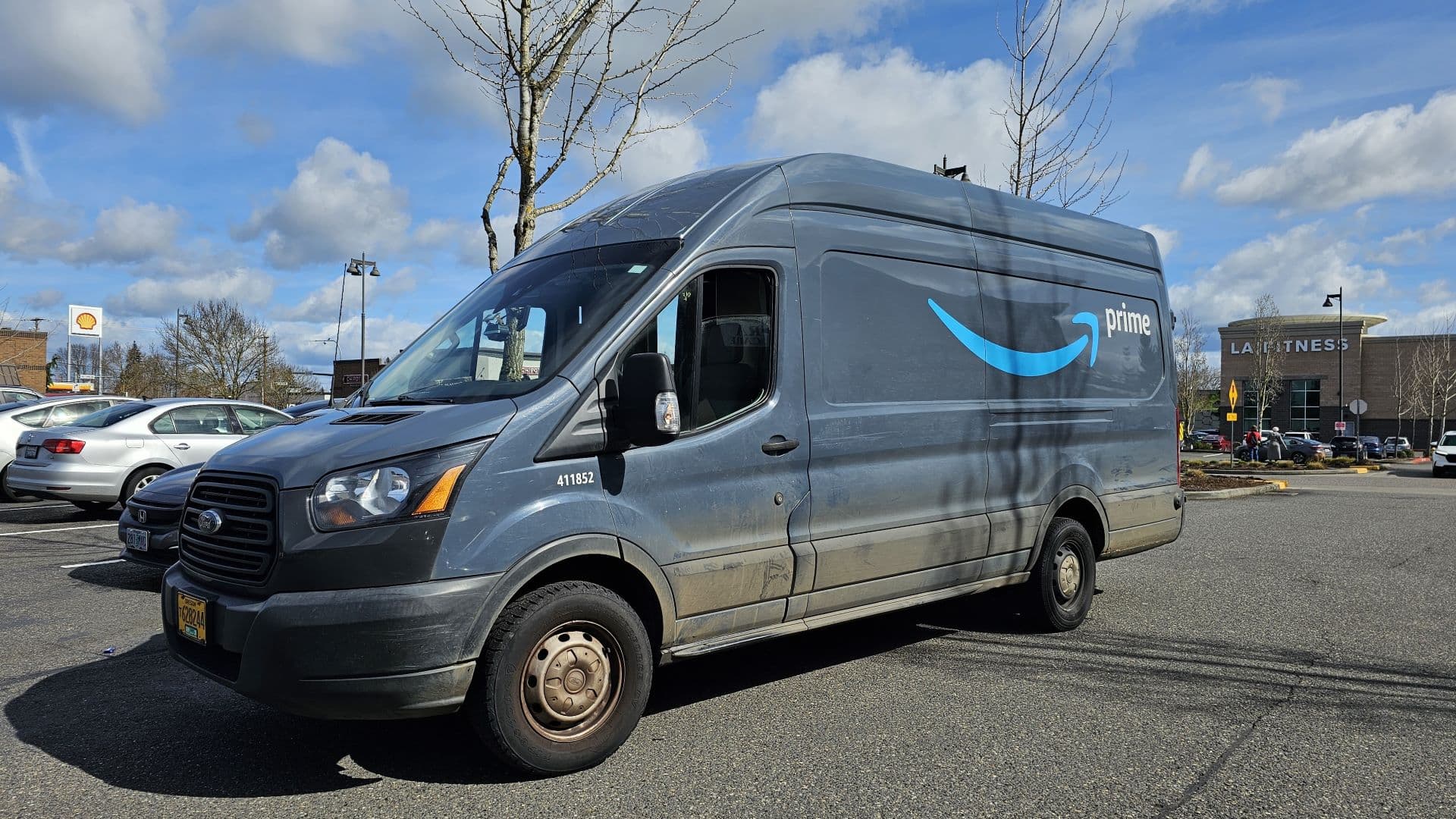
A federal jury convicted Legend Express LLC owner Brittany Hudson on 30 counts of fraud after she and an Amazon warehouse operations manager exploited internal vendor approval controls to steal $9.4M from Amazon between January-June 2022. The scheme used fake vendors and fictitious invoices approved by an Amazon insider with authority over the vendor system, funneling funds to luxury assets including a $1M home and Lamborghinis. Co-conspirator Kayricka Wortham already received 16 years and $9.4M restitution order. This is not a third-party seller fraud story — it's an inside-job exposé of Amazon's internal vendor payment controls, with direct implications for how Amazon will tighten DSP contractor oversight and vendor onboarding protocols in 2026.
The real signal here is not the conviction — it's that $9. 4M moved through fake vendor invoices for six months before detection, meaning Amazon's internal controls had a six-month blind spot in a single warehouse.
Expect Amazon to respond with tighter DSP contract audits, enhanced vendor verification requirements, and potentially slower invoice processing for all logistics partners — which translates to cash flow compression for the 2,000+ DSP operators nationwide.
For 7-8 figure sellers using Amazon's logistics ecosystem, this accelerates the platform's push toward centralized, algorithm-audited vendor systems that reduce human approval authority — raising barriers to entry for smaller DSPs and concentrating last-mile capacity among larger, compliance-heavy operators.
Starting Monday, any brand with a DSP relationship or third-party logistics arrangement tied to Amazon SFP (Seller-Fulfilled Prime) should pressure-test their delivery partner's compliance posture before Amazon does it for them.
This case is part of a broader 2026 trend where Amazon is systematically closing the human-judgment gaps in its vendor and logistics ecosystems — the same trend driving AI-based invoice verification, automated vendor credentialing, and reduced warehouse manager discretionary authority.
As Amazon tightens internal controls post-conviction, the last-mile delivery market will consolidate further around compliant, tech-enabled DSPs with clean audit trails, squeezing out the 30-40% of smaller operators who rely on relationship-based processes.
For brand executives, this is a reminder that Amazon's operational vulnerabilities — when exploited — trigger platform-wide policy responses that redistribute costs and compliance burdens directly onto sellers and logistics partners.
Audit your DSP and 3PL vendor relationships NOW: Pull your Seller Central 'Manage Orders' and 'Shipping Performance' reports and flag any fulfillment partners who haven't provided updated W-9, insurance certificates, or compliance documentation in the last 90 days — Amazon will likely mandate re-verification across the DSP network within Q2 2026, and partners caught flat-footed will face capacity disruptions during peak season.
If you operate an Amazon DSP or SFP program, immediately schedule a legal review of your vendor invoicing workflow this week — specifically ensure no single employee has both vendor-creation and invoice-approval authority (segregation of duties), because Amazon's post-conviction compliance sweep will audit exactly this control gap and DSPs without documented SOD policies risk contract suspension.
In the next 30-60 days, prepare for Amazon to roll out enhanced DSP onboarding requirements and possibly mandatory third-party audits for delivery partners — begin sourcing backup last-mile capacity in your top 3 markets now, because any DSP contract suspensions during Amazon's internal cleanup will create delivery SLA gaps that directly trigger your IPI score and Buy Box eligibility.
Bottom Line
Amazon's $9.4M insider fraud exposes a six-month control gap — and the compliance crackdown that follows will squeeze every DSP operator's cash flow and capacity.
Source Lens
Industry Context
Useful background context, but lower-priority than direct platform, community, or operator intelligence.
Impact Level
medium
Amazon's $9.4M insider fraud exposes a six-month control gap — and the compliance crackdown that follows will squeeze every DSP operator's cash flow and capacity.
Key Stat / Trigger
$9.4M stolen via fake vendor invoices over just 6 months in a single Amazon warehouse
Focus on the operational implication, not just the headline.
Full Coverage
A federal jury last month convicted the owner of an independent Amazon delivery company on 30 counts of stealing nearly $10 million from the retailer through a scheme that involved fake vendors and invoices.
The women and a co-conspirator used the Amazon (NASDAQ: AMZN) money to purchase expensive real estate and luxury cars, including a nearly $1 million home, a Lamborghini Urus, and a Porsche Panamera, the Department of Justice said in a news release on Tuesday.
According to court documents, Brittany Hudson, the owner of Legend Express LLC, which contracted with Amazon to deliver packages, used a romantic relationship with Kayricka Wortham, an operations manager at an Amazon warehouse in Smyrna, Georgia, to skim money from Amazon using bogus vendors and invoices.
Wortham was a supervisor with authority to approve new Amazon vendors and invoice payments. Wortham provided the fake vendor information to unknowing subordinates and asked them to input the information into Amazon’s vendor system.
Once the information was entered, Wortham and another co-conspirator at Amazon approved the fake vendors, enabling the vendors to submit invoices. window. googletag = window. googletag || {cmd: []}; googletag. cmd. push(function() {googletag.
defineSlot('/21776187881/FW-Responsive-Main_Content-Slot1', [[300, 100], [320, 50], [728, 90], [468, 60]], 'div-gpt-ad-1709668545404-0'). defineSizeMapping(gptSizeMaps. banner1). addService(googletag. pubads()); googletag. pubads(). enableSingleRequest(); googletag. pubads(). collapseEmptyDivs(); googletag. enableServices(); }); googletag. cmd.
push(function() {googletag. display('div-gpt-ad-1709668545404-0'); }); Between January and June 2022, Hudson and Wortham then submitted fictitious invoices, falsely representing that the phony vendors had provided goods and services to Amazon. Wortham approved the invoices, causing Amazon to transfer approximately $9.
4 million to bank accounts controlled by Hudson, Wortham, and other co-conspirators. Hudson was also convicted of money laundering, lying to a franchising company while on pretrial release and forging the signature of former Chief U. S. District Judge Timonthy C. Batten, Sr. , on fake court documents.
“The level of greed on the part of the perpetrators in this case was staggering,” said Special Agent in Charge Robert Donovan of the U. S. Secret Service Atlanta Field Office.
“Leveraging personal relationships, she stole millions from Amazon and was so confident she wouldn’t be caught, she even forged the signature of a federal judge with the intent of defrauding a second company. In September 2022, Hudson and Wortham were charged in federal court with defrauding Amazon.
In January 2023, while on bond, they lied to a potential business partner, claiming that their Amazon-related criminal charges had been dismissed. To support that lie, the two emailed fake court documents that purported to dismiss the charges and contained the forged signatures of Judge Batten.
, who has since retired, and Cobb County Magistrate Judge Norman L. Barnett, who was then one of the prosecutors on the case. Hudson also emailed doctored bank statements and personal financial statements that fraudulently inflated the balances in her and Wortham’s accounts.
The jury also found that money seized from Hudson’s bank account and residence were forfeitable as fraudulent proceeds of the Amazon scheme. Wortham, 34, pleaded guilty and was sentenced in 2023 to 16 years in prison to be followed by three years of supervised release and ordered to pay $9. 4 million in restitution to Amazon.
More than $3 million in fraudulent proceeds seized from multiple bank accounts, the Smyrna home and the vehicles were forfeited. On Oct. 6, she pleaded guilty to forgery of the signature of a federal judge. She is scheduled to be sentenced on the forgery charge on March 25. Sentencing for Brittan Hudson, 40, is scheduled for June 16. window.
googletag = window. googletag || {cmd: []}; googletag. cmd. push(function() {googletag. defineSlot('/21776187881/fw-responsive-main_content-slot3', [[728, 90], [468, 60], [320, 50], [300, 100]], 'div-gpt-ad-1665767553440-0'). defineSizeMapping(gptSizeMaps. banner1). addService(googletag. pubads()); googletag. pubads(). enableSingleRequest(); googletag.
pubads(). collapseEmptyDivs(); googletag. enableServices(); }); googletag. cmd. push(function() {googletag. display('div-gpt-ad-1665767553440-0'); }); Click here for more FreightWaves/American Shipper stories by Eric Kulisch. Write to Eric Kulisch at ekulisch@freightwaves. com.
RELATED STORIES: Ceva Logistics loses high-value shipments amid rise in cargo theft The post Amazon delivery provider convicted in $9. 4M fraud scheme appeared first on FreightWaves.
Original Source
This briefing is based on reporting from FreightWaves. Use the original post for full primary-source context.
Style
Audience