

From high-value to high-stakes: Why precision shipping matters more than ever
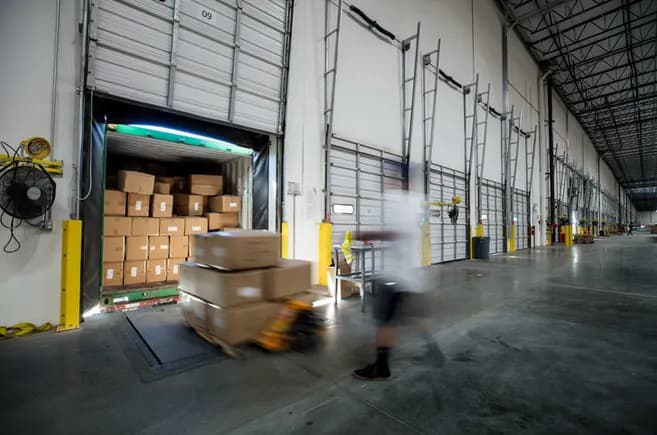
Discover why more companies are recognizing that a 95% assurance rate for high-value cargo won’t do.
Source Lens
Industry Context
Useful background context, but lower-priority than direct platform, community, or operator intelligence.
Impact Level
medium
Use this briefing to decide whether your team needs an immediate workflow, policy, or reporting change.
Key Stat / Trigger
No single quantitative trigger surfaced in this report.
Focus on the operational implication, not just the headline.
Full Coverage
An article from Sponsored From high-value to high-stakes: Why precision shipping matters more than ever Published May 11, 2026 Share Copy link Email / Print halbergman via Getty Images Sponsored content By Werner Enterprises, Inc. SPONSORED CONTENT BY A shipment can be priceless — or it can be indispensable.
There’s a difference between a cargo carrying precious jewelry and one delivering a critical part that fixes a halted manufacturing line. Shipping professionals frequently use premium services only for expensive goods that are high-value.
What they don’t realize is that when high- stakes cargo gets delayed, when a truck carrying AI hardware or medical components is slowed down or develops even a minor environmental change in transport conditions, the “cost” isn’t just an insurance claim; it’s a halted production line or a gap in patient care.
Companies that choose standard shippers have to settle for a 95% on-time rate. They bear the toll of a “precision gap,” a chasm between what the carriers can deliver and the exacting requirements that high-stakes cargo actually need.
When shipping mission-critical cargo, companies have two choices: play Russian Roulette and risk falling into the 5% precision canyon, or choose a freight shipper like Werner ® who closes that gap with specialized equipment, elite driver teams, and real-time data.
Increasingly, companies are recognizing that premium shipping isn’t just for high-value goods — it’s essential for high-stakes cargo. Here are three reasons why. 1. Mitigates invisible risk to eliminate problems down the line When shipping cargo, most companies focus only on short-term problems.
“They worry about the big three: theft, accidents, and delays,” says Jaime Jones, Senior Vice President of One-Way Transportation and Optimization at Werner, an Omaha, Nebraska-based transportation and logistics leader. They often overlook environmental and kinetic stressors, whose impacts are not visible immediately but can cost just as much.
For example, high-value AI infrastructure hardware can be damaged by micro-vibrations from poor suspension or by extreme humidity inside a trailer lacking proper monitoring protocols. “Such damage is not immediately visible because the box looks fine upon arrival, but problems surface when the product fails two months later,” Jones says.
What to look for: Evaluate the total cost of ownership and the true cost of risk you’re assuming if shipments are damaged or delayed. To get ahead of and prevent “invisible damage,” Werner uses digital twin technology that creates a virtual, real-time mirror of the physical shipment.
“It doesn’t just track a GPS dot; it integrates data from the truck’s sensors to monitor the health of the journey. If a shipment encounters unexpected shocks or temperature deviations, we know instantly,” Jones says. 2. Freight must move quickly Freight carriers know the velocity defense: the faster a shipment moves, the safer it is.
Speed is the ultimate risk-mitigator. Dwell time, where freight sits around, waiting for a new driver or truck, can derail mission-critical applications. The costs of running with a carrier that rates only a 95% on-time delivery can add up quickly. A $500 savings on the lane rate is worthless if slow shipping whiplashes into a $100,000 loss in productivity.
Similarly, life-saving pharmaceuticals that depend on efficient cold chain shipping can have their efficacy seriously compromised by delays. As consumer and B2B expectations for speed and transparency rise, even standard retail freight is becoming mission-critical.
If a product isn't on the shelf or in the warehouse when the customer clicks ‘buy,’ the brand damage is immediate,” Jones says. “The less time freight spends at rest — whether in a yard or a cross-dock — the lower the chance of theft, environmental damage, or spoilage,” Jones says. The safest freight is moving freight.
What to look for: Carriers like Werner that prioritize speed. Werner delivers team-driving setups, which involve two drivers sharing a single truck. While one driver sleeps in the back, the other stays behind the wheel.
“This allows the truck to remain in motion for nearly 24 hours a day, effectively doubling the speed of a solo driver while remaining fully compliant with safety and Hours of Service regulations,” Jones says. 3. Accountability matters If and when something does go wrong, carriers need to be accountable for damage or problems during transit.
Using brokers might be appealing, but they are intermediaries; they don’t own assets and have limited control over the driver’s training or the trailer’s condition. As a result, they can’t provide full accountability for deliveries. What to look for: A single point of accountability and financially stable shippers who own the assets and employ the drivers.
In addition, evaluate the safety record. Carriers should have a high volume of “Million Mile” accident-free drivers. “Because we own the asse
Original Source
This briefing is based on reporting from Supply Chain Dive. Use the original post for full primary-source context.
Style
Audience