

Levi’s builds toward unified ERP system by mid-2027
The apparel brand recently migrated its Asia and Beyond Yoga business operations to a single platform that it first rolled out in North America.
Source Lens
Industry Context
Useful background context, but lower-priority than direct platform, community, or operator intelligence.
Impact Level
medium
Use this briefing to decide whether your team needs an immediate workflow, policy, or reporting change.
Key Stat / Trigger
No single quantitative trigger surfaced in this report.
Focus on the operational implication, not just the headline.
Full Coverage
An article from Dive Brief Levi’s builds toward unified ERP system by mid-2027 The apparel brand recently migrated its Asia and Beyond Yoga business operations to a single platform that it first rolled out in North America.
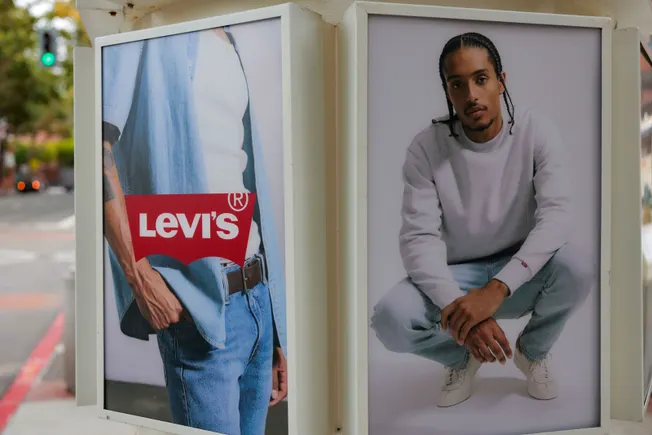
Published July 16, 2026 Phil Neuffer Lead Editor Share Copy link Email / Print License Add us on Google An advertisement on display outside of Levi Strauss headquarters on July 8, 2026, in San Francisco.
Levi’s expects its move toward a unified enterprise resource planning system across its global operations to streamline decision-making and put it in position to effectively leverage artificial intelligence and automation. Heather Diehl via Getty Images Listen to the article 2 min This audio is auto-generated. Please let us know if you have feedback.
Dive Brief: Levi Strauss & Co. expects to complete the transition to a unified enterprise resourcing planning system across its global operations by mid-2027, executives said on a July 8 earnings call.
Most recently, the apparel giant migrated its Asia business operations and Beyond Yoga brand onto the global platform three years after integrating the system in North America.
With the Asia integration wrapped up, Levi’s is now fully rolling out the technology across Europe and Latin America as the final steps of the transition, EVP and Chief Financial and Growth Officer Harmit Singh said. Dive Insight: Levi’s consolidation to a single ERP is an effort more than 10 years in the making.
Through the transition, Levi’s is moving to a standardized, cloud-based ERP system rather than operating through “a very disjointed” customized platform, according to Singh. “When I first joined the company 13 years ago, we had nine ERPs,” Singh said. “People said, “Let's get to one ERP.””
Once fully implemented, the company expects the platform to better support its DTC-first model while enabling faster decision making and setting the foundation to scale artificial intelligence and automation across its global operations, according to Singh. The move is also meant to ensure a more consistent and accurate flow of data.
“If you think about our stores or you think about the distribution center, on a screen on my iPad, I can see the movement of goods happening as they happen, right, what's the fill rate, what's the service, what's happening in sales,” Singh said. ERP upgrades are continuing to proliferate across supply chains in various industries.
Food maker Nestlé has rolled out the cloud-based SAP S/4HANA platform across 112 countries and 50,000 employees with plans to integrate SAP’s AI-powered assistant into core business systems. Meanwhile, CPG manufacturer Clorox began transitioning its U. S. supply chain and other business operations to a new ERP system last July.
For Levi’s, simplifying its supply chain tech stack parallels efforts to reconfigure its network, particularly in the U. S. The company will close a Kentucky distribution center at the end of August as part outfits shift away from an owned and operated distribution model toward a combination of owned and third-party operated locations.
Recommended Reading Levi’s updates strategy to cut freshwater use across supply chain, reduce climate impact Supply Chain Dive Duluth Trading boosts inventory health with SKU cuts, enterprise planning By Kelly Stroh • June 26, 2026 Add us on Google Share Copy link Email / Print License Filed Under: Technology, Operations Management, Manufacturing, Retail
Original Source
This briefing is based on reporting from Supply Chain Dive. Use the original post for full primary-source context.
Style
Audience