

CVSA Roadcheck and enforcement is crucial to national security
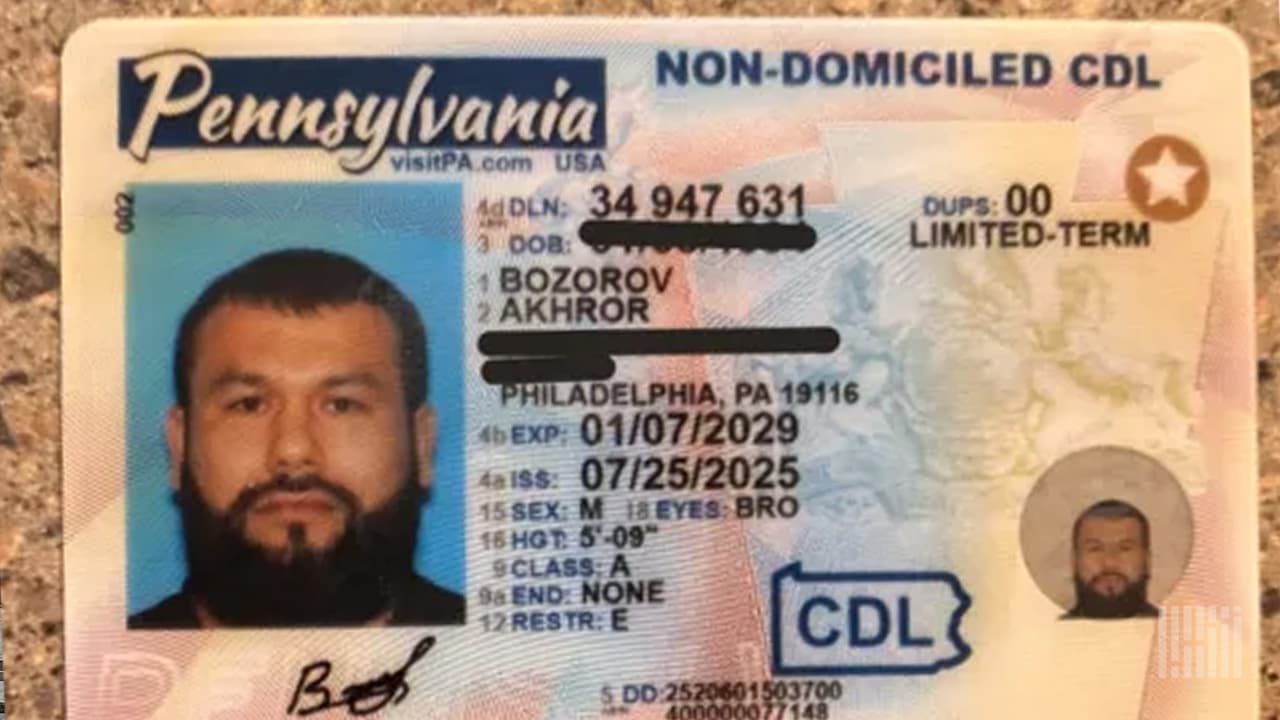
An investigative analysis of the security gaps in American commercial trucking, from terrorism to trafficking and how CVSA Roadcheck plays an important role. The post CVSA Roadcheck and enforcement is crucial to national security appeared first on FreightWaves.
Source Lens
Industry Context
Useful background context, but lower-priority than direct platform, community, or operator intelligence.
Impact Level
medium
Use this briefing to decide whether your team needs an immediate workflow, policy, or reporting change.
Key Stat / Trigger
No single quantitative trigger surfaced in this report.
Focus on the operational implication, not just the headline.
Full Coverage
Right now, as you read this, thousands of CVSA-certified inspectors across North America are pulling commercial motor vehicles into weigh stations, pop-up checkpoints and roadside inspection sites as part of International Roadcheck 2026.
For 72 hours, from May 12 through 14, roughly 15 trucks per minute will undergo the 37-step Level I inspection, the most comprehensive roadside evaluation in the world. The industry conversation around Roadcheck is predictable every year. Brake adjustments. Tire tread depth. ELD compliance. Cargo securement.
The usual compliance checklist stuff that fleet managers and safety directors obsess over each May. This year is no different on the surface, with CVSA naming ELD tampering and cargo securement as its 2026 focus areas. The missed conversation about Roadcheck and trucking enforcement more broadly, which almost never happens.
It is a conversation about national security. About criminal interdiction. About the fact that the same 80,000-pound vehicles hauling America’s freight are also hauling drugs, trafficking human beings and, in the hands of the wrong people, functioning as weapons of mass destruction.
The trucking industry prefers to frame enforcement as a safety and compliance exercise, full stop. The data, the case files and the body count tell a different story. On April 19, 1995, Timothy McVeigh parked a rented Ryder truck containing 5,000 pounds of ammonium nitrate fertilizer, nitromethane and diesel fuel in front of the Alfred P.
Murrah Federal Building in Oklahoma City. At 9:02 a. m. , he detonated it. The blast killed 168 people, including 19 children in the building’s day care center, and injured more than 675 others. It remains the deadliest act of domestic terrorism in American history.
At the time, federal oversight of commercial motor vehicles was buried inside the Federal Highway Administration, an agency whose primary mission was building and maintaining highways. Trucking safety was a side desk inside a road construction agency.
The Office of Motor Carrier Safety, as it was known, had inherited regulatory authority from the Interstate Commerce Commission when the ICC was abolished in 1995, the same year McVeigh demonstrated what a truck could do in the wrong hands. Understanding the timeline of federal trucking oversight is worth it because it explains how we got here.
The ICC’s Bureau of Motor Carriers wrote the first federal truck safety rules in 1936. When the Department of Transportation was established in 1966, the ICC’s safety authority transferred to DOT and was delegated to FHWA. For the next 34 years, trucking safety lived inside a highway agency.
It was not until a series of high-profile bus and truck crashes in the late 1990s, combined with an annual CMV fatality count of 5,374 in 1998 alone, that Congress finally carved out the Federal Motor Carrier Safety Administration as a standalone agency effective January 1, 2000, under the Motor Carrier Safety Improvement Act of 1999.
The political will to create FMCSA did not come from a single event but the post-Oklahoma City enforcement environment, in which FHWA’s Office of Motor Carriers suddenly found itself at the intersection of national security and commercial vehicle regulation, was part of the backdrop. A truck had just killed 168 Americans.
The agency responsible for truck safety was three bureaucratic layers deep inside an organization that poured concrete for a living. Three decades later, the lesson of Oklahoma City has been largely forgotten by the trucking industry, even as the rest of the world has learned it the hard way.
The use of commercial vehicles as instruments of terror is an accelerating global phenomenon. On July 14, 2016, a Tunisian-born man drove a rented 19-ton cargo truck for more than a mile along the packed Promenade des Anglais in Nice, France, during Bastille Day celebrations.
He killed 86 people and wounded more than 430 in the span of four minutes and 17 seconds. The Islamic State claimed responsibility. Five months later, on December 19, 2016, a rejected Tunisian asylum seeker hijacked a Scania semi-trailer truck in Berlin, murdered the original driver, and plowed the rig into a Christmas market at Breitscheidplatz.
Twelve people were killed and 56 were injured. On October 31, 2017, Sayfullo Saipov, an Uzbek national who had entered the United States through the Diversity Immigrant Visa program, rented a Home Depot pickup truck and drove it down a crowded bike path along the Hudson River in Lower Manhattan, killing eight people and injuring 13.
Public records showed Saipov held a commercial driver’s license. He held a commercial truck license AND had his own DOT authority. He wasn’t just a CDL holder working for someone else. He was a registered motor carrier with FMCSA.
The system gave him a CDL, gave him operating authority, and nobody flagged him, even though federal agents had interviewed him in 2015 about his contacts with two suspected terrorists and had decl
Original Source
This briefing is based on reporting from Freightwaves. Use the original post for full primary-source context.
Style
Audience