

JM Smucker eyes margin boost with lower green coffee commodity costs
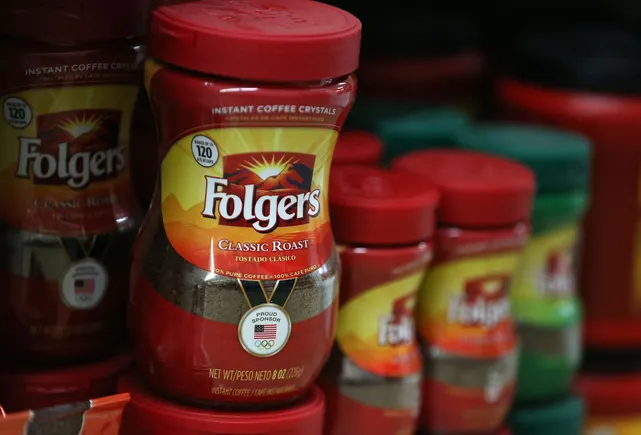
The Folgers coffee maker introduced temporary price reductions due to the lower input costs, but stopped short of permanent cuts.
Source Lens
Industry Context
Useful background context, but lower-priority than direct platform, community, or operator intelligence.
Impact Level
medium
Use this briefing to decide whether your team needs an immediate workflow, policy, or reporting change.
Key Stat / Trigger
No single quantitative trigger surfaced in this report.
Focus on the operational implication, not just the headline.
Full Coverage
An article from Dive Brief JM Smucker eyes margin boost with lower green coffee commodity costs The Folgers coffee maker introduced temporary price reductions due to the lower input costs, but stopped short of permanent cuts.
Published June 25, 2026 Antone Gonsalves Reporter Share Copy link Email / Print License Add us on Google Packages of Folgers coffee are displayed on a shelf at a grocery store in San Rafael, California. Folgers owner The J. M. Smucker Co. expects to pay higher prices for packaging, ingredients and transportation.
Justin Sullivan via Getty Images Listen to the article 2 min This audio is auto-generated. Please let us know if you have feedback. Dive Brief: The J. M. Smucker Co. expects mid-single-digit percentage deflation in the current fiscal year, largely driven by lower green coffee commodity costs, EVP and CFO Tucker Marshall said on a June 9 earnings call.
As a result of the lower coffee costs, the Folgers java maker introduced temporary price reductions through promotions and discounts for retailers and shoppers, CEO Mark Smucker told investors. However, the company did not commit to more permanent price reductions. "Coffee is a pass-through category, right?
So we do pass through up and down costs to our customers and our consumers," Smucker said. "We do it prudently. We do it in a justified manner." Dive Insight: The deflation in unroasted coffee contrasts with last year's tariff-driven sourcing cost increases, which led Smucker to raise prices twice.
Company executives canceled plans for a third price increase after changes in U. S. trade policy excluded green coffee and other agricultural products from levies. Green coffee deflation is expected to benefit the company’s U. S.
Retail Coffee segment, which is projected to return to the high-20s percent profit margin range in the current fiscal year, Marshall said. However, excluding coffee deflation and tariff expenses, the company anticipates overall cost inflation in the low single digits due to higher prices for packaging, ingredients and transportation.
Lower coffee input costs and productivity savings from transformation initiatives are expected to help boost the company's adjusted gross profit margin to 38%, according to Marshall's prepared remarks.
Major organizational changes at the company have included a restructuring of its supply chain leadership team and splitting its supply chain and manufacturing divisions into separate organizations. Despite earlier tariff reductions, levies are at 10% in the current fiscal year, according to Marshall.
However, the company is pursuing tariff refunds for payments made before this year’s Supreme Court ruling invalidating President Donald Trump’s country-specific tariffs. Those potential refunds were not included in projections for fiscal 2027, which started May 1.
"We're continuing to monitor and assess any changes to existing tariffs or new tariffs, and we'll continue to provide updates over time," Marshall said. This story was first published in our Procurement Weekly newsletter. Sign up here. Recommended Reading JM Smucker cancels new coffee price hikes after tariffs lifted By Antone Gonsalves • Dec.
9, 2025 JM Smucker overhauls supply chain leadership By Phil Neuffer • Feb. 11, 2026 Add us on Google Share Copy link Email / Print License Filed Under: Risk and Resilience, Procurement, Regulation, Manufacturing
Original Source
This briefing is based on reporting from Supply Chain Dive. Use the original post for full primary-source context.
Style
Audience