

Why Visa views agentic commerce as its next big growth opportunity
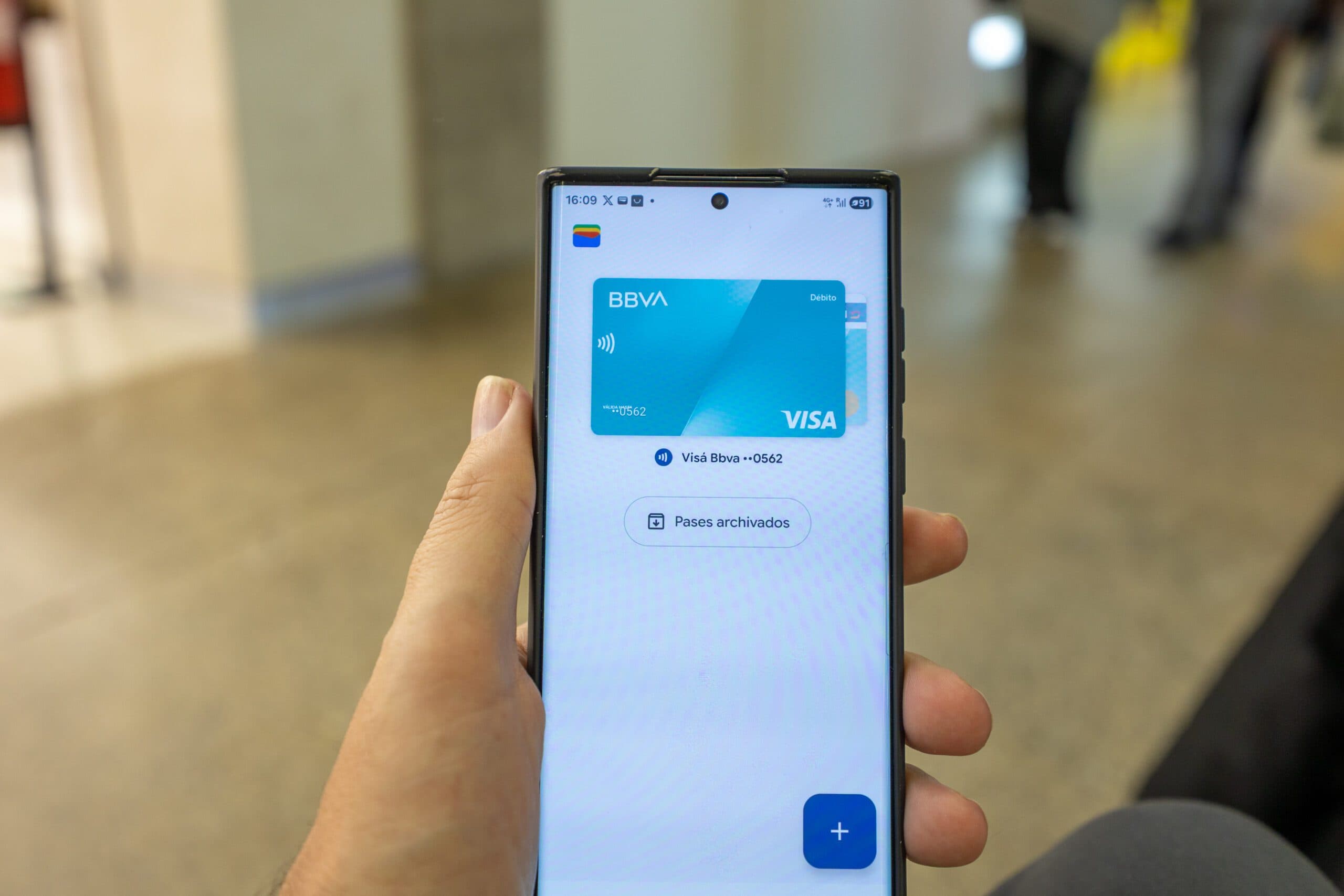
Visa's chief product and strategy officer declared agentic commerce — AI agents autonomously completing purchases — the biggest growth opportunity since ecommerce launched in the late 1990s. Visa and Mastercard both launched agentic AI payment tools in October 2025, with mainstream AI checkout signaled for the near term.
When AI agents handle product discovery and checkout autonomously, brand visibility and listing optimization shift from human-driven search to machine-readable signals — sellers who haven't structured their listings for AI parsing will lose the transaction before a human ever sees it. Start auditing product data completeness and structured content now, before agent-driven traffic becomes measurable.
Agentic commerce accelerates AI disruption of the discovery-to-checkout funnel, threatening sellers who optimize for human shoppers while rewarding those with structured, machine-readable product data — a quiet but significant competitive shift.
Audit your product listings for machine-readable completeness (attributes, specs, GTINs) -- if fields are missing or vague, AI agents will pass over your listings in favor of competitors with cleaner data.
In the next 30 days, identify which of your SKUs rely on visual or emotional copy to convert -- those need structured attribute backup before agentic checkout becomes mainstream.
Bottom Line
AI agents buying autonomously means listing data quality, not copy, wins the sale.
Source Lens
Analyst Intelligence
Research or editorial analysis that adds market context beyond the official announcement.
Impact Level
medium
AI agents buying autonomously means listing data quality, not copy, wins the sale.
Key Stat / Trigger
80 to 150 basis points of GDP growth anticipated from agentic AI macro efficiencies
Focus on the operational implication, not just the headline.
Full Coverage
Visa views agentic commerce as a significant growth opportunity within the payments industry, according to one of its C-suite executives. The payments company’s chief product and strategy officer, Jack Forestell, spoke at the Wolfe Research FinTech Forum in New York in mid-March.
In a conversation with Wolfe Research analyst Darrin Peller, Forestell shared expectations that agentic commerce will benefit purchasing processes. Agentic commerce refers to purchases through artificial intelligence (AI) agents that can autonomously search, book, purchase and complete transactions on behalf of human users.
Along with payments competitor Mastercard, Visa launched agentic AI payments tools in October after having offered support for AI agents in May 2025. Then, in December, Visa signaled that AI checkout could soon go mainstream.
“I have not stared into a bigger growth opportunity than what we have ahead of us in the development of the agentic web broadly — that then will turn into agentic commerce, turn into agentic payments,” Forestell said in his conversation with Peller. “But I haven’t seen anything like this since the dawn of ecommerce itself in the late ’90s or early 2000s.”
Digital Commerce 360 editors have made the same comparison. Visa rejects the agentic AI ‘dystopia’ argument Forestell said Visa executives are not “takers on the agentic dystopia argument.” “Every other wave of technology that has hit the payments ecosystem has generated growth,” Forestell said. “We’ve seen it with e-com, we’ve seen it with mobile.
We’ve seen it with mobile cloud. And we see this the same way.” He said an economic forecast Visa has viewed anticipates gross domestic product (GDP) growth of 80 to 150 basis points, driven by the macro-level efficiencies that agentic AI may introduce.
And GDP growth leads to increases in personal consumption expenditures (PCE), which “flows straight into” Visa’s ecosystem, he said. Forestell also framed agentic commerce as less of a risk than previous changes in the payments industry. “You think about the complexity of the transaction that came into existence at the advent of ecommerce,” he said.
“It was riskier. It was less identifiable. There was no means of having a physical identifier in place.” He said that with desktop ecommerce at first, mobile commerce later and tokenization after that, the payments industry adapted technology, created new authentication mechanisms and changed. “This is the same,” according to Forestell.
Identifying risks in agentic commerce Forestell noted his more than 20 years in the field of payment technology. He said Visa sees agentic commerce as “a generative growth opportunity.” “And I want to make sure we try to get out of the zero-sum mindset,” Forestell said.
“There’s just too much of the, ‘Hey, is agentic a way that the existing pie is going to get sliced up differently?’ I don’t think so. This is about new business models, new transaction flows and increasing the velocity of money. And we’re seeing it in very practical ways.”
Forestell noted that agentic commerce transactions “ are going to be riskier ” than desktop and mobile ecommerce were, as well as tokenization. “You’ve got an agent in the middle,” he said. “The agent needs an identity.
You need to secure that identity, you need to validate it, you need to collect more data in order to be able to ensure the security — all that stuff. And we’re working on that.” Visa has formed a strategic partnership with Akamai Technologies that aims to strengthen identity verification, authentication and fraud prevention.
The companies said the collaboration integrates Visa’s Trusted Agent Protocol with Akamai’s edge-based behavioral intelligence, user recognition and bot mitigation capabilities. Additionally, Visa and Amazon Web Services (AWS) announced a partnership aiming to make it easier for companies to build and deploy agentic commerce systems.
Four ways Visa expects agentic commerce to become practical Forestell noted four “practical” ways that agentic commerce can take shape. Agents “can take friction out of payments,” he said. He noted that Visa sees decline rates in transactions. Agents, he said, will help to address that “and transaction success rates are going to climb.
When those rates increase, so do payment volumes, he said. Increased transaction volumes. He referred to a fixed amount of purchasing among consumers, who then split that total amount among multiple transactions. Visa’s average transaction size from 2015 to early 2026 has dropped about 20%, he said, to about $45 from about $55.
But the number of transactions has tripled, reaching $300 billion. That payment density comes from subs
Original Source
This briefing is based on reporting from Digital Commerce 360. Use the original post for full primary-source context.
Style
Audience