Trimble keeps freight business sale on the table while unveiling new AI tools
Trimble is weighing the future of its transportation and logistics unit while continuing to invest in AI tools for its fleet customers. The post Trimble keeps freight business sale on the table while unveiling new AI tools appeared first on FreightWaves.
Source Lens
Industry Context
Useful background context, but lower-priority than direct platform, community, or operator intelligence.
Impact Level
medium
Use this briefing to decide whether your team needs an immediate workflow, policy, or reporting change.
Key Stat / Trigger
No single quantitative trigger surfaced in this report.
Focus on the operational implication, not just the headline.
Full Coverage
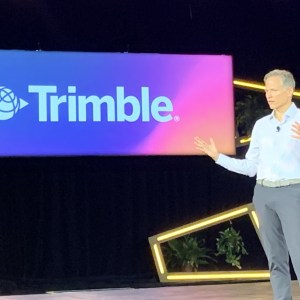
SAN DIEGO — Trimble’s review of its transportation and logistics business remains underway, and multiple outside parties remain interested in the unit, CEO Rob Painter said Monday at the company’s Insight 2026 conference. Painter offered no timetable or indication that a sale has become more likely.
Asked whether the review could also include a spinoff, he said its purpose was to determine what would be best for customers, employees and shareholders. “There is no update,” Painter told reporters at an executive media round table. “Most strategic reviews end up with continuing to do what we do.”
He said Trimble is operating the business as usual and that he is “super, super … comfortable to be the ongoing owner of the business.” Trimble (Nasdaq: TRMB) disclosed in August that it had received credible, unsolicited interest from multiple parties and had launched a strategic review with financial adviser Goldman Sachs.
Painter confirmed Monday that the review is ongoing and, when asked whether interest still exists from multiple parties, answered: “Yes to everything you said.”
Painter characterized the transportation unit as a scarce asset with a distinctive network and technology portfolio, saying Trimble has an obligation as a public company to consider credible approaches. “It’s not surprising to me that we’ve had inbound interest,” Painter said. “It’s a scarce asset, a scarce set of capabilities. We’re a public company.
We have a fiduciary obligation to the shareholders to listen if we have credible interest.” Trimble has not indicated when the review will conclude or what its ultimate outcome might be. “We hope to wrap up the review,” he said.
“I’m super comfortable if I’m back in front of you again in weeks, months, or a year from now at our next conference and we’re executing the playbook because that’s how we’re operating right now.” Painter also left open the possibility that the strategic review could result in the transportation business becoming a separate company.
He declined to speculate about what Trimble’s exposure to trucking would look like if the transportation business were ultimately sold. “My view is this is a Trimble business and let’s say until it’s not, if that’s the case,” Painter said. “I’m super, super — I can’t emphasize that enough — comfortable to be the ongoing owner of the business.”
“This business is a terrific business with an exciting future providing real value and unique value,” he added. Trimble pushes AI into existing trucking systems The comments came as Trimble used its annual Insight conference to demonstrate that investment in the transportation segment is continuing during the strategic review.
The company unveiled technologies centered on voice AI, route and trailer orchestration, automated maintenance and transportation management systems designed to support AI agents.
Michael Kornhauser, who leads Trimble’s transportation operations in North America and its applications business, said the company’s modernization strategy is intended to let existing customers begin using AI without undergoing expensive, disruptive replacements of longstanding TMS platforms.
Trimble’s latest TMS release provides an updated experience designed to support AI while allowing fleets to retain existing systems and integrations. “We felt that that was the quickest way to get our customers in their existing systems to a place where AI can impact their business today,” Kornhauser said.
The approach means customers don’t have to immediately disconnect technology and integrations accumulated over decades, he said. “For now, there’s not a big lift. There’s not a big risk,” Kornhauser said.
Trimble executives also highlighted Arc Agent, which the company is developing around a single AI agent capable of acquiring multiple skills rather than deploying separate agents for individual tasks.
Philipp Pfister, vice president of Transporeon- a Trimble company, described Arc Agent as functioning somewhat like another employee: Users can teach it a task, verify its work and gradually give it greater responsibility as trust develops.
The goal is for Arc Agent to operate across freight processes ranging from procurement and execution to settlement and across shippers, carriers, brokers and other participants. Trimble said customers will also be able to create skills tailored to their own operations instead of relying exclusively on predefined applications.
Kornhauser cited one example involving currency conversion for TMT Trucking. A capability that he said traditionally might have required a three- to six-month proof of concept, custom coding and professional services was created in Arc in roughly 35 minutes. “You don’t have to have an engineering degree to build a skill,” Pfister said.
AI brings security questions Painter acknowledged that adoption of autonomous AI also introduces questions about governance, cybersecurity and protection of proprietary information. Customers can connect Trimble and non-Tri
Original Source
This briefing is based on reporting from Freightwaves. Use the original post for full primary-source context.
Style
Audience