Trump says US could stop trading with Mexico, other countries over trade deficits
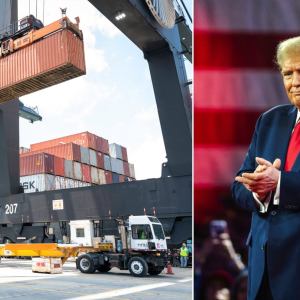
Trump threatened to halt trade with Mexico, Canada, and the EU over deficits totaling $195B (Mexico), ~$200B (EU), and $60-90B (Canada) annually. Sellers sourcing from Mexican manufacturers — auto parts, electronics, agriculture — face potential supply chain disruption if rhetoric becomes policy.
This accelerates the bifurcation of global sourcing strategy — sellers who diversified away from China into Mexico now face a second geopolitical squeeze, compressing margins further in an already high-tariff environment.
The second-order risk: nearshoring strategies built around Mexico as a China alternative are now politically exposed, not just tariff-exposed. Brands that shifted production to Mexico post-2018 should audit their supplier concentration before any new POs.
Operational Impact
This story may require teams to revisit workflows, monitoring, or platform assumptions.
Bottom Line
Mexico trade halt threat puts nearshoring supply chains at immediate risk for sellers.
Source Lens
Industry Context
Useful background context, but lower-priority than direct platform, community, or operator intelligence.
Impact Level
medium
Mexico trade halt threat puts nearshoring supply chains at immediate risk for sellers.
Key Stat / Trigger
$197 billion goods deficit with Mexico in 2025
Focus on the operational implication, not just the headline.
Full Coverage
President Donald Trump said Mexico has little the U. S. needs and suggested Washington could stop trading with countries where it runs trade deficits, escalating rhetoric against one of America’s largest trading partners. President Donald Trump suggested the U. S.
could stop trading with Mexico and other countries where it runs large trade deficits, saying during an Oval Office news conference Friday that America could prosper by reducing its dependence on foreign trade. “We could do tremendous good for ourselves by just not trading with countries,” Trump said during the Sept. 4 news conference.
Trump singled out Mexico, one of the United States’ largest trading partners and a critical link in North American automotive, manufacturing and agricultural supply chains. “We lose with Mexico $195 billion a year,” Trump said in a video posted by C-SPAN. “If I don’t trade with Mexico, they have nothing that we have to have. I mean, hot tamales? Tomatoes?
A couple of things? Basically, they have nothing we need. We have oil. We have everything.” Trump added that he has a good relationship with Mexican President Claudia Sheinbaum. “I don’t want to do that, because we get along very well with the president,” Trump said. “We like the president, respect her a lot.”
Related: Exports of Mexican-made vehicles to the US rose in August The president made similar comments about Canada and the European Union, saying the U. S. could eliminate trade deficits simply by refusing to trade with those markets. Trump said the U. S.
“loses” roughly $200 billion annually with the European Union and claimed ending trade with Canada would save the U. S. between $60 billion and $90 billion a year. The remarks came as Trump continued to pressure the Federal Reserve to lower interest rates. Reuters reported Friday that Trump threatened to stop trading with some countries where the U. S.
runs deficits if the Fed does not cut rates. Why it matters: The U. S. ran a $197 billion goods deficit with Mexico in 2025, but Mexico also supplies critical vehicles, machinery, electronics and agricultural goods to U. S. businesses and consumers.
The post Trump says US could stop trading with Mexico, other countries over trade deficits appeared first on FreightWaves.
Pull your COGS breakdown by country of origin now — if Mexico represents 20%+ of your sourcing, model a 25-40% landed cost increase scenario and reprice SKUs proactively.
In the next 30 days, contact Mexican suppliers about dual-sourcing options in Vietnam, India, or domestic alternatives before any policy announcement locks in lead times.
Original Source
This briefing is based on reporting from Freightwaves. Use the original post for full primary-source context.
Style
Audience