

C.H. Robinson earnings call shifts to nuclear verdict as key topic
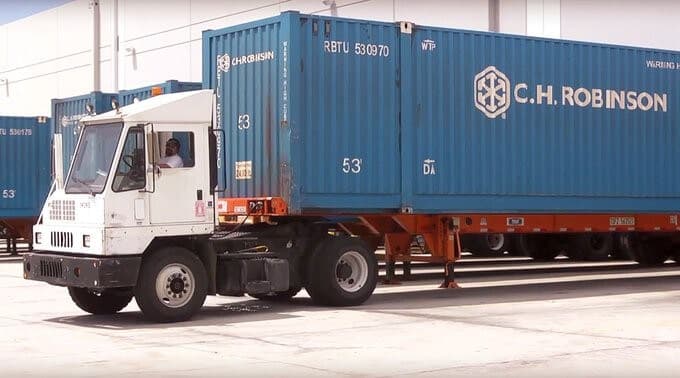
It may have been an earnings call, but there was a nuclear verdict at the center of C.H. Robinson’s earnings call. The post C.H. Robinson earnings call shifts to nuclear verdict as key topic appeared first on FreightWaves.
Source Lens
Industry Context
Useful background context, but lower-priority than direct platform, community, or operator intelligence.
Impact Level
medium
Use this briefing to decide whether your team needs an immediate workflow, policy, or reporting change.
Key Stat / Trigger
No single quantitative trigger surfaced in this report.
Focus on the operational implication, not just the headline.
Full Coverage
It did not take long on the C. H. Robinson second quarter earnings call with analysts late Wednesday for the subject to switch away from a strong financial performance in the quarter to the fallout from its more than $600 million nuclear verdict handed down in a Texas courtroom last week.
While there might have been some speculation that CEO Dave Bozeman and other members of the management team might have cited “ongoing litigation” as a reason to not discuss the Dallas County case of Lipe vs. Lupus Superior, with C. H.
Robinson also as a defendant, Bozeman addressed it in his opening remarks, and numerous questions from analysts were all answered with the same reply: our behavior was proper and we’re confident this verdict will not stand. That message on Lipe vs.
Lupus Superior ultimately became likely the most-discussed topic of the phone call, though Michael Castagnetto, the president of North American Surface Transportation, was able to make his core point at least twice about the company’s core brokerage operations: it has now been 13 quarters where volume growth at C. H.
Robinson outstripped the benchmark volume numbers published by Cass Information Systems. Bozeman introduced his remarks on Lipe vs. Lupus Superior by referring to the “evolving legal environment regarding trucking accidents,” which he described as “tragic, and every loss of life on our nation’s highways is one too many.”
It’s a tragedy but we didn’t cause it “But acknowledging that a terrible tragedy occurred is not the same as having caused it,” Bozeman said. “C. H. Robinson did not act negligently and should not be held liable in this case.” A jury did find C. H.
Robinson negligent in its hiring of Lupus Superior, whose driver in 2021 plowed into several cars, killing three people. The driver of the Lupus Superior truck also died, leaving unanswered the question of just what happened behind the wheel to lead to the crash. More chillingly for C. H.
Robinson (NASDAQ: CHRW) and brokers in general, the jury found that the driver was essentially an employee of the 3PL. “C. H. Robinson does not employ drivers,” Bozeman said.
That new world Several references were made during the call to the “post-Montgomery world,” the general term for the legal landscape brokers face with negligence and liability protection offered by the Federal Aviation Administration Authorization Act stripped away through the Supreme Court decision in Montgomery vs. Caribe Transport II.
Lupus Superior had in its history hauled 270 loads successfully for C. H. Robinson, the company said. It also had a Satisfactory rating from the Federal Motor Carrier Safety Administration (FMCSA), handed down both before the crash and after as well. The jury verdict has yet to be certified by Judge Dianne Jones.
That fact was raised several times on the call. Bozeman also said appeals could take “years.” In the wake of the verdict, C. H. Robinson released a statement calling for federal guidance on what level of vetting would protect a broker in situations like the Mississippi crash.
FMCSA had given thumbs up The fact that the broker hired a carrier with a Satisfactory rating and still got hit with one of the biggest nuclear verdicts in the history of trucking has helped to drive home the question of just what actions a 3PL needs to undertake to avoid such a fate. That call by C. H.
Robinson echoes what the Transportation Intermediaries Association, the brokerage industry’s trade group, said in a recent petition to FMCSA seeking a rulemaking that would establish guidance on what constitutes proper procedures in hiring a carrier in the wake of Montgomery vs. Caribe Transport II.
“We go beyond federal requirements and apply multiple layers of safety and risk criteria that we continuously reevaluate and strengthen,” Bozeman said in his remarks.
“The extreme nature of this verdict means it is even more imperative that Congress and the federal government act with urgency to establish clear and proper accountabilities across the transportation industry that enhance highway safety and support the uninterrupted flow of goods across the United States.”
When Bozeman moved away from his scripted remarks on the call, the message was the same, if maybe a bit more pointed. “We really believe this case was decided based on emotion rather than the law,” he said.
He reiterated that if the jury’s decision is entered by Judge Jones as final, “we will immediately appeal and we are very confident in the facts and the law on appeal.” Settlement had been rejected Providing some detail on how the case ever got to trial in the first place and wasn’t settled on the courthouse steps, as the phrase goes, Bozeman said C. H.
Robinson’s insurance carriers “were not willing to settle based on the plaintiff attorneys’ demands.” Bozeman added he would not provide further information on that process, given the ongoing litigation. But even if C. H. Robinson can spin a victory out of a present defeat from the case, the impact on the
Original Source
This briefing is based on reporting from Freightwaves. Use the original post for full primary-source context.
Style
Audience