No mention of U.S.-China ship taxes in trade truce
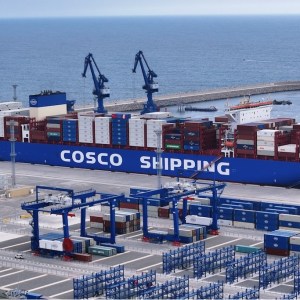
U.S. port-entry fees on China-built and China-linked vessels resume Nov. 10, 2025 unless USTR issues a separate suspension — the broader U.S.-China trade truce extension to Jan. 10, 2027 did NOT automatically pause these maritime fees. Non-Chinese carriers using Chinese-built ships face fees of $18/net ton or $120/discharged container (whichever is higher), hitting nearly every major ocean carrier.
This adds another layer of margin compression on China-sourced goods beyond existing tariffs, reinforcing the case for nearshoring, supplier diversification, and tighter freight cost modeling heading into 2026.
Most major carriers (MSC, Maersk, Hapag-Lloyd) operate Chinese-built vessels, so these fees will almost certainly be passed through as surcharges on ocean freight invoices starting mid-November. Sellers importing from China should request carrier surcharge schedules now and model a $0.50–$2.00/unit cost increase into Q4 and Q1 replenishment orders.
Operational Impact
This story may require teams to revisit workflows, monitoring, or platform assumptions.
Bottom Line
China ship fees resume Nov. 10 — expect ocean freight surcharges on nearly all imports.
Source Lens
Industry Context
Useful background context, but lower-priority than direct platform, community, or operator intelligence.
Impact Level
high
China ship fees resume Nov. 10 — expect ocean freight surcharges on nearly all imports.
Key Stat / Trigger
$120 per discharged container fee on Chinese-built vessels operated by non-Chinese carriers effective Nov. 10
Focus on the operational implication, not just the headline.
Full Coverage
U. S. port-entry fees targeting China-linked and China-built vessels remain scheduled to resume Nov. 10, even after Washington and Beijing agreed last week to extend their broader trade truce until Jan. 10, 2027. The discrepancy leaves liner operators and cargo interests awaiting a formal U. S.
Trade Representative action that would align the maritime-fee suspension with the newly extended diplomatic accord. The fees were suspended for one year beginning Nov. 10, 2025 as part of the U. S. -China economic détente. Under USTR’s governing notice, the pause expires at 11:59 p. m. ET Nov. 9; fees would again become applicable at the start of Nov.
10 unless the agency issues another modification. The measure stems from USTR’s Section 301 investigation into China’s maritime, logistics and shipbuilding policies. It would impose service fees on vessels operated by Chinese companies, Chinese-owned vessels, and, in a separate provision, Chinese-built ships operated by non-Chinese carriers.
The original action also established a distinct fee regime for foreign-built vehicle carriers. window. googletag = window. googletag || {cmd: []}; googletag. cmd. push(function() {var gptSlot = googletag. defineSlot('/21776187881/FW-Responsive-Main_Content-Slot1', [[300, 100], [320, 50], [728, 90], [468, 60]], 'div-gpt-ad-1709668545404-0').
defineSizeMapping(gptSizeMaps. banner1). addService(googletag. pubads()); googletag. pubads(). enableSingleRequest(); googletag. pubads(). collapseEmptyDivs(); googletag. enableServices(); setInterval(function() {if (! document. hidden) {googletag. pubads(). refresh([gptSlot]); } }, 30000); }); googletag. cmd. push(function() {googletag.
display('div-gpt-ad-1709668545404-0'); }); Trade truce buys time Treasury Secretary Scott Bessent said Sept. 23 that the U. S. and China agreed to extend the “Busan Agreement,” a trade truce that had been scheduled to expire Nov. 10, by two months to Jan. 10.
The extension was announced as Chinese President Xi Jinping met in Washington with President Donald Trump. The summit concluded Sept. 25 with limited public detail on the economic arrangements.
USTR Jamieson Greer said that details of the limited trade agreements would be released today, while reports indicated the two countries had agreed to continue discussions on broader trade issues, including agricultural trade, non-tariff barriers and tariff relief for selected goods.
The truce announcement did not automatically amend the Section 301 notice, and no formal notice extending the fee pause had been issued as of Sept. 28. Exposure extends beyond China lines The prospective U. S. fees are important because they could affect a much wider set of operators than Chinese carriers such as Cosco Shipping (1919. HK) and OOCL (0316.
HK). The Section 301 action includes separate treatment for China-built vessels operated by carriers outside China.
In the original fee schedule, covered Chinese vessel operators and Chinese-owned vessels faced a $50-per-net-ton fee, while non-Chinese operators using Chinese-built vessels would face the higher of $18 per net ton or $120 per discharged container. The action also provided for escalating fee levels in subsequent years. window. googletag = window.
googletag || {cmd: []}; googletag. cmd. push(function() {var gptSlot = googletag. defineSlot('/21776187881/fw-responsive-main_content-slot3', [[728, 90], [468, 60], [320, 50], [300, 100]], 'div-gpt-ad-1665767553440-0'). defineSizeMapping(gptSizeMaps. banner1). addService(googletag. pubads()); googletag. pubads(). enableSingleRequest(); googletag. pubads().
collapseEmptyDivs(); googletag. enableServices(); setInterval(function() {if (! document. hidden) {googletag. pubads(). refresh([gptSlot]); } }, 30000); }); googletag. cmd. push(function() {googletag.
display('div-gpt-ad-1665767553440-0'); }); The USTR action was structured to limit fees to one chargeable call per vessel per rotation and no more than five chargeable rotations per calendar year.
It also contained exclusions and relief provisions, including for certain small vessels, vessels arriving empty, specified specialized trades, and certain owners that commit to acquiring U. S. -built tonnage. If revived, the charges could prompt carriers to adjust vessel deployments, port rotations and network design to reduce exposure.
Carriers could also seek to recover costs through surcharges or all-in freight rates, potentially widening the impact to U. S. importers and exporters. Reciprocal stakes China’s reciprocal “special port fees” on U. S. -linked vessels were suspended on a similar timetable, raising the prospect of a parallel return of Chinese charges if the U. S.
measure is allowed to revive. Both governments paused the maritime measures in November 2025 as part of the broader trade stabilization effort. The timing is especially awkward for shipping lines: The broader U. S. -China accord now runs beyond the maritime-fee deadline, but the fees themselves remain governed by a separate USTR administrative action.
Contact your freight forwarder this week — ask specifically if your carrier operates Chinese-built vessels and whether a Section 301 maritime surcharge is planned for Nov. 10 shipments.
Adjust landed cost models in Sellerboard, Inventory Planner, or your 3PL's costing tool before booking any ocean freight departing after Oct. 15 to avoid margin erosion on Q4 inventory.
Original Source
This briefing is based on reporting from Freightwaves. Use the original post for full primary-source context.
Style
Audience