

3PL stocks drop in wake of stunning Texas case against C.H. Robinson
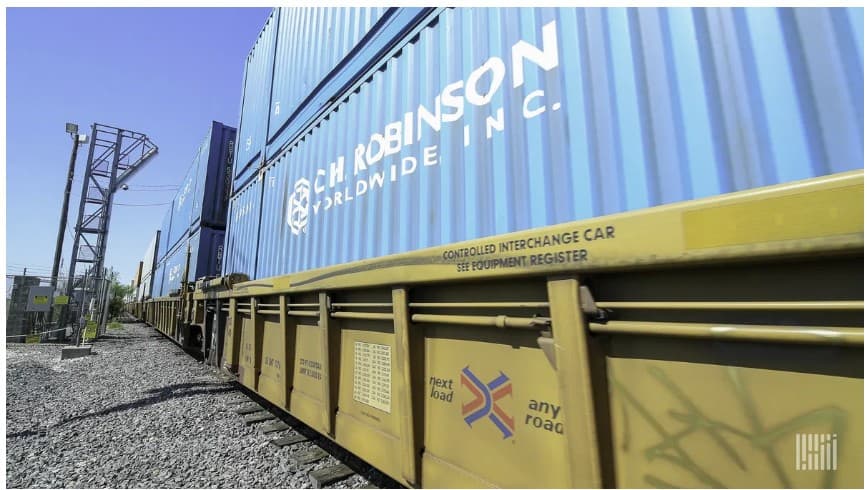
Wall Street sold off freight brokerage stocks following a nuclear verdict in Texas. The post 3PL stocks drop in wake of stunning Texas case against C.H. Robinson appeared first on FreightWaves.
Source Lens
Industry Context
Useful background context, but lower-priority than direct platform, community, or operator intelligence.
Impact Level
medium
Use this briefing to decide whether your team needs an immediate workflow, policy, or reporting change.
Key Stat / Trigger
No single quantitative trigger surfaced in this report.
Focus on the operational implication, not just the headline.
Full Coverage
Investors reacted Friday to the giant nuclear verdict out of a Texas court directed at C. H. Robinson and what it might mean for the brokerage industry with a selloff of 3PL stocks. C. H. Robinson (NASDAQ: CHRW) fell $19, or 9. 25%, to $186. 50. Two days earlier, it had hit a 52-week high at $210. 33.
RXO (NYSE: RXO) felt the impact of the decision as well, dropping 7. 71% or $2. 14 to $25. 63. That stock hit its own 52-week high Tuesday at $29. 90. Landstar (NYSE: LSTR) declined $7. 65 or 3. 68% to $200. 32. Its 52-week high was last month at $228. 46 on June 8. The S&P 500 was marginally higher on the day.
Falling dominoes The research team at TD Cowen summed up the pessimistic view of the investors dumping their 3PL shares in the wake of the decision in Lipe vs. Lupus Superior with a short report entitled “The First Domino to Fall?” “C. H. Robinson faces the first post-Montgomery ruling nuclear verdict,” the report said.
“We view this as a negative for brokers.” In the Dallas County court system case, a group of plaintiffs sued several companies and individuals connected to a 2021 crash that killed three people and the employee driver of carrier Lupus Superior, which was hired by C. H. Robinson to move the load of beverages from Arizona Beverages.
The jury Thursday handed down a compensatory damages award of approximately $604 million that is structured to most likely fall on the back of C. H. Robinson for payment. The company has said it plans to appeal.
The previous defense in such a case–that 3PLs are protected under the safety exception of the Federal Aviation Administration Authorization Act (F4A)–disappeared in May’s unanimous Supreme Court ruling in Montgomery vs. Caribe Transport II that rejected that interpretation of the law. C. H.
Robinson had been an original defendant in that case, but both a district court and appellate court had invoked F4A to take the company out of the litigation. Won’t be quick In a commentary on the case by Ken Hoexter of Bank of America, it was noted that the Lipe vs. Lupus decision is just the start of the next steps.
Under a headline that said “process will be long,” the Bank of America report noted, citing statements by C. H. Robinson, that “the verdict is one step in a process, does not determine what CHRW will pay, with any final outcome subject to post-trial motions, appeals, and other proceedings.” Judge Dianne Jones has yet to certify the jury award.
Various reports from Wall Street analysts zoomed in on the fact Lupus Superior had a Satisfactory safety rating from the Federal Motor Carrier Safety Administration that was in place before the crash and affirmed afterward. That fact, TD Cowen said, “(suggests) that CHRW was working with a high-quality carrier (at least in the eyes of FMCSA’s standards).”
Good rating might not be a defense The jury decision, TD Cowen analysts wrote, “puts the company and broker in a difficult position. If a carrier with a satisfactory FMCSA rating is insufficient, what standard should brokers use when determining which carriers are permitted on their platforms?”
It is a question the brokerage industry was asking in the runup to the Supreme Court case.
In an amicus brief filed before the decision, Marc Blubaugh of the Benesch law firm, representing the Transportation Intermediaries Association, raised the specter of problems if a broker’s decision is seen as eclipsing a federal judgement of a carrier’s safety practices.
“No valid way exists for a broker to compare and contrast motor carrier safety records in any consistent and meaningful way in order to yield uniform outcomes necessary for efficient interstate commerce,” Blubaugh wrote.
“Even given identical facts, judges and juries across the nation’s myriad state and federal jurisdictions would inevitably reach contrary and conflicting conclusions as to the adequacy of a broker’s choice of federally authorized motor carrier.” Hit to earnings? The TD Cowen report said it was not likely that C. H.
Robinson would take a charge against earnings “immediately…as the case remains subject to appeal.” But it added such a charge is possible in the future. If it does take a charge, it would be similar to trailer manufacturer Wabash National (NYSE: WNC) taking a $342 million charge in 2025 in connection with its own nuclear verdict.
When that case was ultimately settled, Wabash reduced the size of that charge. The TD Cowen report had an ominous outlook for the future. “Verdicts are coming faster than most expected,” the analysts’ report said. “Many pending court cases were waiting for the SCOTUS ruling for more clarity and are now moving forward in the courts.
This is…a new reality many brokers will now live with and investors need to assess the risks of more nuclear verdicts in the future.” Besides the size of the award, the other decision by the jury that has caught the eye of the industry was its finding that the Lupus Superior driver was also effectively an employee of C. H. Robinson, which does not actuall
Original Source
This briefing is based on reporting from Freightwaves. Use the original post for full primary-source context.
Style
Audience