

U.S. Customs’ “5H” Inspections Hit Chinese Imports Hard
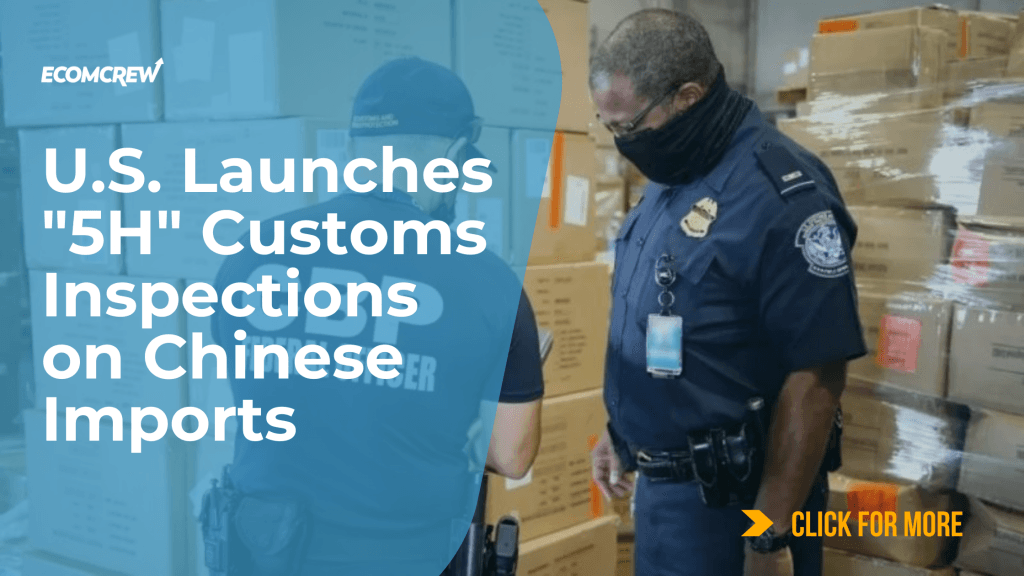
CBP's 'Operation 5H' AI-driven document inspection now flags 30%+ of Chinese import containers at LA/Long Beach ports, triggering holds, fines, forced returns, and daily demurrage costs. Sellers importing furniture, electronics, clothing, and outdoor goods from China face the highest exposure.
The second-order hit is inventory velocity: detained containers mean stockouts, which tank search rank and BSR on Amazon — a compounding loss far exceeding the port fees. Audit every open PO now for HS code accuracy, invoice-to-packing-list consistency, and valid importer bond before shipments hit U.S. waters.
This is a structural regulatory shift accelerating supply chain decoupling from China — sellers without diversified sourcing or airtight compliance infrastructure face mounting margin compression from both tariff pressure and detention costs.
Pull your freight forwarder's last 6 months of entry documents and cross-check commercial invoice values, HS codes, and packing lists for consistency — any mismatch is a 5H trigger under ACE's AI matching system.
Within 30 days, confirm your importer of record has a valid continuous bond and all product certifications (FCC, CPSC, FDA) are current and attached to shipment docs before your next China PO ships.
Bottom Line
30% container hold rate at LA/LB means Amazon stockouts and rank drops for China importers.
Source Lens
Operator Tactics
Tactical content that tends to be strongest when tied to workflow, process, or execution.
Impact Level
high
30% container hold rate at LA/LB means Amazon stockouts and rank drops for China importers.
Key Stat / Trigger
30%+ inspection rate at Ports of Los Angeles and Long Beach
Focus on the operational implication, not just the headline.
Full Coverage
Alexa Alix Last Updated: March 17, 2026 2 minutes read Recently, the U. S. Customs and Border Protection (CBP) has intensified its scrutiny of imported goods, particularly those from China. A special operation, codenamed “5H,” has been launched to enhance this oversight.
Reports from the front lines at ports indicate that inspection rates at the Ports of Los Angeles and Long Beach have surged to over 30%. As a result, thousands of Chinese export containers have been detained due to issues with declaration documents, with some being forcibly returned.
Understanding the 5H Inspection The 5H inspection, officially known as Entry Processing Hold, is a formal detention directive issued by the U. S. Customs through the ACE Automated Commercial Environment system. This inspection focuses on the precise examination of declaration documents rather than the traditional random physical checks.
The 5H inspection employs a zero-tolerance approach, starting with document review followed by physical inspection if necessary. Upon arrival at the port, the ACE system uses artificial intelligence to cross-verify the entire set of documents, including commercial invoices, packing lists, bills of lading, HS codes, and importer bond qualifications.
If documents are fully compliant, they transition to 5I status for immediate release. However, if discrepancies are found, the cargo is subjected to physical inspection, potentially leading to additional duties, fines, destruction, or forced return, with little room for negotiation in cases of malicious non-compliance.
Common Triggers for 5H Inspection Currently, popular categories of Chinese exports to the U. S. , such as furniture, electronics, clothing, and outdoor goods, are primary targets for 5H inspections.
Common triggers include: Underreporting or misreporting of goods value Vague, inaccurate, or inconsistent product names or HS codes Issues with importer qualifications, such as using another's bond or being a “shell” importer Lack of mandatory certifications (FCC, CPSC, FDA, etc.)
Significant deviations from historical data or market prices Suspected infringement or concealment Strategies to Avoid 5H Inspection Once a container is flagged for 5H inspection, the system immediately freezes container pickup and transfer operations.
Port storage fees, demurrage, and agency fees will accumulate daily, ranging from hundreds to thousands of dollars, marking the beginning of financial losses. Inspection periods can vary from a few days to several weeks.
For cross-border e-commerce sellers, logistics delays may lead to stockouts, declining sales, or even a decrease in store rankings, making these hidden losses particularly severe. Compliance may be the only way forward in the face of strict U. S. customs enforcement.
To avoid 5H inspections, consider the following measures: Accurate declaration of goods value Ensure importer qualifications and bond authenticity Precise declaration of product names and HS codes Adhere to the “multiple document consistency” rule Prepare all mandatory certifications to avoid qualification deficiencies Select compliant logistics partners and conduct pre-audits of documents Final Thoughts The heightened scrutiny by U.
S. Customs on Chinese imports underscores the importance of compliance in international trade. As inspection processes become more stringent, businesses must adapt by ensuring their documentation and practices meet the required standards. By doing so, they can mitigate risks and maintain smooth operations in the global market.
Ultimately, staying informed and proactive in understanding and adhering to regulatory requirements will be crucial for businesses aiming to thrive in the ever-evolving landscape of international trade. Alexa Alix Last Updated: March 17, 2026 2 minutes read
Original Source
This briefing is based on reporting from EcomCrew. Use the original post for full primary-source context.
Style
Audience