

AG1 lands in Target as its year of retail expansion continues
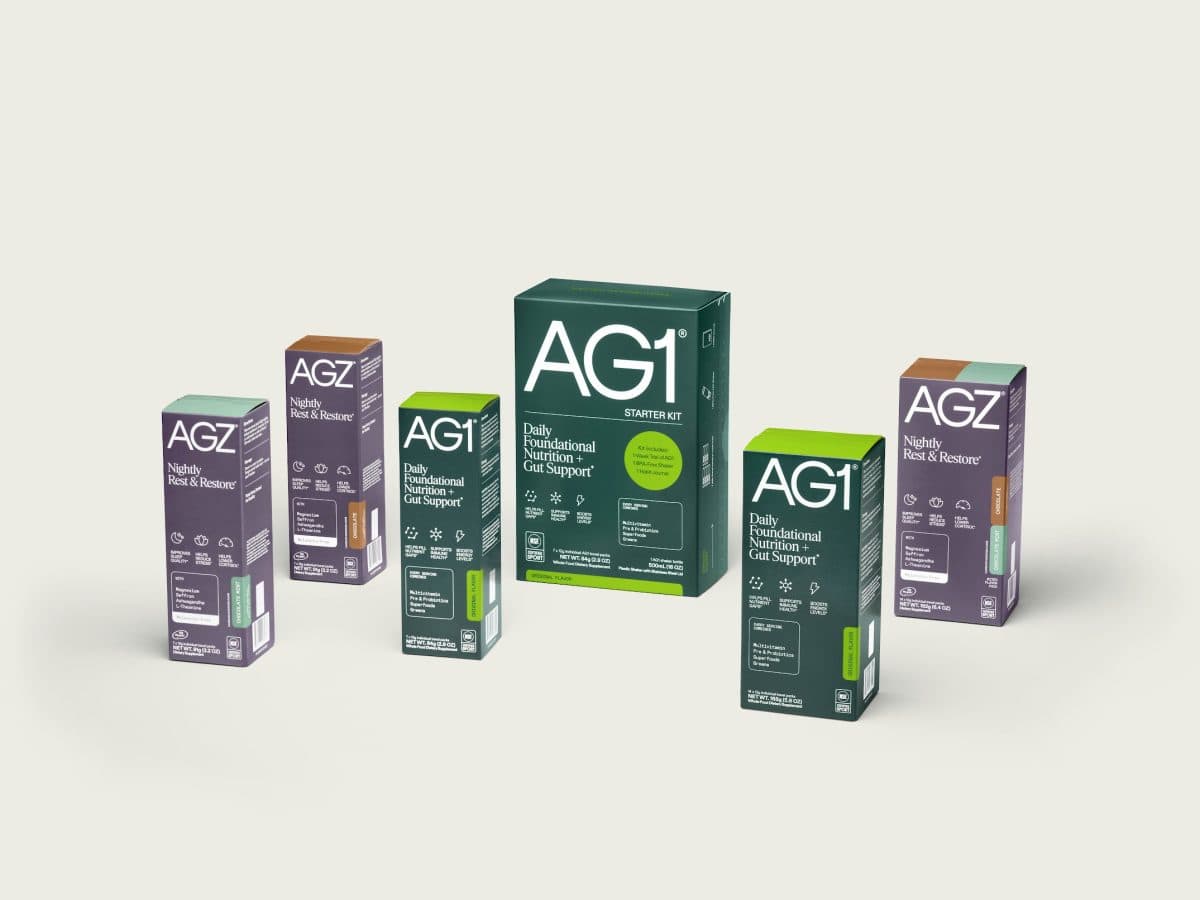
AG1 launches in all Target stores and website on April 14, 2026, doubling its retail footprint after previous launches at Costco, Vitamin Shoppe, and Amazon. The brand introduces 7-count and 14-count packs plus starter kits with custom end cap displays.
AG1's retail expansion signals how DTC brands are using multi-SKU strategies and solution-based merchandising to secure premium shelf placement. Target sellers should monitor how AG1's end cap performance affects supplement category dynamics and pricing pressure.
This reflects the broader trend of profitable DTC brands leveraging retail expansion to reach mass market shoppers while maintaining premium positioning through strategic merchandising and multi-SKU offerings.
Check Target's supplement category rankings in Helium 10 or Jungle Scout -- if AG1 ranks top 10, expect increased competition and potential keyword bid increases.
Review your own multi-pack and starter kit strategies for Q2 -- retailers are prioritizing brands with diverse SKU architectures for end cap placements.
Bottom Line
AG1's Target launch shows DTC-to-retail playbook for premium shelf placement.
Source Lens
Industry Context
Useful background context, but lower-priority than direct platform, community, or operator intelligence.
Impact Level
medium
AG1's Target launch shows DTC-to-retail playbook for premium shelf placement.
Key Stat / Trigger
$600 million in annual revenue with profitability in 2024
Focus on the operational implication, not just the headline.
Full Coverage
CPG Playbook // April 14, 2026 AG1 lands in Target as its year of retail expansion continues By Anna Hensel AG1 Health supplement brand AG1 has taken an important step in its quest to reach more mass shoppers.
The company is announcing today that it is launching on Target’s website and entering all of the retailer’s stores, a move that CEO Kat Cole says will double the number of doors where AG1 is sold. Additionally, the Target launch marks the first time that the brand’s nighttime sleep product, AGZ, will be available on retail shelves.
Founded in 2010, AG1 has taken an unorthodox approach to expansion. While the majority of supplement sales still happen in retail stores, AG1 remained a DTC-only brand for its first 15 years of business to focus on driving revenue through subscriptions.
It also only sold one product: its greens powder that contains 75 vitamins, nutrients and minerals all-in-one. But AG1 continued to grow bigger and bigger by sticking to selling a single product through a single channel. The company shared in 2024 that it was profitable with $600 million in annual revenue.
It was only in 2025 that AG1 launched its second product, AGZ. That was also the year the brand started seriously focusing on expanding beyond its DTC channel, launching on Amazon in April and Costco in June, followed by a launch in The Vitamin Shoppe in January.
Now, with the Target launch, AG1 is finally at the point where it can be “a good mass retail partner,” Cole said. In Target, shoppers will be able to find both 7-count and 14-count packs of AG1 and AGZ; AG1 has experimented with these packs before in specialty retailers, but this is the first time they will be available widely in mass retail.
Shoppers can also find a “start here” kit, which will include seven servings of AG1, a shaker bottle and a habit-tracker. For AG1’s Target debut, these products will be displayed on a custom end cap at the end of the supplement aisle.
“We can be a good mass retail partner [because we have] multiple SKUs, multiple price-pack architecture elements and a few products to really show up on shelf,” Cole said.
Amar Singh, senior director of retail consulting at Kantar, said he’s seeing more challenger brands like AG1 “own the end cap” as health and wellness becomes a bigger area of focus for retailers. He said he’s also seeing more retailers redefine the end cap to focus on more “solution-based merchandising.”
For example, end caps may bring together a bunch of disparate products — say, aromatherapy, eye masks and melatonin gummies — designed to address an issue, like sleep care. “Retailers want to build bigger baskets, brands want to create awareness and incrementality,” he said.
As AG1 positions it, launching into retailers like Target is an important step to reach more mass shoppers. While AG1 had succeeded for years on a subscription-only model, there are only so many shoppers who will spend $79 a month to commit to a product they have never tried before. (There is an option for a one-time purchase, but it costs more, at $99).
But it also comes at a time when competition in the supplement space is heating up. Grüns, an AG1 competitor that sells a green gummy bear supplement containing more than 20 vitamins and minerals, announced last week that it was selling to Unilever, reportedly for $1. 2 billion.
When asked if AG1 is expanding more into retail to position itself for an exit, Cole replied that AG1 has “its choice of paths” because the company is profitable. “We’ve been profitable for several years,” she said. “We fund our own innovation. We have funded our own expansion and growth, and we could continue to do that.
But as a company of our scale and leadership position, of course, over the years, we continually get approached with potential partners who might like to be involved in the business.”
At the same time, “what is also clear,” she added, is that “having a more diversified portfolio of channels and products opens up that optionality even more, and certainly makes us more attractive for whether it’s investment, acquisition or other paths that might be in front of us.”
Cole said one of AG1’s biggest learnings from entering more retail doors is “the need for even more descriptive communication of benefits and ingredients on the front of the package.” AG1 likes to position its green powder as three products in one: a multivitamin, a pro and prebiotic, and a superfoods supplement.
One of AG1’s biggest differentiators is also its investment in clinical research — the company has committed to spending $20 million in clinical research between 2025 and 2028. The challenge, Cole said, is how to communicate that quickly and clearly on retail packaging.
On its website, its research page “is like a novella of science — it is pages and pages of our approach to research, the outcome of our research, a tracking fo
Original Source
This briefing is based on reporting from Modern Retail. Use the original post for full primary-source context.
Style
Audience