

BUILD America 250 Act hands AV trucks a fed framework
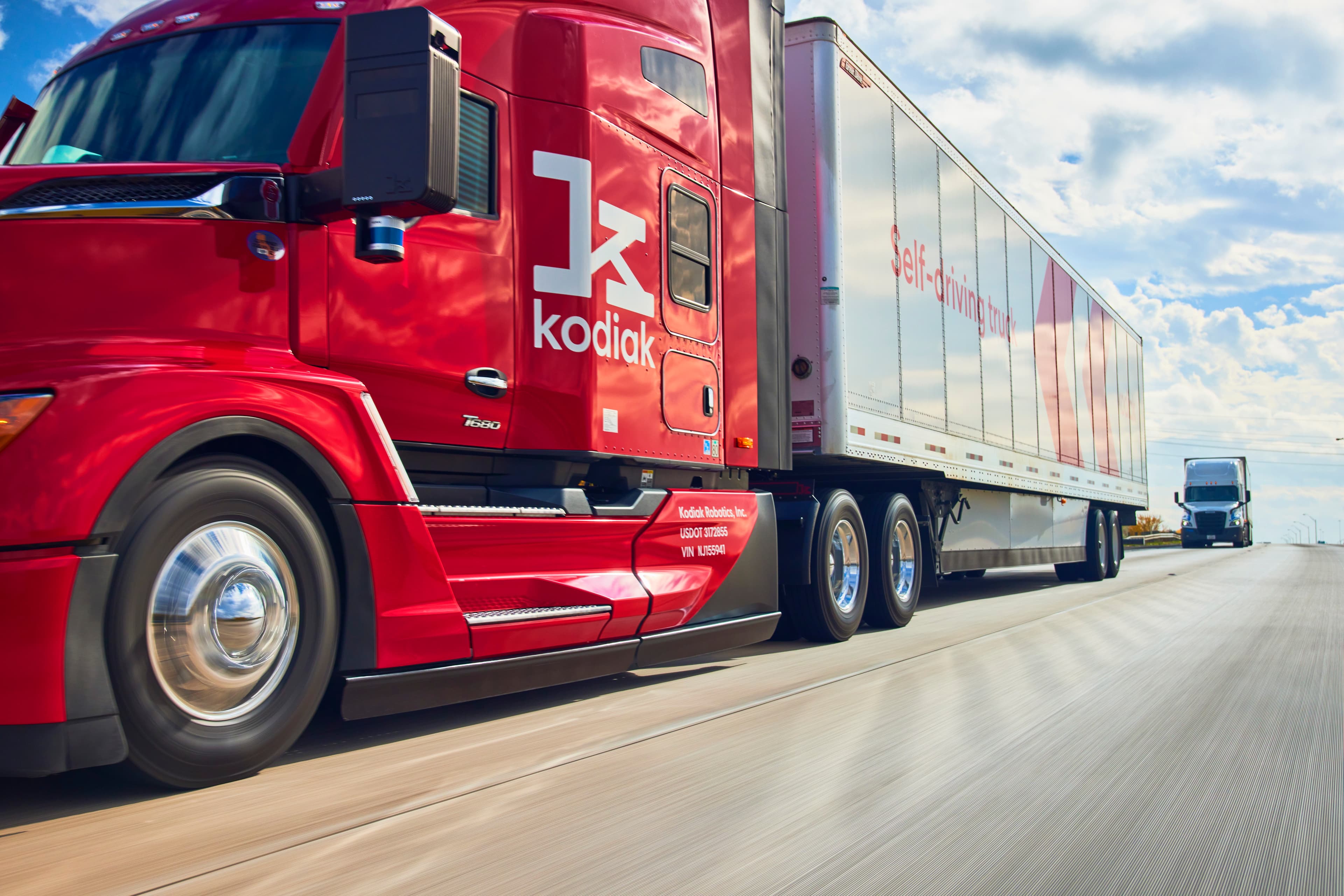
The BUILD America 250 Act creates the first federal framework for autonomous commercial trucks. It is not a green light. DOT has 2 years to write the safety standard; the liability question stays in front of a jury; and the bill funds retraining for drivers in the cab today. The post BUILD America 250 Act hands AV trucks a fed framework appeared first on FreightWaves.
Source Lens
Industry Context
Useful background context, but lower-priority than direct platform, community, or operator intelligence.
Impact Level
medium
Use this briefing to decide whether your team needs an immediate workflow, policy, or reporting change.
Key Stat / Trigger
No single quantitative trigger surfaced in this report.
Focus on the operational implication, not just the headline.
Full Coverage
On May 17, House Transportation and Infrastructure Committee Chairman Sam Graves, R-Mo. , and ranking member Rick Larsen, D-Wash. , released the BUILD America 250 Act, a bipartisan five-year surface transportation reauthorization that has to be done before the current authorization expires Sept. 30.
Buried inside the 1,000-plus pages is something the autonomous trucking industry has chased for years. Subtitle E, titled Safe Integration of Autonomous Commercial Motor Vehicles, is the first time Congress has tried to write a national rulebook for driverless trucks. Read the headlines and you would think driverless trucks just got cleared coast to coast.
They did not. The bill does not authorize a single truck to do anything new. What it does is hand the U. S. Department of Transportation a two-year homework assignment, which is to write a performance-based safety standard for automated driving systems, or ADS, equipped commercial motor vehicles operating in interstate commerce.
Until that rule is in place, nothing changes on the road. Framework is the honest word for it. This is scaffolding, not a finished building. The autonomous trucking industry welcomed it anyway, and fast. Kodiak AI founder and CEO Don Burnette called the bill historic and said it would replace today’s patchwork of state rules with a single federal standard.
That is the part of the bill the industry has wanted most, and it is a fair read of what the text is trying to do. The bill borrows the self-certification model that already governs the rest of the vehicle. A manufacturer must certify to the DOT that its system meets the standard, and it does so through what the bill calls a safety case.
In plain terms, the company has to put claims, arguments and evidence on the table showing the automated system delivers an equivalent or greater level of safety than a human-driven truck.
That safety case has to cover the hardware and software, the operational design domain, which is the set of conditions the truck is built to handle, a hazard analysis, a cybersecurity plan and a list of competencies.
Those competencies include detecting vulnerable road users, recognizing emergency vehicles and school buses, and pulling itself to a safe stop when it runs out of its comfort zone. The bill also locks in crash reporting.
ADS truck operators will have to report any crash involving a fatality, a serious injury, a strike on a pedestrian or cyclist, an airbag deployment or a tow-away, aligned with the standing order the National Highway Traffic Safety Administration already uses for automated vehicles.
For anyone who works with crash data, that is the provision that gives the public a real way to see how these trucks perform, rather than taking a press release at face value. The bill says that for Level 4 and Level 5 trucks, the manufacturer assumes the duties otherwise applicable to a human driver for the real-time driving task.
That sounds like Congress just assigned the blame. It did not. The bill includes a careful rule of construction stating that nothing in the section creates, expands or limits strict liability, creates a cause of action, or touches defenses such as comparative fault, contributory negligence, product liability principles or proximate causation.
Translation from the expert witness chair: when one of these trucks is in a fatal crash, and one eventually will be, the courts sort it out the same way they sort out everything else. Congress wrote the framework and deliberately stepped around the liability question. That fight stays where it has always been, in front of a jury.
The bill is not as hands-off as the skeptics fear, either. Remote drivers, remote assistants and fallback-ready users who actually perform the driving task have to be properly licensed commercial driver’s license holders subject to the existing federal motor carrier safety regulations. They have to be physically located in the United States or a U. S.
territory, which closes the door on offshoring the virtual driver’s seat. Any time they spend monitoring those trucks counts as driving time under hours-of-service rules. A remote operator is still a regulated commercial driver, not an unregulated worker behind a screen. The bill also draws a line on what stays human.
An ADS-equipped vehicle hauling placarded hazardous materials, or one carrying primarily minors such as a school bus, still has to have a human operator on board. Fully driverless is on the table for general freight. It is not on the table for hazmat or for kids.
Section 5407 establishes a commercial motor vehicle workforce development grant program, funded at roughly $27. 5 million to $30 million a year through 2030, to retrain current CDL holders in operating and maintaining automated trucks, build apprenticeships, and help the existing workforce adapt to new and emerging technologies.
That is not a promise that there will be no job changes. It is an acknowledgment, written into the bill itself, that the job
Original Source
This briefing is based on reporting from Freightwaves. Use the original post for full primary-source context.
Style
Audience