

Union Pacific, Norfolk Southern file revised merger application
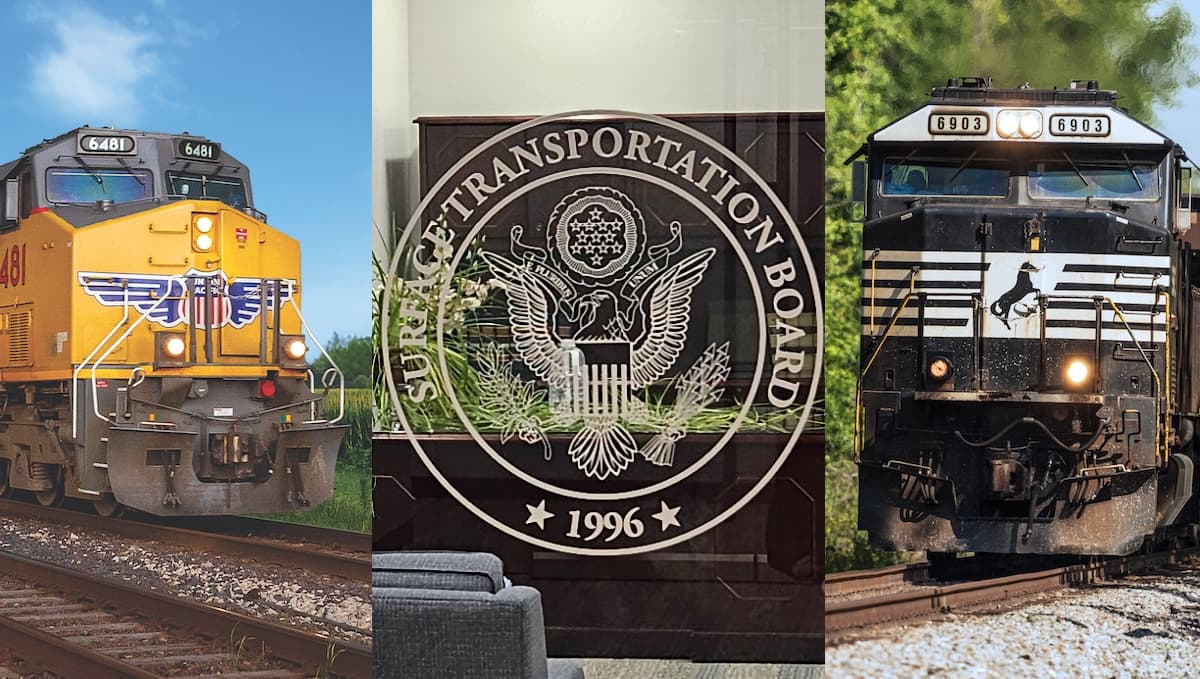
Union Pacific and Norfolk Southern filed revised merger application to create first transcontinental railroad, projecting $3.5 billion annual shipper savings and 2.1 million truckloads shifted from highway to rail. Combined network promises 24-48 hour transit time reductions with coast-to-coast service in four days.
Lower shipping costs could compress margins for sellers who don't renegotiate freight contracts, while faster cross-country rail transit opens new inventory distribution strategies. Monitor your logistics costs closely and explore rail intermodal options for heavy, non-urgent shipments between coasts.
This fits the broader supply chain consolidation trend, potentially giving large sellers with heavy products new cost advantages over smaller competitors who can't leverage rail freight minimums.
Review shipping cost allocation in your P&L reports -- if rail freight represents >10% of COGS, prepare to renegotiate contracts when merger completes.
Evaluate inventory positioning strategy for cross-country fulfillment using potential 4-day rail transit times versus current truck routing.
Bottom Line
Rail merger could cut cross-country shipping costs and transit times for sellers.
Source Lens
Industry Context
Useful background context, but lower-priority than direct platform, community, or operator intelligence.
Impact Level
medium
Rail merger could cut cross-country shipping costs and transit times for sellers.
Key Stat / Trigger
$3.5 billion annual shipper savings projected
Focus on the operational implication, not just the headline.
Full Coverage
Union Pacific and Norfolk Southern on Thursday submitted an amended merger application to the Surface Transportation Board, seeking approval for the first all-freight transcontinental railroad they say will drive growth, lower costs for shippers, and strengthen the U. S. supply chain.
“After completing the additional work requested by the STB, the facts remain clear: This merger enhances competition and delivers real public benefits that make America’s supply chain stronger,” said Union Pacific (NYSE: UNP) Chief Executive Jim Vena, in a release.
The STB in January rejected the railroads’ initial filing as incomplete, stating it failed to include market share forecast information, terms for UP’s withdrawal from the deal, and details of the sale of a switching railroad that handles critical interchange traffic between carriers.
UP claimed that the new analysis in the updated application is the first in rail merger history to use traffic data provided by all six North American Class I railroads, rather than sample data from the STB, enabling “the most thorough assessment of market and operational impacts ever.” window. googletag = window. googletag || {cmd: []}; googletag. cmd.
push(function() {googletag. defineSlot('/21776187881/FW-Responsive-Main_Content-Slot1', [[300, 100], [320, 50], [728, 90], [468, 60]], 'div-gpt-ad-1709668545404-0'). defineSizeMapping(gptSizeMaps. banner1). addService(googletag. pubads()); googletag. pubads(). enableSingleRequest(); googletag. pubads(). collapseEmptyDivs(); googletag.
enableServices(); }); googletag. cmd. push(function() {googletag. display('div-gpt-ad-1709668545404-0'); }); “This merger is fundamentally about growth,” said Norfolk Southern (NYSE: NSC) President and CEO Mark George, in the release. “Shippers have been clear about what they value, and the data backs it up.
When single-line rail service is available, they choose it. Our combined network will deliver seamless freight moves within and across the Mississippi watershed markets with one Class I railroad accountable from origin to destination.”
An improving trucking market where rising rates historically lead shippers increasingly to use less expensive intermodal rail led the partners in the revised filing to bump up their projections for winning over highway freight from 2 million to 2. 1 million truckloads annually. The shift will save shippers an estimated $3.
5 billion a year, which the railroads say will flow through to consumer prices, making American goods more affordable. Coast-to-coast route will cut transit times The single-line route and accompanying reduction in freight handoffs, they say, means in-transit savings of 24-48 hours, although some industry executives expect even greater reductions.
George in a recent presentation to a rail conference touted coast-to-coast service in just four days – the same as trucks. The amended application increases premium seven-day-a-week intermodal lanes from six to seven, including a new lane connecting northern California and the Southeast. window. googletag = window. googletag || {cmd: []}; googletag. cmd.
push(function() {googletag. defineSlot('/21776187881/fw-responsive-main_content-slot3', [[728, 90], [468, 60], [320, 50], [300, 100]], 'div-gpt-ad-1665767553440-0'). defineSizeMapping(gptSizeMaps. banner1). addService(googletag. pubads()); googletag. pubads(). enableSingleRequest(); googletag. pubads(). collapseEmptyDivs(); googletag.
enableServices(); }); googletag. cmd. push(function() {googletag. display('div-gpt-ad-1665767553440-0'); }); “The analysis also confirms the combined company will have sufficient equipment and infrastructure capacity available to support the projected growth,” the release stated.
The companies in the application also claim the merger will preserve customer access to competing railroads, “and will have no meaningful impact on geographic competition or on the availability of independent routes.”
Vena said projections show the combined railroad will move about the same number of ton-miles as BNSF (NYSE: BRK-B), its western competitor, currently handles. He said that emphasizes how the merger will enhance competition – a central requirement of the STB’s tougher requirements for mergers formulated in 2000 after a series of problematic rail takeovers.
A newly-consolidated carrier will require 1,200 net new union jobs by the third year of the merger to handle new business, up from 900 in the original application. That’s in addition to the “jobs-for-life” guarantee covering every union employee with a job at the time of the merger, even for members of unions such as the Teamsters, which oppose the deal.
The amended application includes more detailed market share projections that account for the growth the combined railroad expects to gain as shippers move traffic from trucks and other railroads. window. googletag = window. googletag || {cmd: []}; googletag. cmd. push(function() {googletag.
defineSlot('/21776187881/fw-responsive-main_content-slot4', [[300, 100], [320, 50],
Original Source
This briefing is based on reporting from Freightwaves. Use the original post for full primary-source context.
Style
Audience