

From regulatory shifts to on-site power: The new economics of heavy-duty EV infrastructure
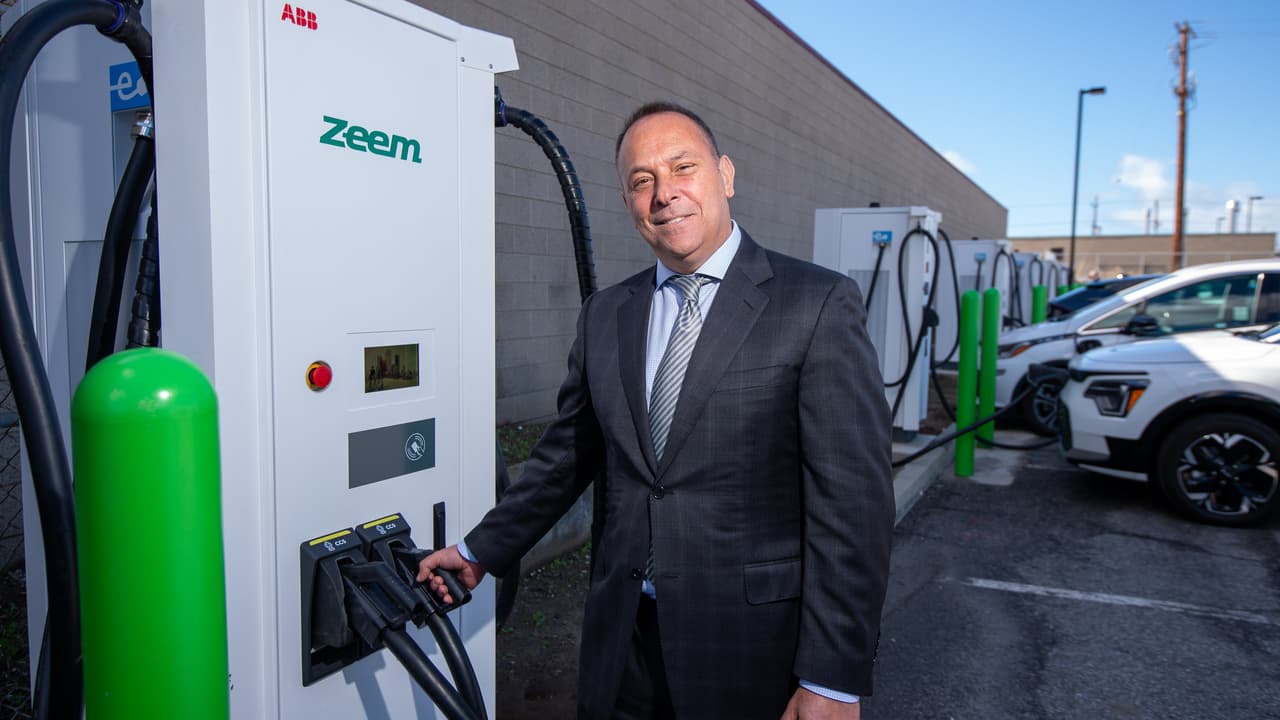
Fleets and providers are adapting after regulatory changes. Zeem CEO Paul Gioupis talks vehicle performance, infrastructure, and grid integration. The post From regulatory shifts to on-site power: The new economics of heavy-duty EV infrastructure appeared first on FreightWaves.
Source Lens
Industry Context
Useful background context, but lower-priority than direct platform, community, or operator intelligence.
Impact Level
medium
Use this briefing to decide whether your team needs an immediate workflow, policy, or reporting change.
Key Stat / Trigger
No single quantitative trigger surfaced in this report.
Focus on the operational implication, not just the headline.
Full Coverage
The presidential election was not kind to the commercial vehicle market. Then, the following rollback of federal regulations was unkinder. Despite the headwinds, many operators who paused their electrification plans are returning with renewed commitment.
This is particularly in California, where regulatory pressure remains intact despite shifting federal policy. “Obviously the presidential election sent the entire industry sideways for a bit,” said Paul Gioupis, CEO of Zeem Solutions in an interview with FreightWaves.
“After, let’s say, a quarter or two of settling, Zeem started picking up the pace again and came back with a nice little roar.” The Advanced Clean Fleets (ACF) was the regulation that created an initial wave of early adopters. Those fleets purchased vehicles to comply with California’s aggressive decarbonization mandates.
When federal rollbacks appeared imminent, some fleets balked. That hesitation, however, was short-lived. “There was this sort of celebratory moment that ACF went away, then they started realizing that CARB in the state of California is going to do everything they can to keep their finger on making sure these fleets comply,” Gioupis said.
“Many California fleets have realized they’re not out of the woods and they still need to think about decarbonization.” The California Air Resources Board’s (CARB) continued enforcement means operators in the state face a fundamentally different calculus than their counterparts elsewhere.
The good news for the broader industry: improved vehicle performance is driving adoption even without regulatory mandates. “The good news is the remainder of the country wasn’t under that kind of pressure, and they’re seeing OEMs bringing product to market that performs much better,” Gioupis said. “I think it’s an inflection point year—2026.”
The Tesla Semi-sized Elephant in the Room. The Tesla Semi has emerged as one catalyst reshaping the perceptions of what heavy-duty electric vehicles can do. Zeem has had the second-generation vehicles since December, with real-world results that challenge the skeptics. “It’s consistently getting well over 400 miles on a full charge,” Gioupis said.
“Tesla is going to bring it to market. A lot of the competitive OEMs were downplaying it, saying they weren’t serious about it, that it wasn’t going to come.” The company’s relationship with Tesla has deepened as adoption accelerates. Zeem now buys vehicles on behalf of customers and for its own fleet.
It leverages infrastructure that supports Megawatt Charging System (MCS) compatibility through V3. 5 skidded charging solutions. “Bottom line is we’ve been test driving the vehicle,” Gioupis said. “These are the second-generation vehicles. We ended up buying one of those and operating it with our fleet since December.”
Tesla’s rapid iteration stands in stark contrast to traditional original equipment manufacturer (OEM) development cycles. When drivers complained about bump-out windows that prevented handing paperwork to port officials and toll booth attendants, Tesla responded quickly.
“They came back very, very quickly, made that repair, and put in an automatic roll-down window,” Gioupis said. “I know how minimal that may sound, but for fleets it matters.” Gioupis, who watched Tesla’s automotive division overcome early doubts as an investment banker, sees history repeating itself.
He recalls when the company’s market cap fell below $1 billion and critics predicted the vehicles wouldn’t last a year. “I feel like I’m watching that in slow motion right now with the Tesla Semi truck,” he said.
“So while all the doubters—those OEMs—are coming out and saying, ‘They’re not going to build that truck, it’s not going to have that range,’ I think a lot of it was fear.” The Power of Skids and Modernizing Infrastructure Zeem has developed a skidded EV charging solution designed around 2. 5-megawatt building blocks.
These scalable, modular systems avoid the extensive ground excavation and traditional construction requirements. “We took all that experience, all those learnings, we’ve come back and just simplified the build and modernized EV infrastructure,” Gioupis said. This addresses a fundamental disconnect between utilities and charging depot operators.
When Zeem contacts utilities in new territories, representatives often request building plans that don’t exist. “I tell them, ‘I don’t have a building. I’m going to put in a bathroom and a lounge, but I have parking lots and I have a parking layout that I can send you,’” Gioupis said.
“They don’t even know how to carry on the conversation, and they tell you, ‘I don’t even know how to get to the next level.’” The problem stems from outdated regulatory frameworks. Utility equipment was never modernized with parking-lot charging hubs in mind.
“I simply came and said, if I’m in the middle of a parking lot, why do I have to build something that complies with being three feet away from a building?” Gioupis said. “So I have to pay all this extra mo
Original Source
This briefing is based on reporting from Freightwaves. Use the original post for full primary-source context.
Style
Audience