

TIA asking FMCSA for guidance on approved carriers post-Montgomery
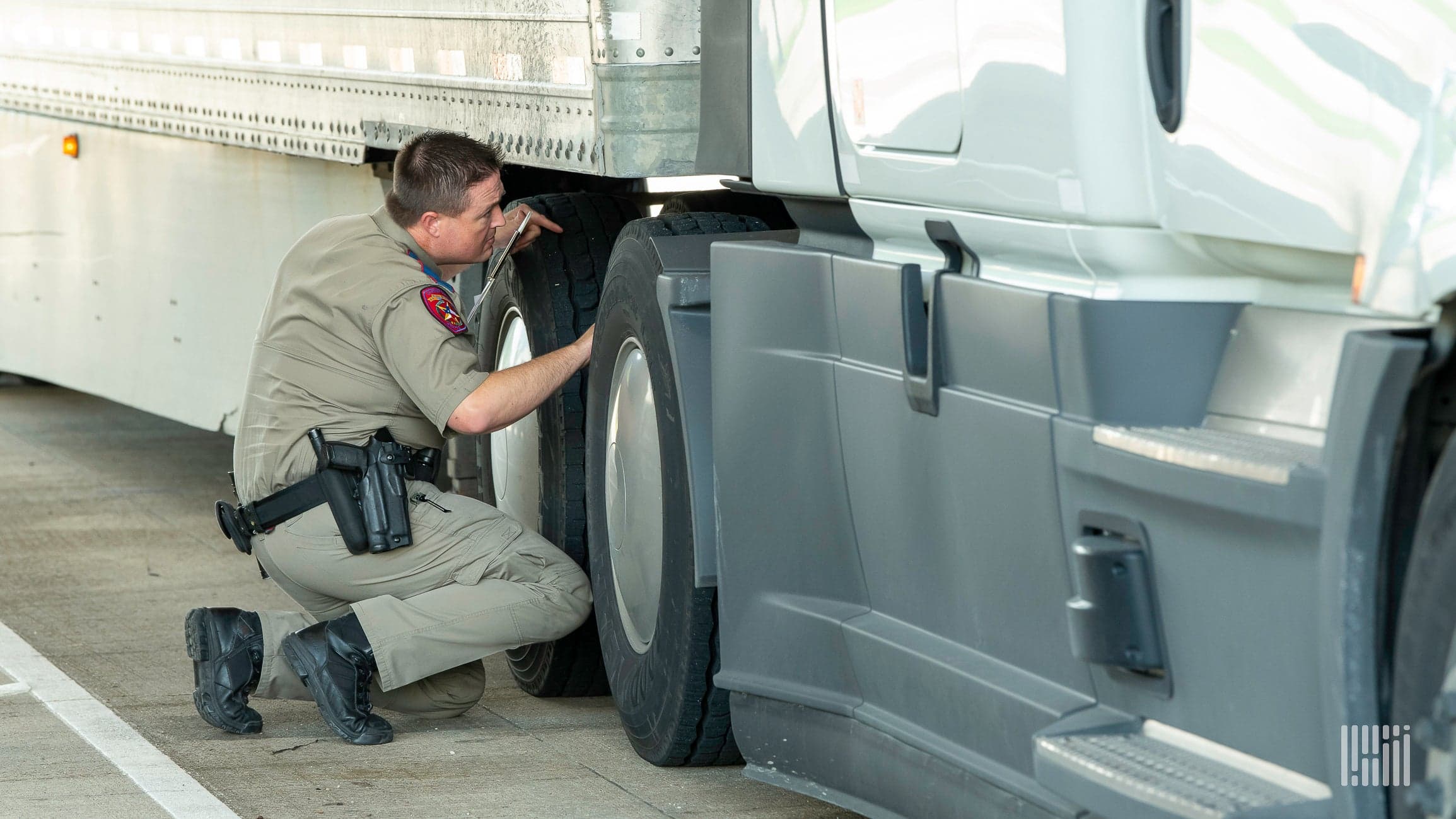
The Transportation Intermediaries Association is asking FMCSA to take steps more clearly defining safe carriers. The post TIA asking FMCSA for guidance on approved carriers post-Montgomery appeared first on FreightWaves.
Source Lens
Industry Context
Useful background context, but lower-priority than direct platform, community, or operator intelligence.
Impact Level
medium
Use this briefing to decide whether your team needs an immediate workflow, policy, or reporting change.
Key Stat / Trigger
No single quantitative trigger surfaced in this report.
Focus on the operational implication, not just the headline.
Full Coverage
The Transportation Intermediaries Association (TIA) is asking the Federal Motor Carrier Safety Administration (FMCSA) for a federal rulemaking that would set standards on what constitutes a carrier that can safely be booked.
The TIA, in a formal petition for rulemaking to the agency, leaves little doubt as to the need for such a process: the fallout from Montgomery vs. Caribe Transport II and the door it opened to brokers being found liable for crashes and other incidents involving a carrier hired by the 3PL. “In light of the recent U. S. Supreme Court decision in Montgomery v.
Caribe, it is now clear that brokers and shippers continue to face an untenable burden in attempting to evaluate, develop, and apply disparate methodologies and standards (using potentially suspect data) in an effort to discern whether a federally-licensed motor carrier will nevertheless be deemed unsafe according to judges and juries in every state and federal jurisdiction across the country,” the TIA said in its petition.
TIA President Chris Burroughs disclosed the petition–which is not yet publicly available bt was obtained by FreightWaves–in a post on LinkedIn. “In far too many cases, a carrier’s safety deficiencies are only revealed after a catastrophic incident has already occurred,” Burroughs wrote on LinkedIn.
The 90% number Burroughs cited the oft-quoted number, which has been challenged as not fully capturing the amount of federal regulation, that “more than 90% of authorized motor carriers currently operate without an FMCSA safety rating.” That number is in the petition as well.
The specific request in the petition is that FMCSA “(promulgates) a federal safety standard governing the use of federally licensed motor carriers.”
Even where a carrier falls under the 10% that has a safety rating, the TIA says that “FMCSA has acknowledged that the data generated by the Safety Measurement System (SMS) is used to prioritize potential interventions but is not intended to imply a federal safety rating and should not be used to draw conclusions about a motor carrier’s overall safety condition.”
The fallout from Montgomery, FMCSA said in its petition, mean that “brokers and shippers continue to face an untenable burden in attempting to evaluate, develop, and apply disparate methodologies and standards (using potentially suspect data) in an effort to discern whether a federally-licensed motor carrier will nevertheless be deemed unsafe according to judges and juries in every state and federal jurisdiction across the country.”
Montgomery changed everything Various arguments made not just in Montgomery but in other federal cases involving broker liability often came down to saying a broker should be shielded in part because if a carrier with a federal motor carrier number is legally on the road because it has an MC number granted by the Department of Transportation, brokers should be able to assume a level of safety for that fleet, whether it is one truck or thousands of them.
Montgomery ended that assumption. Now it wants FMCSA to give a more in-depth stamp of approval for brokers to rely on. TIA’s petition recaps the attempt that dates back 10 years to create a “modernized Safety Fitness Determination rule.” It was withdrawn in 2017 and little has happened since, TIA argues.
“This regulatory gap has had significant consequences,” the TIA writes in its petition request.
“Unsafe motor carriers may continue to operate without adequate oversight, while small and independent carriers, many from diverse and underserved communities, are often excluded from opportunities due to risk-averse selection practices driven by litigation exposure.”
If some sort of system is not put into place, the TIA says, it will lead to “overcorrection across the industry, with increasingly restrictive carrier selection practices that exclude large numbers of otherwise compliant motor carriers.”
Hitting small carriers That step will have “a disproportionate effect on small motor carriers, which are the lifeblood of the modern domestic supply chain.”
The core of the TIA request is that FMCSA “(establishes) a federal motor carrier selection safety standard that informs brokers and shippers whether or not the use of a given motor carrier is reasonable based on objective criteria determined by FMCSA to correlate demonstrably with safety performance.”
FMCSA’s request is that a proposed Safety Selection Standard would give a stamp of approval to a carrier that is: • Registered as a motor carrier or household goods motor carrier under Title 49, which is the U. S.
code governing transportation • Meets the minimum insurance requirements of federal and state law • “Is not determined unfit to operate safely commercial motor vehicles…or otherwise ordered to discontinue operations by the Federal Motor Carrier Safety Administration or a state for intrastate commerce.”
The TIA also asked that FMCSA “immediately publish” a list of motor carriers that the agency concludes are “high risk.” At the FreightWaves Freight Fraud symposium in Cleveland last month, FMCSA deputy administrator Jesse Elison acknowledged FMCSA has a key role post-Montgomery, but that it is not a “ratings agency.”
The TIA petition to FMCSA is signed by Burroughs. In his LInkedIn statement, Burroughs talked of the broad goals it was seeking from FMCSA: to “establish a clear, uniform federal standard outlining the reasonable steps brokers and shippers should take when selecting motor carriers.
Such a standard would provide much-needed guidance, improve safety outcomes and create a more predictable legal and operating environment for all stakeholders.”
More articles by John Kingston Texas court nixes shipper liability in Home Depot/Werner case Carrier Nussbaum sets driver pay increase; others popping up more quietly Commerce finding on van imports may give relief to beleaguered Wabash The post TIA asking FMCSA for guidance on approved carriers post-Montgomery appeared first on FreightWaves.
Original Source
This briefing is based on reporting from Freightwaves. Use the original post for full primary-source context.
Style
Audience