

The DVIR could be the maintenance program key you’re missing
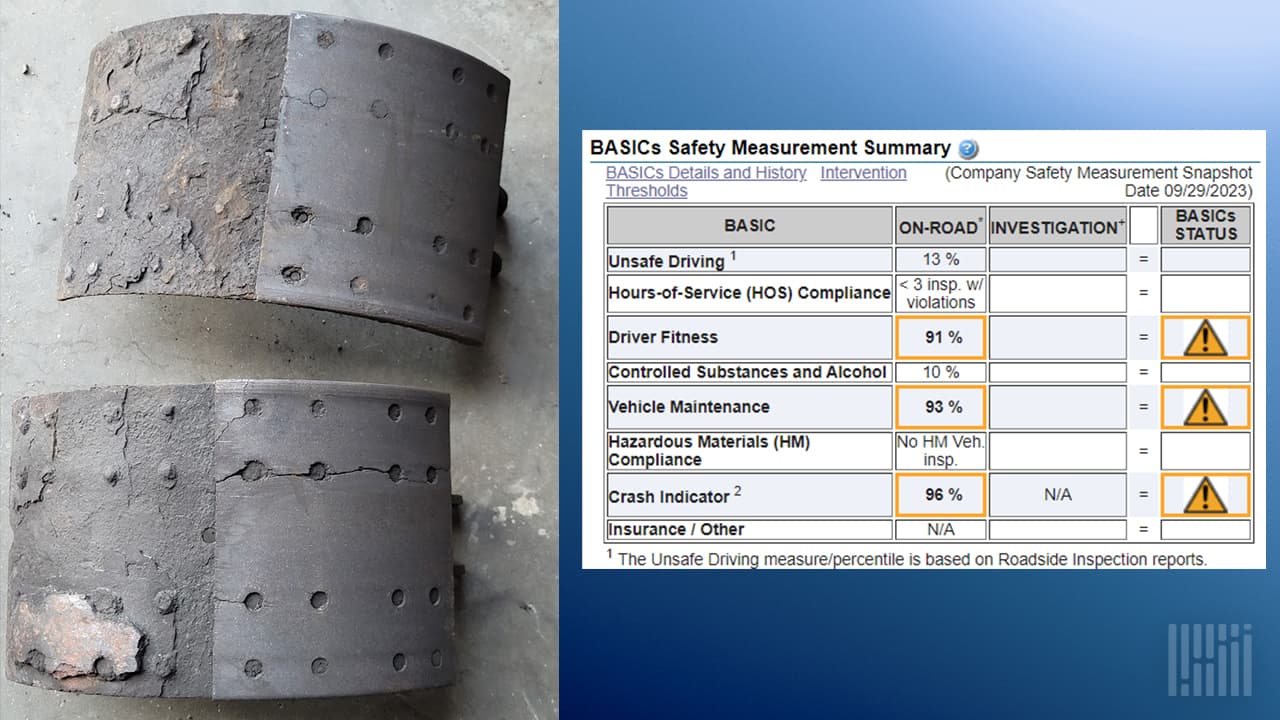
Pre-trip inspections are the first line of defense against mechanical failure on the highway. For most of the industry, they are a 30-second checkbox exercise completed in the cab. That gap between regulation and reality is showing up in courtrooms. The post The DVIR could be the maintenance program key you’re missing appeared first on FreightWaves.
Source Lens
Industry Context
Useful background context, but lower-priority than direct platform, community, or operator intelligence.
Impact Level
medium
Use this briefing to decide whether your team needs an immediate workflow, policy, or reporting change.
Key Stat / Trigger
No single quantitative trigger surfaced in this report.
Focus on the operational implication, not just the headline.
Full Coverage
The driver vehicle inspection report is one of the oldest safety tools in commercial transportation. The DVIR is the communication between the driver who sees the vehicle or asset every day and the maintenance, dispatch and management teams that manage operational efficiency. Without that communication, the entire operation fails. The idea is simple.
Before you drive the truck, walk around it, look at it, check the brakes, tires, lights, coupling device, mirrors, and steering, and write down what you find. If something is wrong, you report it. The carrier fixes it before the truck moves. If nothing is wrong, you certify the truck is safe and you go to work.
After the trip, you do it again and report anything that developed during the day. The next driver reviews the previous report, verifies that any reported defects were repaired, and the cycle continues. That is what the regulation says. What happens on the ground at most carriers, including some carriers that consider themselves safety leaders, is different.
The driver climbs into the cab, opens the ELD or the fleet management app, scrolls to the DVIR screen, taps the “no defects” button, signs it electronically, and starts driving. Total time: 30 seconds. Total inspection: none. The DVIR exists. It is completed. It is filed. It is also fiction.
Why the process breaks down A proper pre-trip inspection on a tractor-trailer combination takes 15 to 20 minutes for a driver who knows what to look at. That is 15 to 20 minutes of unpaid time for most drivers under the current HOS structure, since the driver does not go on duty until the pre-trip is complete but the clock starts when the inspection begins.
For a driver paid by the mile, those 20 minutes represent zero revenue. For a driver under pressure from dispatch to make a pickup window, those 20 minutes represent the difference between making the load and missing it.
The economic incentive to skip the inspection is built into the compensation structure, and telling drivers to do it anyway without addressing the incentive is a training failure that repeats itself every morning in every truck yard in the country. Dispatch culture makes it worse.
A fleet that tells its drivers to complete thorough pre-trips but also tells its dispatchers to get trucks moving by 6 a. m. has created a conflict it has not resolved. The driver who reports a defect and delays departure is the driver who gets a phone call from dispatch asking why the truck is not moving.
After that phone call happens two or three times, the driver stops reporting defects. The defect does not go away. The report does. The truck goes out on the road with a bad glad-hand seal, a leaking air line, a cracked mirror, or a tire at 60 psi that should be at 100, and the DVIR says everything is fine. Training is the other failure point.
A pre-trip inspection is a skill. It requires knowledge of what the components look like when they are functioning correctly, so the driver can recognize when they are not. It requires knowing what to listen for in an air brake test, what to feel for in a steering check, and what to look for in a suspension walk-around.
Most CDL training programs teach a pre-trip as a memorized sequence for the skills test and never revisit it. Most carrier onboarding programs mention it in orientation and never reinforce it. The driver who was taught to pass the test is not the same driver who knows how to find a cracked brake drum at 5 a. m. in a dimly lit yard.
What it looks like in discovery The litigation value of the DVIR depends entirely on whether it is real. A DVIR that shows a defect reported by the driver, followed by a work order showing the defect was repaired, followed by a certification that the repair was completed before the next trip, is evidence that the carrier’s system works.
It is powerful evidence. It shows the driver looked, the carrier listened, and the truck was fixed. That is the kind of documentation that wins cases. A DVIR that shows no defects reported for 60 or 90 consecutive days on a truck that accumulated multiple roadside violations during the same period is the opposite.
The plaintiff’s expert will line up the DVIRs next to the roadside inspection reports and ask a simple question: if the driver inspected this truck every morning and found nothing wrong, and the trooper found four brake defects on March 14, and the driver reported no defects on March 13, who was wrong?
The answer the jury hears is that the driver never looked. It gets worse if the carrier has a pattern. When the plaintiff’s attorney pulls DVIRs across the fleet, not just the truck in the crash, and finds that 95 percent of all DVIRs fleet-wide report no defects, the argument shifts from one negligent driver to a systemic failure.
The carrier did not train its drivers to inspect. Or it trained them and did not enforce it. Or it enforced it and created a culture where reporting defects was punished by dispatch pressure. Whichever version the evidence supports, the result is the same.
The DVIR program was not functioning, and the carrier knew or should have known because the data was in its own system. If you have a fleet with 500k to 1 million miles and you have no defect DVIRs, you don’t have a DVIR communication program; you have a pencil-whipping checklist. Making it real The fix is not complicated, but it requires commitment.
Paid pre-trip time, separate from the driving clock, removes the economic penalty. A defect reporting process that does not result in dispatch pushback removes the cultural penalty.
A training program that teaches drivers what a cracked brake drum looks like, what a leaking hub seal sounds like, and what a loose kingpin feels like at the fifth wheel removes the knowledge gap. Random spot-checks by a maintenance supervisor who walks the yard and compares what the DVIR says against what the truck looks like removes the accountability gap.
Some fleets are using technology to close the gap. Photo-verified DVIRs that require the driver to take a picture of each inspection point, with time and location stamping, create a record that is harder to fabricate than a checkbox.
Video walk-around systems that record the entire pre-trip give the carrier a visual record that matches or contradicts the written report. Neither of these is required by regulation.
Both of them, in a post-crash litigation environment where the plaintiff’s attorney will ask whether the carrier’s pre-trip process was real, are worth more than the cost of the subscription.
Oftentimes in litigation, it isn’t about whether you were compliant; it’s what the rest of your reasonable industry peers are doing and why you weren’t doing it as well. It’s about defensibility and defensible programs and systems and workflows.
This is the difference between having to make someone whole if you cause a crash vs making someone rich after you cause a crash. It’s very seldom about who was at fault for the actual event itself. It’s about the systems, programs, policies, and workflows, and how or if you managed them effectively and consistently.
The carrier that takes DVIRs seriously is building a litigation defense every single day as its drivers complete honest inspections. The carrier that treats DVIRs as a formality is building a plaintiff’s case every single day that its drivers check a box and drive. The regulation is identical for both. The outcome in court is not.
The post The DVIR could be the maintenance program key you’re missing appeared first on FreightWaves.
Original Source
This briefing is based on reporting from Freightwaves. Use the original post for full primary-source context.
Style
Audience