

Is Lufthansa giving up on its Airbus A321 cargo fleet?
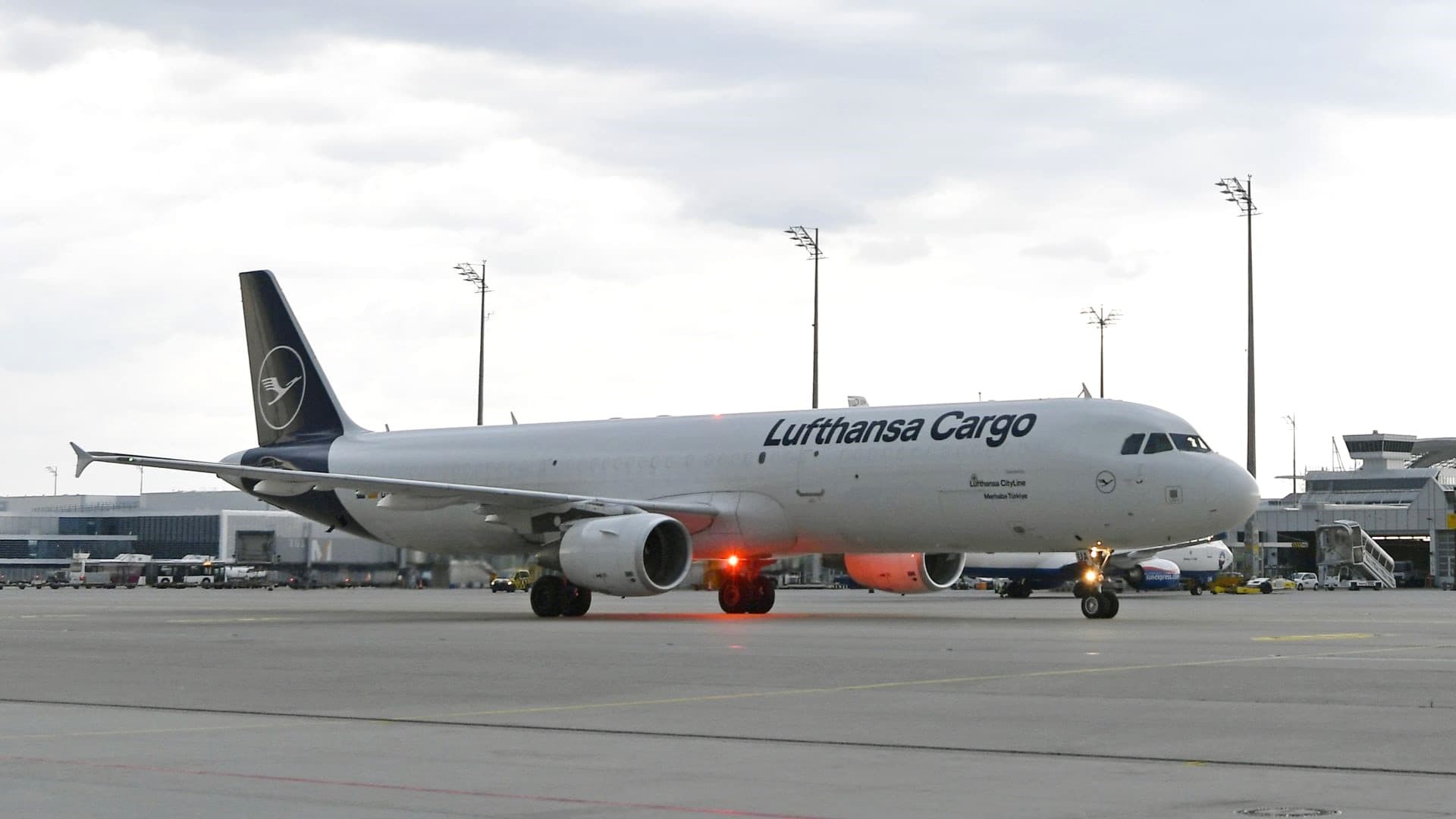
Lufthansa Cargo is trying to unload its four Airbus A321 converted freighters despite repeated assurances it plans to redeploy the aircraft in commercial service, which have been grounded since the sister passenger airline that provided the pilots went out of business. The post Is Lufthansa giving up on its Airbus A321 cargo fleet? appeared first on FreightWaves.
Source Lens
Industry Context
Useful background context, but lower-priority than direct platform, community, or operator intelligence.
Impact Level
medium
Use this briefing to decide whether your team needs an immediate workflow, policy, or reporting change.
Key Stat / Trigger
No single quantitative trigger surfaced in this report.
Focus on the operational implication, not just the headline.
Full Coverage
Lufthansa Cargo insists it will soon resume commercial service with its four Airbus A321 converted freighters that were grounded nearly four months ago, but all signs suggest the carrier has given up on the narrowbody jets and is looking to unload them.
The cargo subsidiary of Lufthansa Group (XETRA: LHA) is ready to abandon the narrowbody A321 jets after less than four years, because they have fallen short of performance expectations and Lufthansa Cargo doesn’t need the capacity, as most regional freight customers can be served by Lufthansa’s passenger air and trucking networks without any noticeable impact, according to aviation and logistics industry sources.
The A321s were operated for Lufthansa Cargo by CityLine, which provided crews and flight support until Lufthansa Group accelerated the planned closure of the loss-making, regional passenger affiliate. It abruptly shut down CityLine operations in mid-April because of rising fuel costs linked to the Iran war and pressure from labor disputes.
The A321s remain parked at Frankfurt International Airport, Lufthansa’s main hub. “Our strategic European network is a key component in maintaining global supply chains. Lufthansa Cargo and the Lufthansa Group are aware of this responsibility.
We will now be working with the Lufthansa Group to find a way to offer this cargo capacity to our customers again as soon as possible,” the cargo division said in a statement at the time. Lufthansa Cargo, the No.
14 cargo carrier in the world by scheduled traffic, has a fleet of 12 large Boeing 777 intercontinental freighters and manages shipments on Group passenger airlines.
Lufthansa took delivery of the A321 freighter aircraft in 2022 and 2023 from San Francisco-based BBAM Aircraft Leasing & Management, after they were reconfigured by a speciality repair shop to carry shipping containers on the main deck.
The all-cargo airline marketed their capacity on short-and-medium haul routes geared towards e-commerce customers in Europe, and parts of the Middle East and North Africa. In March, Lufthansa Cargo executives remained publicly bullish about the A321s, describing how they helped support customers in the automotive sector, a key focus area for the company.
In one case, a chartered A321 flew on less than 24-hour notice from Frankfurt, Germany, to Vienna, Austria, to pick up a load of components and deliver them to Belgrade, Serbia, to keep a production line from closing down. Two additional charter flights followed in subsequent days.
And in February, Lufthansa Cargo operated 11 A321 freighter flights from Casablanca, Morocco, for Mercedes-Benz over an 11-day span.
Responding to an inquiry about the delayed return of the A321 cargo fleet, spokeswoman Katharina Stegmann, said Lufthansa Cargo was looking to replace CityLine with a third-party contract carrier that would operate the aircraft. “We are currently working intensely to evaluate the available options for operating our A321-fleet.
Currently, it appears that this will be handled by an operator outside Lufthansa Group. It has not yet been definitively determined whether the suspension will remain in effect for the entire summer flight schedule,” she said in a June 29 email message.
“Our goal is not only to provide a short-term solution, but also to establish a structurally improved solution that will ensure even greater stability and flexibility in the future. Until we can implement a new operating structure, the aircraft will remain grounded.
There is no exact timeline foreseeable at the moment, but we are working on restarting the operations as soon as possible.” Ghost freighters Restarting the A321 operations now seems unlikely after a spokesman confirmed to FreightWaves that Lufthansa Cargo has removed its brand name and color scheme from the A321 freighters.
“As part of the ongoing evaluation of different operating scenarios, the aircraft have been transitioned to a neutral exterior appearance. Since the aircraft are currently grounded, the branding was removed during this period,” Jan Paulin said in a statement on July 16.
“For operational reasons, the aircraft are moved on a regular basis, for example to undergo scheduled inspections and maintenance checks.” Stripping the corporate colors from the A321s raises questions about whether Lufthansa Cargo is still interested in operating them.
The latest statement describes the goal of finding a home for the A321s, but notably ignores any specific mention of resuming operations for Lufthansa Cargo itself. Lufthansa CityLine operated four Airbus A321 converted freighters on behalf of Lufthansa Cargo.
(Photo: Lufthansa Cargo) “We are currently working intensively to evaluate the available options for operating our A321 freighter fleet. As part of this process, we are in discussions with several potential operators to identify a sustainable solution for the future operation of the aircraft.
The duration of the current suspension of flight operations has not yet been finally determined,” Paulin said. The change to a neutral color scheme indicates that Lufthansa Cargo is trying to return the A321s and break the multi-year lease with BBAM or sublease them to another all-cargo carrier, said an industry executive familiar with the situation.
BBAM doesn’t want the planes back and Lufthansa would prefer not subleasing them. “It’s a bit of a standoff at the moment,” the source said. “I don’t think they’ll operate back for Lufthansa.”
The lessor’s position is influenced by a glut of narrowbody freighters, caused by a boom in passenger conversions in response to massively elevated air shipping activity during the pandemic, and the realization that remarketing the A321s at equal lease rates to a carrier of equal credit worthiness will be difficult — especially with most operators still favoring the Boeing 737-800 in that category.
Some owners are making more money by removing engines from idle A321 freighters and leasing them to passenger airlines desperate to avoid capacity reductions in the face of a global engine repair and production slowdown. But the Lufthansa aircraft are in BBAM’s freighter fund and BBAM wants to keep them working as freighters, the source said.
BBAM representatives did not respond to repeated phone messages requesting comment on the matter. From Lufthansa’s point of view, subleasing the aircraft isn’t ideal because it would be an intermediary with its credit still on the hook to BBAM.
“If they do cut a deal with BBAM to return the airplanes it would mean millions of dollars of termination fees,” the source told FreightWaves.
Lufthansa Cargo is coming to terms with the fact that the A321 “is an expensive aircraft to operate in cargo configuration and every operator is having a hard time making money,” said a prominent air logistics expert with experience running airline operations and as an airline customer.
Miami-based Global Crossing Airlines, for example, this year idled two of its four A321 freighters because of soft demand and its inability to exit the lease. Latvia-based SmartLynx Airlines, which operated a fleet of A321 converted freighters shut down cargo operation in March 2025 after losing a major contract.
Also, Air Transport Services Group, the world’s largest lessor of freighter aircraft and a contract cargo airline for customers such as Amazon and DHL Express, in January dissolved its joint venture converting Airbus A321 passenger aircraft to all-cargo configuration because demand for A321 freighters has collapsed.
Turkish Airlines’ cargo division has wet-leased some A321 freighters from another airline to temporarily fill capacity needs, but doesn’t like them because they lose money, the logistics source said.
FreightWaves spoke with several air cargo analysts and operators who say the A321 is uneconomical without high capacity utilization, the right commodity and the right route system. They all requested anonymity so they could speak freely without jeopardizing current or future business relationships.
The primary issue is that the Boeing 737-800 is more efficient than the A321. The A321 is heavier, which means it requires more fuel, and requires more maintenance than predicted, resulting in higher trip costs than with a 737-800, said an expert who previously worked at one of the aircraft manufacturers.
In many cases, A321 leases are more expensive because the planes tend to be newer than 737-800 converted freighters and the conversion costs are rolled into the lease. Of the 82 A321 converted freighters in the market, 38% are inactive compared to an inactive rate of 14.
8% for the 283 available Boeing 737-800s, according to data provided by Aerodynamic Advisory. Over time, operators have realized the plane’s volumetric capacity works well high-frequency small-package shuttle routes, but is less desirable for general freight. “The A321 passenger-to-freighter experiment is a failure.
The only way to make money is if you pack them full of e-commerce day-in and day-out and then they might only break even. But with high fuel costs, and so on, these are doomed in my opinion,” said the logistics professional.
One of the few carriers having apparent success with the A321 is Qantas, which operates six A321 converted freighters on behalf of Australia Post and is scheduled to take delivery of three additional A321s in the coming months.
Lufthansa Cargo can achieve greater operating flexibility by contracting, as needed, with narrowbody freighter operators when extra capacity is needed for short periods rather than being permanently stuck with dedicated planes it can’t efficiently utilize, the aviation executive said.
The airline acknowledged that it has been able to support customers without interruption since the A321s were grounded.
“Thanks to our extensive global network, supported by our own Boeing 777 freighters and the belly cargo capacity provided by Lufthansa Group passenger airlines, we are able to continue offering our customers flexible and reliable transportation solutions,” Paulin, the spokesman, said.
Jonathan Mellink, head of sales and marketing at cargo consultancy Rotate, said the A321s exit from Lufthansa Cargo’s fleet has had a relatively small impact on customers within the intra-Europe network. The freighters offered about 210 metric tons of daily regional capacity and likely better service levels than passenger aircraft or trucks, he explained.
Lufthansa’s A321 changes have not had much impact on Germany-based logistics provider Dachser, spokesman Hedrik Durst said.
The company has been able to leverage its strong European road network to absorb traffic previously carried by the freighters The head of an air freight shipping cooperative said he hasn’t seen any shipper delays because there are plenty of regional air cargo and ground alternatives. Click here for more FreightWaves/American Shipper stories by Eric Kulisch.
Write to Eric Kulisch at ekulisch@freightwaves. com. RELATED STORIES: GlobalX shelves 2 Airbus cargo aircraft amid thin demand New Australia airport has no curfew for cargo campus Lufthansa Cargo targets high-value tech, auto and pharma sectors The post Is Lufthansa giving up on its Airbus A321 cargo fleet? appeared first on FreightWaves.
Original Source
This briefing is based on reporting from Freightwaves. Use the original post for full primary-source context.
Style
Audience