

Logistics resiliency is critical as disruptions pile up in 2026
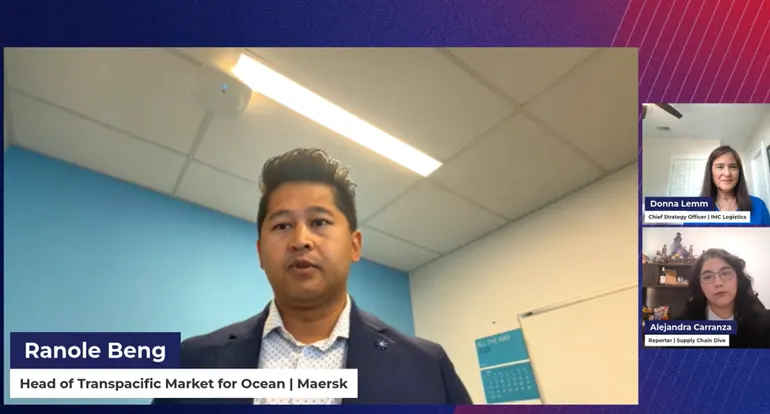
“It is increasingly difficult to really predict where that next disruption is going to come from,” Ranole Beng, Maersk's head of Transpacific market for ocean, said in a virtual panel.
Source Lens
Industry Context
Useful background context, but lower-priority than direct platform, community, or operator intelligence.
Impact Level
medium
Use this briefing to decide whether your team needs an immediate workflow, policy, or reporting change.
Key Stat / Trigger
No single quantitative trigger surfaced in this report.
Focus on the operational implication, not just the headline.
Full Coverage
An article from Logistics resiliency is critical as disruptions pile up in 2026 “It is increasingly difficult to really predict where that next disruption is going to come from,” Ranole Beng, Maersk’s head of Transpacific market for ocean, said in a virtual panel.
Published July 20, 2026 David Taube Senior Reporter, Trucking Dive Share Copy link Email / Print License Add us on Google Maersk Head of Transpacific Market for Ocean Ranole Beng (left) speaks during a Supply Chain Outlook event alongside IMC Logistics Chief Strategy Officer Donna Lemm (top right) that was moderated by Supply Chain Dive reporter Alejandra Carranza (lower right).
Speakers noted how ongoing pressures, such as fuel prices due to the Iran war, are continuing. David Taube/Trucking Dive/Supply Chain Dive First published on Listen to the article 3 min This audio is auto-generated. Please let us know if you have feedback.
Editor’s note: This story is part of a series highlighting takeaways from a Supply Chain Outlook event hosted by Supply Chain Dive, Trucking Dive, Manufacturing Dive and Packaging Dive. Event sponsors had no influence over editorial sessions or coverage. Register here to watch a replay of the event.
Volatile trade policies, tightening capacity, cargo theft, geopolitical conflicts and market conditions are continuing to give logistics leaders from shippers to truckers a recurring barrage of challenges.
These are among the leading issues concerning transportation, and further developments — even surprises — will inevitably require executives to remain agile and flexible, according to speakers of a logistics session for a July 15 online event, “Supply Chain Outlook: Trends and Risks to Watch in 2026,” moderated by Supply Chain Dive.
"It is increasingly difficult to really predict where that next disruption is going to come from," speaker Ranole Beng, Maersk’s head of Transpacific market for ocean, said at the session.
Nevertheless, global trade has proven to be remarkably resilient despite drastic change and unpredictability in recent years, showing how supply chains can absorb shocks and events, Beng added.
Regulations, disruptions pressuring transportation services But while the COVID-19 pandemic disruption appeared to be the pinnacle of shortages, shipping customers are reconsidering that assessment given further developments, such as military attacks closing the Strait of Hormuz and squeezing fuel prices, according to speaker Donna Lemm, IMC Logistics chief strategy officer.
IMC Logistics Chief Strategy Officer Donna Lemm (left) speaks during an online Supply Chain Outlook event alongside Maersk Head of Transpacific Market for Ocean Ranole Beng (bottom right) and moderated by Supply Chain Dive reporter Alejandra Carranza (above right).
David Taube/Trucking Dive/Trucking Dive “It's more than a ripple effect,” Lemm said regarding diesel pricing effects. “It's immediate." Additionally, federal regulations have been tightening driver capacity, from English language proficiency enforcement to non-domiciled commercial driver license changes, she added.
To further add stress, cargo theft, frequently affecting not just high-value items but also everyday commodities like food and beverage, continue to bring threats to supply chains, Lemm said.
Trade lanes showing resiliency While the Transpacific shipping lane has so far shown flat revenue in 2026 year over year, suggesting resiliency, Q3 could further exacerbate transportation capacity given these ongoing changes, Beng suggested. Challenges could take force this quarter as supply chains close in on the bulk of cargo arrivals for the U. S.
“ With this peak season,” Beng said, “we do see that customers generally are looking to replenish their inventories for the the seasonal goods towards Q4.” That peak season for shipping generally runs from June through October, and Maersk hasn’t seen a slowdown in activity, Beng said.
Navigating the rest of 2026 While logistics pressures could further mount in Q3, there are several strategies that businesses can pursue. According to Beng, diversifying sourcing strategies, maintaining flexibility, improving visibility and strengthening partnerships across supply chains are among the ways leaders can navigate future shakeups.
Resilience isn't about eliminating risk completely, he said, but being prepared to respond. Recommended Reading Top trucking trends to watch in 2026 Trucking Dive Add us on Google Share Copy link Email / Print License Filed Under: Risk and Resilience, Logistics, Freight, Maritime, Trucking
Original Source
This briefing is based on reporting from Supply Chain Dive. Use the original post for full primary-source context.
Style
Audience