Vestiaire Collective boosts sales 5% with Photoroom standardised product shots
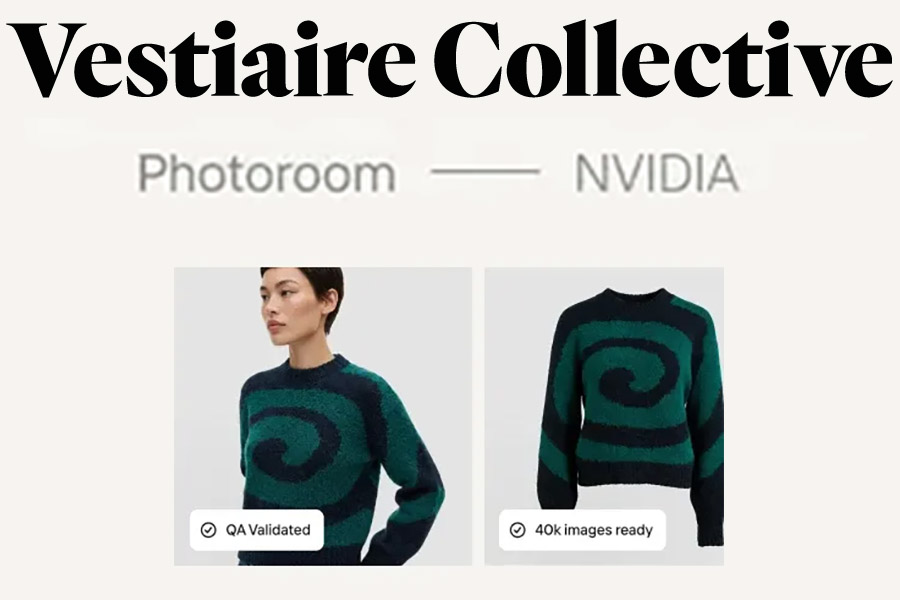
Photoroom's AI background-removal tool boosted Vestiaire Collective's sell-through rate 5% and drove 3-7% more unique product page views versus their legacy in-house tool. The key differentiator: Photoroom preserves product fidelity while competing generative AI tools altered item details, breaking authentication and buyer trust.
As AI image tools proliferate, the competitive edge shifts from 'using AI' to 'using AI that doesn't fabricate product details' — a distinction that will matter more as Amazon and resale platforms tighten authenticity enforcement and penalize listings with misleading visuals.
Most AI image tools on the market fail product fidelity checks 71% of the time — meaning sellers using generative AI editors risk returns, listing suppression, and trust erosion at scale. Audit your current image editing workflow now; if you're using generative AI to 'clean up' product shots, you may be creating liability, not value.
Operational Impact
This story may require teams to revisit workflows, monitoring, or platform assumptions.
Bottom Line
AI image editing that alters products kills trust — 5% more sales when fidelity holds.
Source Lens
Industry Context
Useful background context, but lower-priority than direct platform, community, or operator intelligence.
Impact Level
medium
AI image editing that alters products kills trust — 5% more sales when fidelity holds.
Key Stat / Trigger
5% higher sell-through rate for listings using Photoroom vs. legacy in-house image tool
Focus on the operational implication, not just the headline.
Full Coverage
Photoroom have published results from its work with Vestiaire Collective, the global platform for pre-loved luxury fashion. Vestiaire Collective split its new listings into two random groups. One had its main photo edited by Photoroom, the other by the photo clipping tool Vestiaire Collective built in-house years ago.
Listings in the Photoroom group sold at a 5% higher rate of liquidity. Their product pages drew 3 to 7% more unique views, with bags and shoes gaining the most. Vestiaire Collective chose Photoroom after testing several generative AI tools and finding that every one of them changed the items.
A photo that changes the item breaks two things on a resale platform. Vestiaire Collective authenticates a share of items from their photos alone, checking labels, stitching and how light falls on the material. Buyers can also return anything that turns out to be fake or has a fault the seller didn’t disclose.
Smooth out a scuff or redraw a logo and both are at risk. Photoroom’s own testing points the same way. In a benchmark of 4,250 AI-generated images across 850 real products, the best AI image-editing models on the market passed a full product fidelity check only 29% of the time.
Buyers notice too: 63% of UK consumers say inconsistent product images or branding make a marketplace less trustworthy, according to Photoroom’s State of GenAI in Marketplaces 2026 report. We tested different GenAI solutions, and each time they changed some details.
Then it was no longer possible to authenticate from the pictures or to make sure buyers could trust them. Photoroom maintained product fidelity, and that’s clearly the reason we chose it.
– Thomas Hezard, Chief Product Officer, Vestiaire Collective Vestiaire Collective built its own photo clipping tool years ago, because nothing on the market was accurate enough. Photoroom now runs that work as a service for enterprises.
Its Visual Agents system, launched in August 2026, brings together the right AI models and quality checks for each catalogue, so every image that goes live is true to the product and ready to sell. Vestiaire Collective operates in 70 countries and adds around 40,000 listings a day.
Sellers range from private sellers photographing items at home to semi-professional sellers using AI tools to enhance their photos. Sellers list the way they always have. Before a listing goes live, the Photoroom API removes the background from the main photo, adds a shadow, centres the item and corrects the lighting.
Bags and shoes get a deeper shadow to show their shape, clothing laid flat gets little or none. It took eight weeks to go from deciding to test to having results. The same photos run in Vestiaire Collective’s performance marketing ads, which became 2% more efficient, while digital authentication was unaffected.
Photoroom’s pipeline for Vestiaire Collective combines its own models with open models, including FLUX. 2 [klein] from Black Forest Labs and DINOv2 from Meta. It runs on NVIDIA H100 and H200 GPUs, with GPU capacity from Nebius and inference optimised using NVIDIA TensorRT and NVIDIA Triton Inference Server.
Some of Photoroom’s models only get a few requests an hour, so they shut down when idle and restart when traffic arrives. As a member of the NVIDIA Inception programme, Photoroom worked with NVIDIA to put NVIDIA Dynamo Snapshot into production.
A new GPU server now comes online from around three and a half minutes to about a minute, so a spike in listings doesn’t slow anything down. We looked at how first-hand players create emotion to convince a buyer to purchase a €1,000-plus item. Then we looked at our photos, and the gap was clear.
– Thomas Hezard, Chief Product Officer, Vestiaire Collective Nobody returns a photo. They return the product. Vestiaire Collective tried the tools that change products and picked the one that doesn’t, and more of its items now sell. Marketplaces have spent years building their own tools to get this right, and we want them to be able to buy it instead.
– Matt Rouif, Co-founder and CEO, Photoroom.
Check your product image editing tool against Photoroom's benchmark: if your AI editor modifies product details (logos, stitching, texture), switch to a background-removal-only workflow to avoid return spikes and policy violations on authenticated or high-value SKUs.
In the next 30 days, A/B test standardized white-background images versus your current hero shots on top-revenue ASINs — measure click-through rate and conversion rate separately to isolate image impact before committing to a new tool.
Original Source
This briefing is based on reporting from Tamebay. Use the original post for full primary-source context.
Style
Audience