

Why more better-for-you brands are leading with taste over health claims
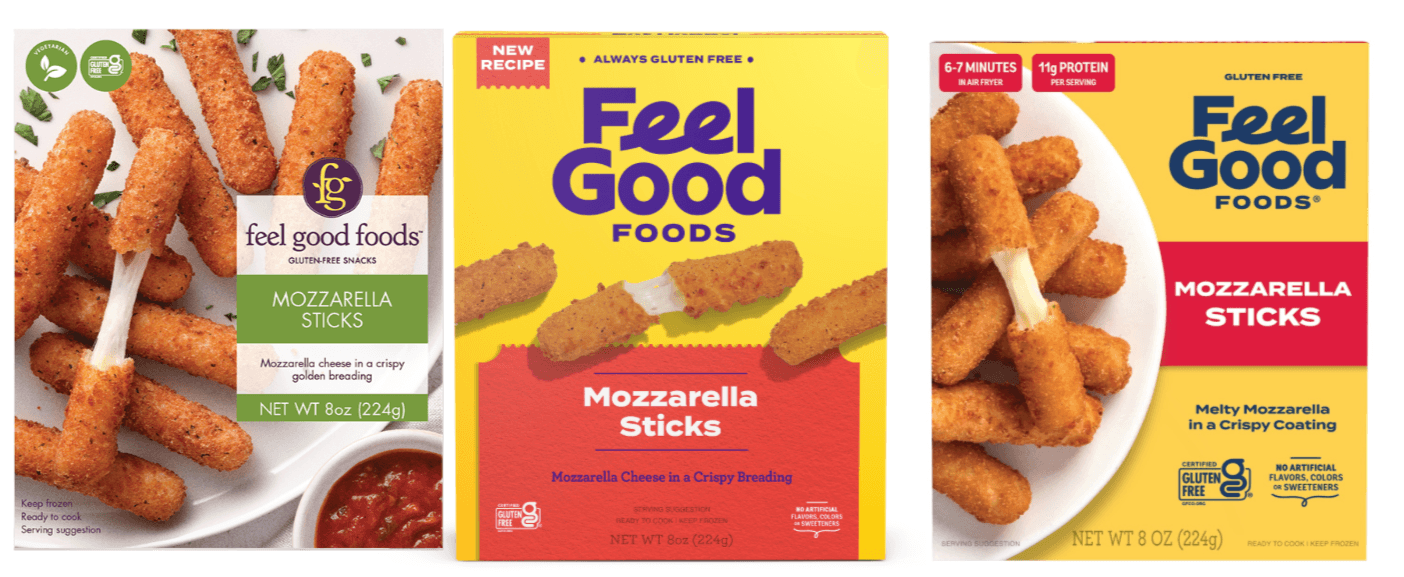
Better-for-you brands are prioritizing taste and fun packaging to attract more customers while still offering healthier food options.
Source Lens
Industry Context
Useful background context, but lower-priority than direct platform, community, or operator intelligence.
Impact Level
medium
Use this briefing to decide whether your team needs an immediate workflow, policy, or reporting change.
Key Stat / Trigger
No single quantitative trigger surfaced in this report.
Focus on the operational implication, not just the headline.
Full Coverage
CPG Playbook // June 16, 2026 Why more better-for-you brands are leading with taste over health claims By Gabriela Barkho Feel Good Foods Brands want customers to know they can have their better-for-you cake and eat it too.
As sales in the better-for-you snack category continue to grow, some startup brands like Feel Good Foods and Good Pops are undergoing a packaging makeover to appeal to more mainstream shoppers. These startups say they previously felt pigeonholed in their branding as they tried to appeal to the health-conscious customer.
Now, these startups say they are rethinking their health-focused branding to reflect a more fun and joyful eating experience. In many cases, consumer trends have changed since these brands first launched. When frozen snack brand Feel Good Foods was founded 13 years ago, gluten-free frozen food was still a burgeoning category.
Founder and CEO Vanessa Phillips said that at the time, frozen better-for-you products were still niche, especially for items like the restaurant-style appetizers that Feel Goods makes. The brand sells products like chicken bites, mini pizza bagels and potstickers made without additives or artificial coloring.
Phillips, who is celiac herself, said when the brand started out in the 2010s, gluten-free alternatives were still fringe. However, more health-conscious people were becoming interested in the benefits of following gluten-free diets. “And so we called out ‘gluten-free’ like seven times on the packaging in addition to the certification,” she said.
As such, the brand’s positioning was made in the early days. “We never saw gluten-free as trendy, and I’m proud that our products don’t taste gluten-free,” Phillips said. “It helped set us apart at a time when we were the first gluten-free dumpling.”
But over the years, Phillips said, the company saw its customer base skew more toward people who “simply wanted crave-worthy foods with better ingredients.” While the brand’s portfolio is still fully gluten-free, currently only 25% of Feel Good Foods’ customers follow a gluten-free diet.
Phillips said the company found mass appeal through offering healthier alternatives to nostalgic foods that many people grew up with. Feel Good Foods’ mozzarella sticks launched in 2021 and have since become its top-selling SKU. This growth inspired the brand to go after a more mainstream customer, especially in mass retail.
In the past year, Feel Good Foods announced a major expansion across chains such as Target, Publix and Kroger, bringing its national door count to 25,000. “We are encouraging mass grocery stores to sell our brand in addition to, or as a replacement for, some of the conventional brands,” Phillips said.
So when Feel Good Foods refreshed its packaging, it shifted the health-focused positioning and leaned into bright colors and modern food photography that stands out in the freezer. One of the major changes the brand made was transitioning from white boxes to bright yellow packaging.
“Gluten-free is still very much on the packaging, but in a way that gluten-free consumers learn that information quickly,” Phillips said. Previously, a gluten-free label was prominently displayed on nearly every side of the Feel Good Foods’ boxes.
Now, the gluten-free callout is displayed once at the front with the official certification by the Gluten Intolerance Group. Instead, the biggest callouts on the box are the air fryer cooking time and, in some products’ cases, the protein content.
So while the product has stayed the same, the new branding also more directly targets customers like families that want to trade up their mozzarella sticks while still having the convenience and speed of heat-and-eat. The new mainstream positioning is paying off. Feel Good Foods is expecting 60% year-over-year growth in 2026.
According to Spins data, it’s now the top-selling frozen snack and appetizer brand in both natural and mass channels, outpacing conventional brands like TGI Fridays, PF Chang’s and Hot Pockets.
Earlier this year, natural frozen treats brand GoodPop also completed a brand refresh that leans more into bright colors and more exaggerated graphics that pop through freezer doors. GoodPop is also venturing further into unique flavors that appeal to Gen Z.
Its new French fry pop, inspired by fries dipped in a milkshake, was turned into a permanent SKU after a successful run as a limited-edition product. The Fudge n’ Vanilla French Fry Pop was first released in 2024 as an exclusive collaboration with Ore-Ida. One of the brand’s newest launches is the Fruit Sours line, made with a patent-pending coating.
Another new line is the Fruit n’ Cream Pops that are inspired by dirty sodas. With all of these changes, GoodPop is emphasizing novelty and innovation. While the company still boasts better ingredients — its products contain no artificial dyes, and all products are made with organi
Original Source
This briefing is based on reporting from Modern Retail. Use the original post for full primary-source context.
Style
Audience