

How Roller Rabbit became TikTok’s favorite sleepwear brand
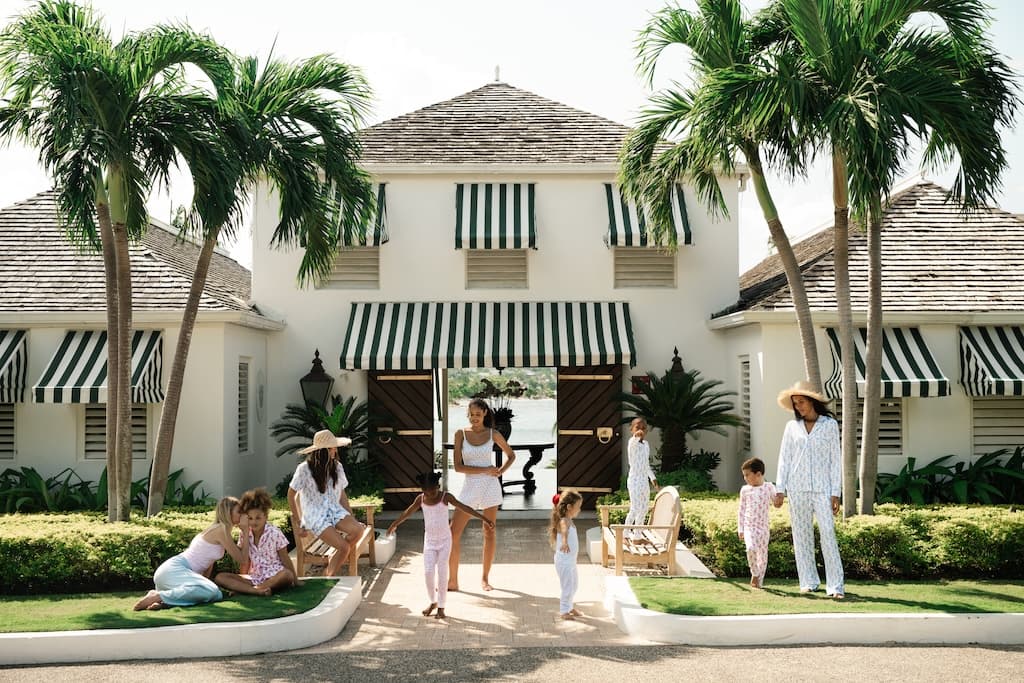
Roller Rabbit became TikTok’s favorite pajama brand thanks to exclusive drops and collaborations with the likes of Target and Starbucks.
Source Lens
Industry Context
Useful background context, but lower-priority than direct platform, community, or operator intelligence.
Impact Level
medium
Use this briefing to decide whether your team needs an immediate workflow, policy, or reporting change.
Key Stat / Trigger
No single quantitative trigger surfaced in this report.
Focus on the operational implication, not just the headline.
Full Coverage
New DTC toolkit // May 11, 2026 How Roller Rabbit became TikTok’s favorite sleepwear brand By Gabriela Barkho Roller Rabbit Founded back in 2003, Roller Rabbit has spent the last few years rebuilding itself as a DTC-first business. Long before it became TikTok’s favorite pajama brand, Roller Rabbit was founded by Roberta Freymann as Roberta Roller Rabbit.
Known for its signature monkey pajama print, Roller Rabbit has gone viral over the last few years thanks in part to its strategic, limited-edition collaborations. Standouts came in 2024, when Roller Rabbit x LoveShackFancy sold out within 60 seconds. Roller Rabbit has also been testing new categories to bring in new audiences.
In November 2024, it expanded into the intimates category, with some styles selling out within the first hour of launch and 20% of the entire collection selling out in the first day. And last holiday season, the brand collaborated with Starbucks on a viral merch collection that was exclusively available at Starbucks shops and sold out instantly.
These partnerships, along with tactics like pop-ups and activations, have helped the brand transition from a once wholesale-heavy company to a digital-first brand. According to Roller Rabbit, sales have grown by more than 30% year over year over the last five years. The brand has amassed nearly 200,000 followers and 1.
6 million likes on TikTok, along with 276,000 Instagram followers. Roller Rabbit’s Pima cotton pajamas, which start at around $118 per set, come in signature prints like Georgetown Monkey and Leo the Lion.
Rebuilding with digital in mind Roller Rabbit CEO Ed Bertouch told Modern Retail that while the brand appears to have taken over social media feeds recently, the team has been working behind the scenes with a specific strategy to modernize it as a direct-to-consumer brand.
Building Roller Rabbit’s devoted following has been made possible by employing a DTC frequent drop model, which would be difficult to execute through wholesale partners. The stage was first set in 2017 when the company was sold to its current owner, RRR Brands.
The first order of business, Bertouch said, was to cut back on all the wholesale accounts the brand had accumulated over two decades. At the time, he said the business was very dependent on wholesale, and the e-commerce infrastructure was definitely lacking.
There were about 500-plus wholesale accounts around the country that stocked Roberta Roller Rabbit, ranging from Bloomingdale’s to Shopbop.
Over the course of 2019 through Covid, Bertouch — with the help of Roller Rabbit’s chief marketing officer, Carolyn Phillips — “drastically edited those wholesale counts and brought them down to about 100 to 120,” Bertouch said. By 2022, wholesale made up about 30% of the brand’s sales.
“We came to the conclusion that it was not a distribution channel that was working for us,” he said. And so, as of 2023, Roller Rabbit stopped shipments to all third-party partners. “We are just 13 [brand] stores around the country and online, that’s it,” Bertouch said.
Instead, the company has struck strategic licensing deals for limited-edition drops with retailers like Pottery Barn and, most recently, Target. “The collabs strategy somewhat coincided with the end of wholesale for us, because we still wanted to work with other brands,” he said.
The making of a viral print Bertouch largely credited the sleepwear brand’s cult following to its vibrant, whimsical prints that are still made in Peru and known for their cozy, soft feel. “Even when Roberta started this brand, she specifically made the woven products in India because of the block printing technique [used] there,” Bertouch said.
That same process is still used today, with prints being illustrated by hand in the New York headquarters and then digitized and manufactured in Peru. “When we took over the brand, there were maybe two factories in Peru and in India that were doing all this for Roller Rabbit,” Bertouch said.
Since the company has grown fivefold since the acquisition, it has brought on four additional family-owned factories in Lima to meet demand. Bertouch said that while demand is hot right now, the company is being thoughtful in its store expansion.
Its next store will open in Atlanta later this year, making a return to the city after closing a storefront there. Now the brand mostly relies on testing pop-ups in new markets to gauge customer interest. Having the freedom of a DTC operation, Roller Rabbit has begun to use an array of marketing strategies.
Phillips, Roller Rabbit’s chief marketing officer, said, “We have been very fortunate with social media and the fact that Gen Z is so great about capturing every aspect of our product.” For both audience retention and acquisition, Phillips said a large portion of the company’s budget is spent on organic social content and very little on
Original Source
This briefing is based on reporting from Modern Retail. Use the original post for full primary-source context.
Style
Audience