

Maersk denies report its vessel transited dangerous Mideast route
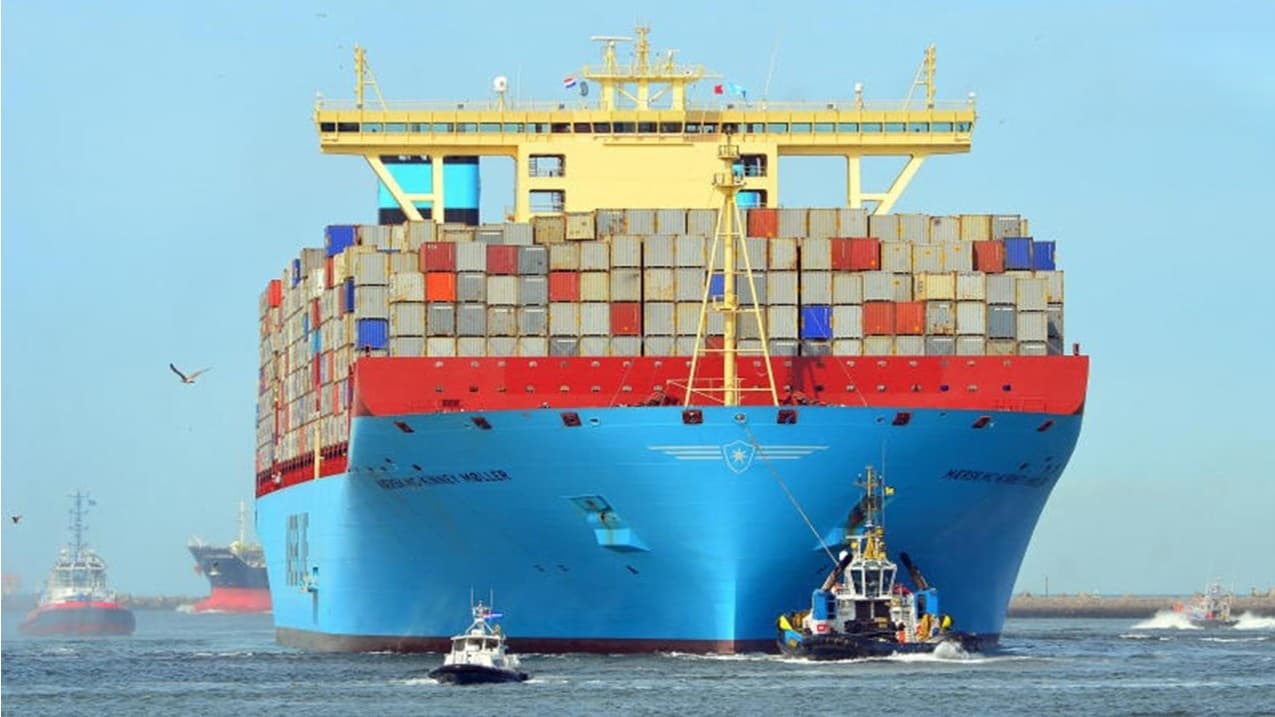
Maersk this week contradicted a consultant’s report that one of its vessels made a recent transit of a violence-plagued Mideast shipping route. The post Maersk denies report its vessel transited dangerous Mideast route appeared first on FreightWaves.
Source Lens
Industry Context
Useful background context, but lower-priority than direct platform, community, or operator intelligence.
Impact Level
medium
Use this briefing to decide whether your team needs an immediate workflow, policy, or reporting change.
Key Stat / Trigger
No single quantitative trigger surfaced in this report.
Focus on the operational implication, not just the headline.
Full Coverage
Maersk, the world’s second-largest container carrier, this week denied a report that one of its ships recently transited a critical Middle East shipping route. A report by British analyst Drewry said a Maersk vessel transited the northern portion of the Suez Canal trade lane the week of May 17.
It cited automated tracking data and information on Maersk’s website. The latter showed that Maersk Line Limited’s Maersk Elba called Jeddah, Saudi Arabia, in the Red Sea on May 16. Maersk Line is the U. S. -flag subsidiary that often provides transportation services for the U. S. government.
“We cannot confirm what you are hearing and what Drewry is apparently reporting,” said Maersk (OTC: AMKBY) spokesman Jesper Lov, in an email to FreightWaves. Major container lines and tanker operators have mostly avoided the Red Sea-Suez route since late 2023, when Houthi rebels in Yemen attacked shipping in support of Gaza.
The largest ships connecting Asia with the Mediterranean, Europe and North America have been diverted voyages around Africa, adding as much as two weeks’ sailing time to a typical voyage. The Red Sea crisis reset global shipping, with the diversions from it and the Strait of Hormuz absorbing the equivalent of 2 million containers in annual capacity.
Suez Canal traffic and toll revenue were both higher in early 2026 than in the same period of 2025, but they were still far below pre-crisis levels. From January 1 to February 8, 2026, the canal handled 1,315 vessels and earned $449 million, versus 1,243 vessels and $368 million in the same period of 2025.
Canal revenue in 2024 had fallen sharply to about $4 billion from $10. 25 billion in 2023, showing how severe the Red Sea disruption had been. The diversions have come with new dangers.
There have been four confirmed hijackings this year off the coast of Somalia, according to the International Chamber of Commerce Commercial Crime Service, with three ships and their crews still held captive. The frequency and intensity of the attacks on Red Sea vessels waned in 2025 as Houthi sponsor Iran was overwhelmed by its own domestic troubles.
Major liners tested a return to the Red Sea earlier this year only to see their plans upended by the war in Iran, and more threats by the Houthi. This article was updated May 28 to add that Drewry’s data had the Maersk vessel transiting the northern end of the Suez Canal, not the entire Red Sea. Read more articles by Stuart Chirls here.
Original Source
This briefing is based on reporting from Freightwaves. Use the original post for full primary-source context.
Style
Audience